Resistance bands are cheap, light and small enough to pack in a suitcase. They are also more than a rehab tool: studies comparing bands with dumbbells and weight machines find similar strength gains and similar muscle activation. This guide explains the different types of bands, how they load your muscles differently from weights, what the research shows, and gives you a full-body band workout with a plan to progress.
Types of resistance bands
| Type | What it looks like | Best for |
|---|---|---|
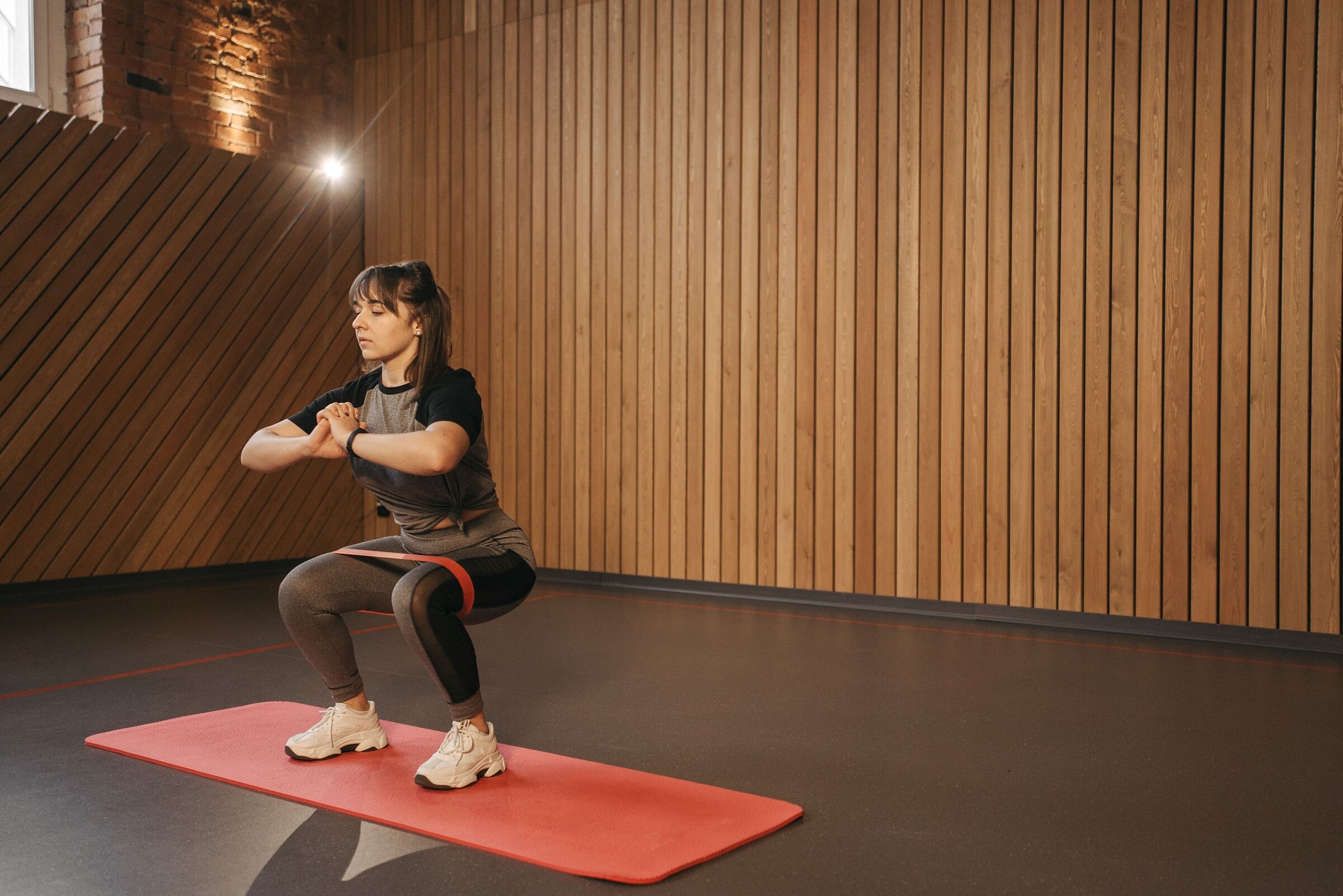
| Loop bands (mini bands) | Short, flat loops | Hip and glute work, such as lateral walks and bridges |
| Long loop bands (power bands) | Thick loops about 1 to 2 m long | Squats, hinges, presses, rows and assisted pull-ups |
| Tube bands with handles | Rubber tubing with handles, often with a door anchor | Cable-style presses, rows and curls |
| Flat therapy bands | Thin sheets without handles | Light rehab and warm-up work |
Most bands are color-coded by resistance, but treat the colors and the numbers on the label as a rough guide. When researchers measured the tension of one popular brand's bands, several colors pulled less than the manufacturer's listed values.[1] Test each band yourself and pick by feel.
A good starter kit is three to five long loop bands or tube bands from light to heavy, plus one or two mini bands.
How bands load your muscles
Weights pull down with the same force through the whole rep. A band is different: the further you stretch it, the harder it pulls. Resistance is lowest at the start of each rep and highest at the end.
That suits exercises such as squats and presses, where you are strongest near the top. For others, such as curls, the band can feel too light at the start and too heavy at the finish. To remove the slack at the start, begin each rep with some tension already on the band: step further from the anchor, widen your stance or choke up on the band. If the end of the rep then gets too hard, switch to a lighter band.
Does that changing resistance make bands less effective? The evidence says no. A meta-analysis comparing elastic resistance with free weights and machines found similar activation in the main working muscles and in the muscles that stabilize the movement.[2] In a study of women with neck and shoulder pain, dumbbells and elastic tubing produced comparably high activation of the working muscles at their hardest resistance levels.[3]
What the research says
- Strength: a meta-analysis of eight studies found no difference in upper- or lower-body strength gains between elastic resistance and conventional equipment such as weight machines and dumbbells.[4]
- Beginners: in sedentary middle-aged women, 10 weeks of band training produced improvements in body composition and in knee push-up and squat tests comparable to the same program on weight machines. Intensity was set simply by combining a target number of reps with how hard each set felt.[5]
- Older adults: a meta-analysis of 11 studies in people aged 60 to 79 found that progressive band training improved muscle strength, with the largest effects in healthy adults.[6]
- Trained lifters: in university students with advanced training experience, push-ups loaded with elastic bands produced strength gains similar to the bench press over five weeks.[7]
One honest caveat: most band studies are short and measure strength rather than muscle size. Muscle growth follows the same principles with any equipment, though: enough tension, sets that end close to failure, and steady progression.
Set up safely
- Check every band for nicks, cracks or thin spots before you train, and replace any damaged band.
- Stand on the band with your whole foot so it cannot slip out.
- If you use a door anchor, close the door firmly and, where possible, stand on the side it opens away from, so the band pulls it shut rather than open.
- Control the return on every rep. Never let a stretched band snap back toward your face.
The full-body band workout
Do this workout two or three times a week on non-consecutive days. Perform the exercises as straight sets, finishing all sets of one exercise before moving on. The whole session takes about 35 to 40 minutes.
Full-body resistance band workout
-
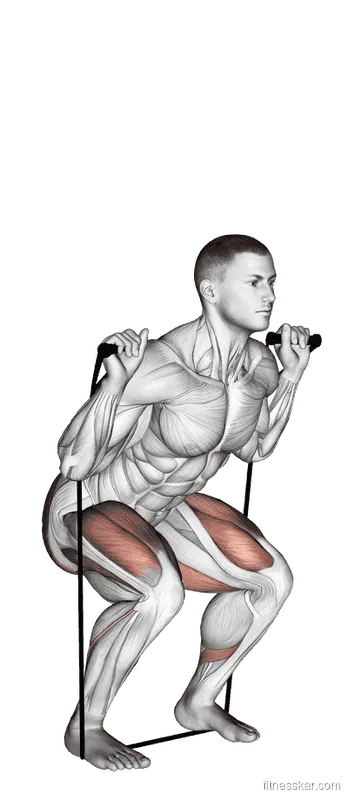
1 Band Squat - Sets
- 3
- Reps
- 12–15
- Rest
- 60 s
-
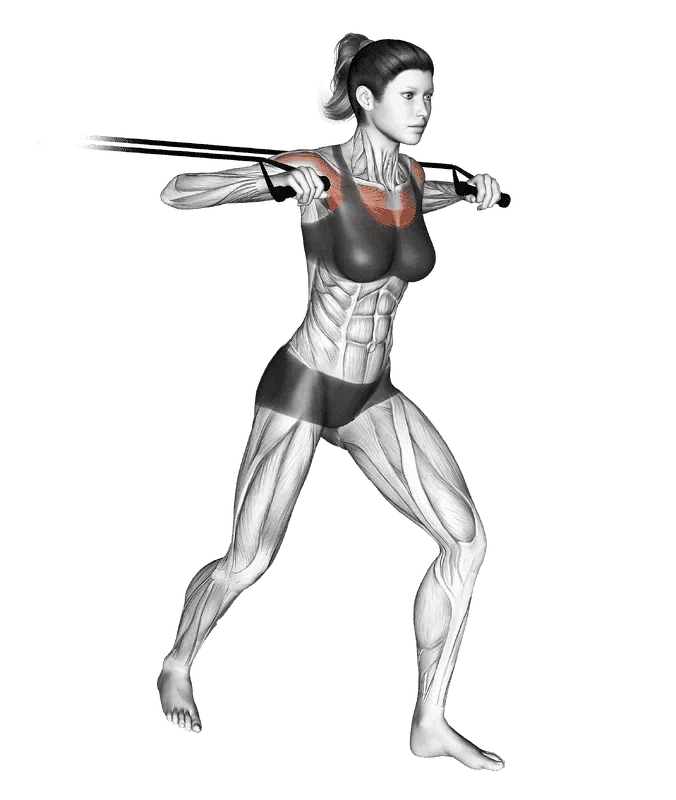
2 Band Standing Chest Press - Sets
- 3
- Reps
- 10–15
- Rest
- 60 s
-
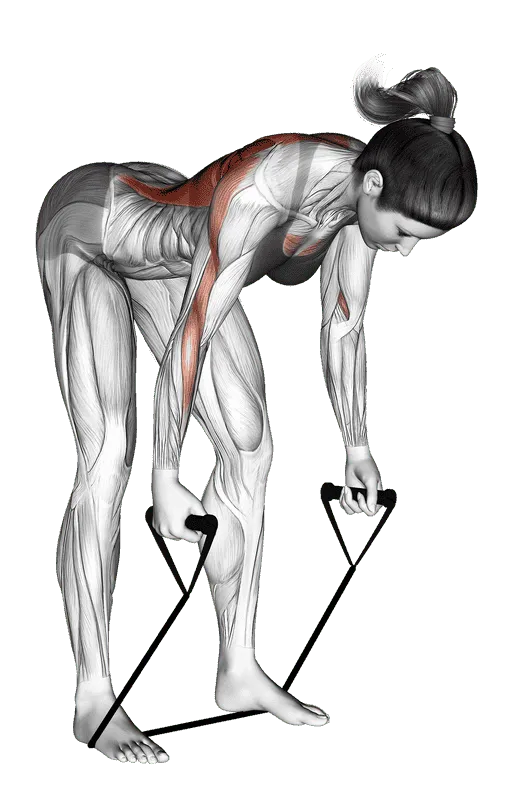
3 Band Bent-Over Row - Sets
- 3
- Reps
- 10–15
- Rest
- 60 s
-
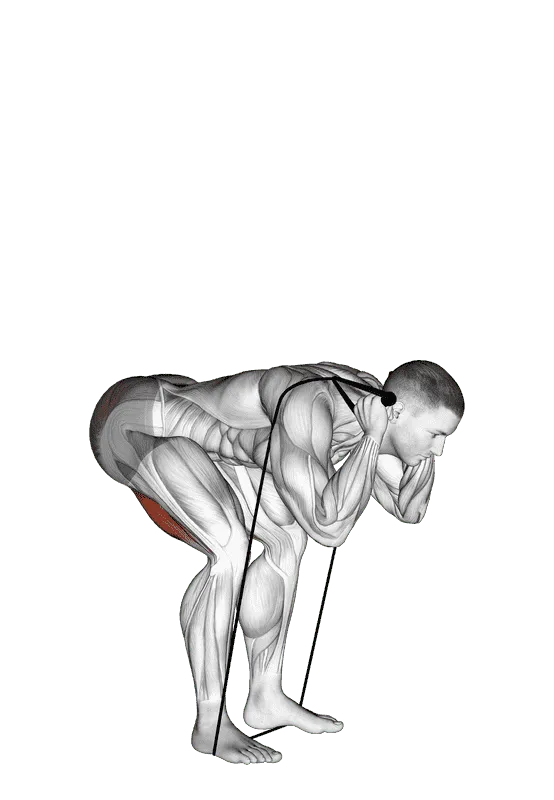
4 Band Good Morning - Sets
- 3
- Reps
- 10–15
- Rest
- 60 s
-
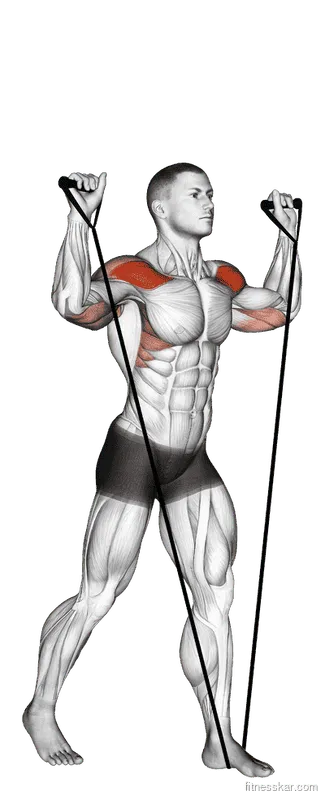
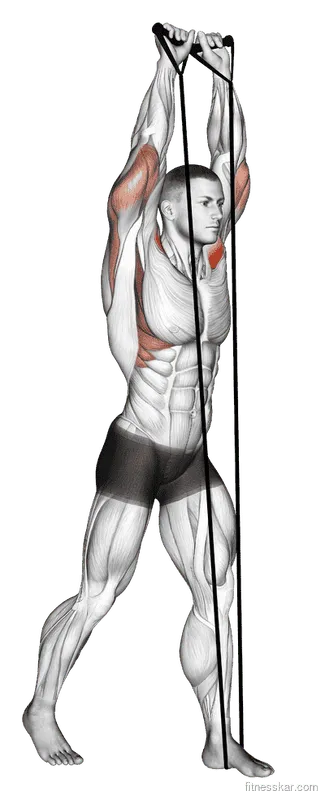
5 Band Shoulder Press - Sets
- 3
- Reps
- 10–15
- Rest
- 60 s
-
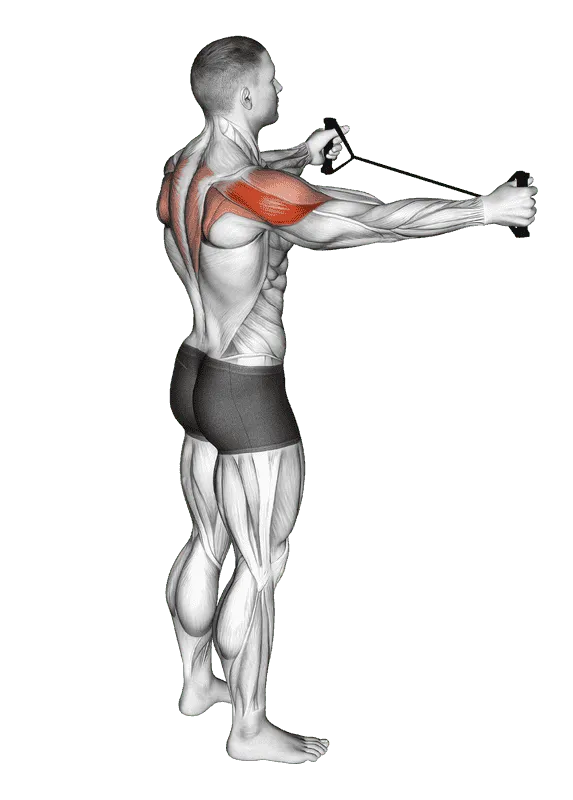
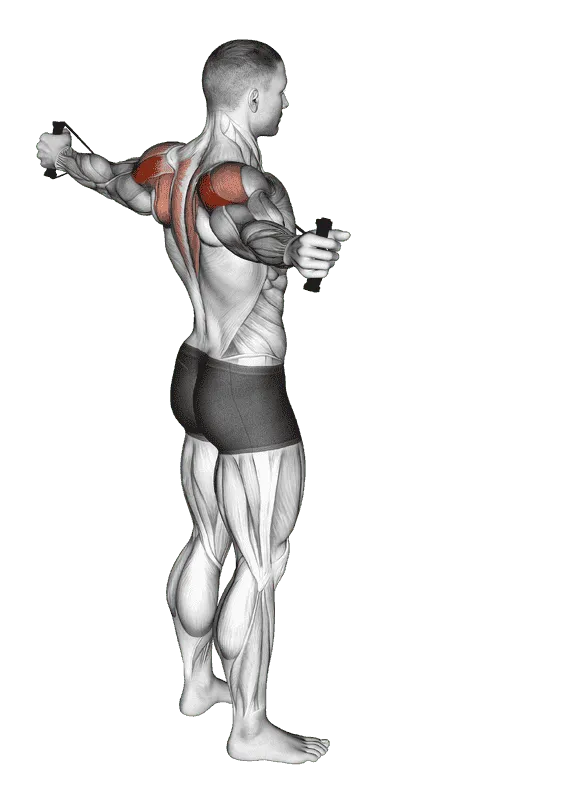
6 Band Pull Apart - Sets
- 3
- Reps
- 15–20
- Rest
- 45 s
-
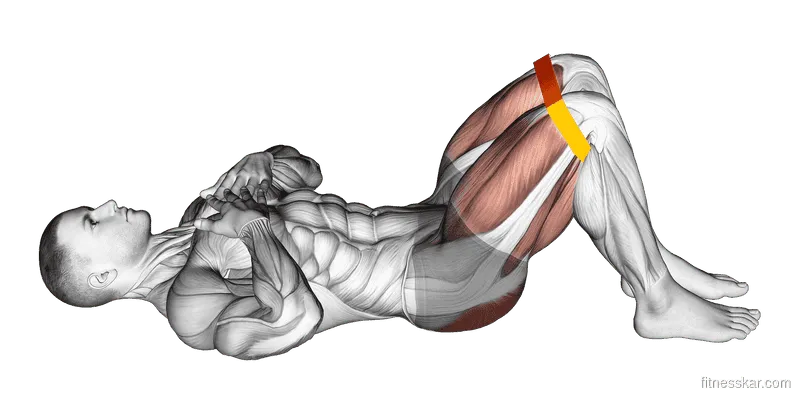
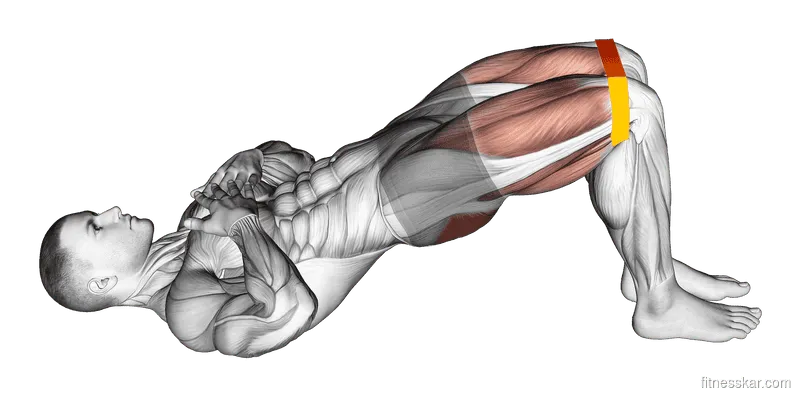
7 Resistance Band Glute Bridge - Sets
- 3
- Reps
- 15–20
- Rest
- 45 s
-
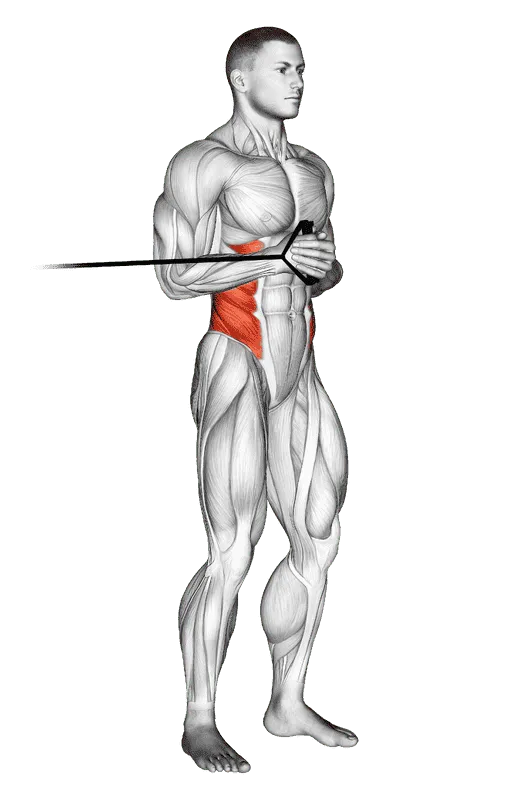
8 Band Horizontal Pallof Press - Sets
- 3
- Reps
- 10–12
- Rest
- 45 s
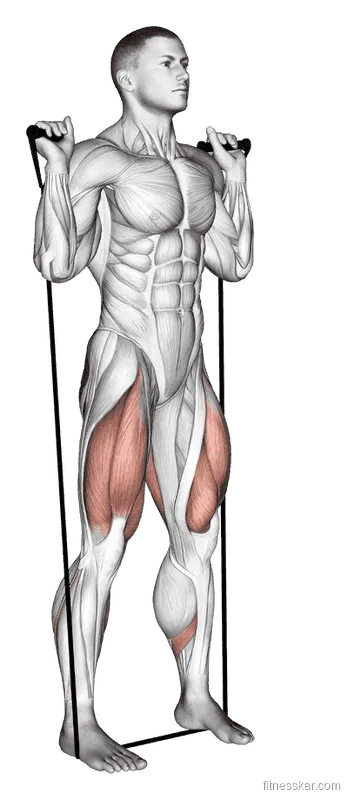
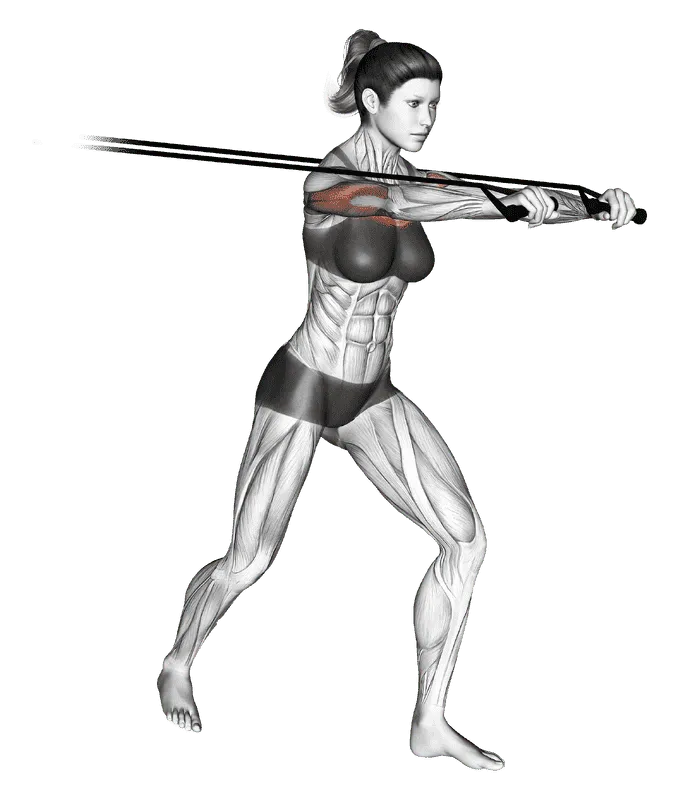
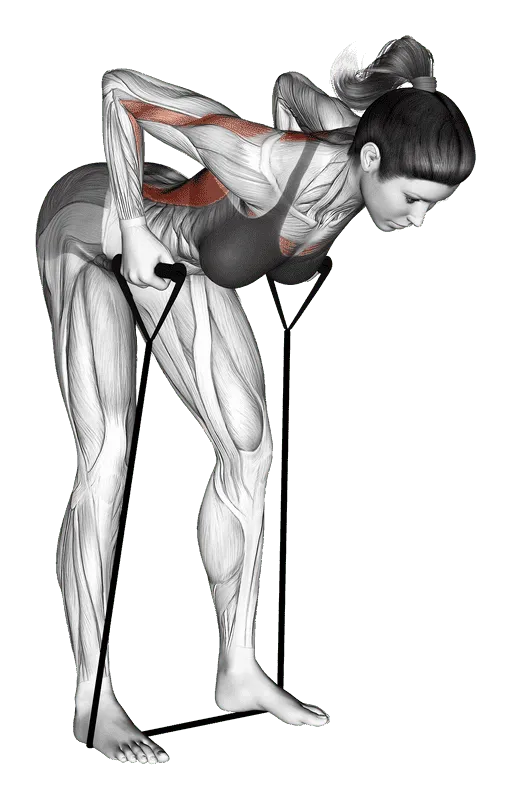
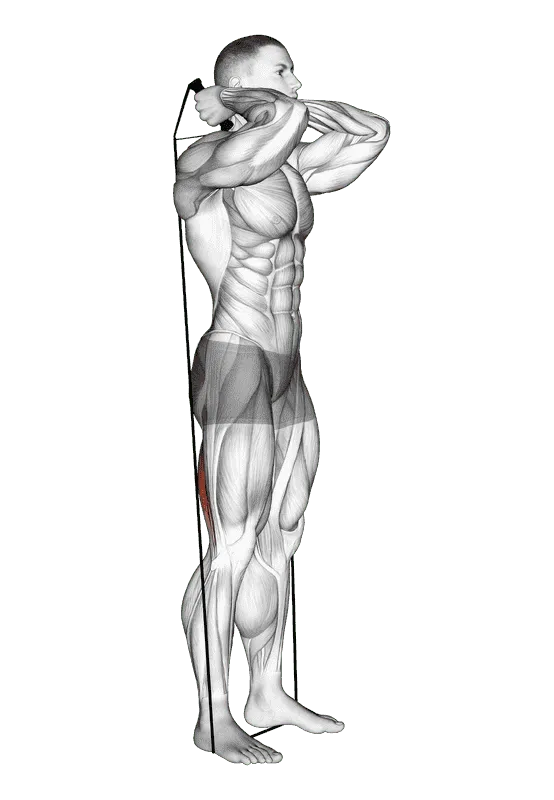

If you have time for more, finish with two sets each of band biceps curls and band pushdowns for your arms.
How hard should it feel?
Pick a band that makes the last one to three reps of each set difficult while your form stays clean. Bands suit moderate to higher reps, and the 10 to 20 rep ranges above work well for building muscle and general strength. If you finish a set and could clearly have done five or more extra reps, the band is too light.
A simple way to steer your training is the approach from the study on sedentary women above: aim for a target number of reps and notice how hard the set felt. When the target feels easy, make the exercise harder next time.
How to progress with bands
Bands do not come with small weight plates, so you progress in other ways. Work down this list:
- Add reps until you reach the top of the rep range on every set.
- Increase the stretch. Step further from the anchor, widen your stance on the band, or choke up so the band starts each rep with more tension.
- Move to the next band. Step up one color when the stretch alone is no longer enough.
- Combine bands. Two lighter bands together can bridge the gap between two heavy ones.
- Slow down and pause. Lower for three seconds and hold the fully stretched position for a second or two.
- Go one-sided. One-arm rows and presses, or split squats standing on the band, double the demand on the working limb.
For the principle behind all of these, see our guide to progressive overload. Bands also pair well with a set of dumbbells: use the dumbbells for squats and hinges and the bands for rows, pull-aparts and presses. Our dumbbell-only workout shows how to build that kind of program.
FAQ
Frequently asked questions
Can resistance bands build muscle?
Yes. Bands produce muscle activation similar to free weights, and studies show similar strength gains. Most band research measures strength rather than muscle size, but the same rules for growth apply: hard sets, enough weekly volume and steady progression.
Which resistance band should I start with?
Buy a set of three to five bands from light to heavy rather than a single band, because your legs and back need much more resistance than your shoulders and arms. Choose each band by feel, since colors vary between brands.
Are resistance bands as good as weights?
For building strength, studies show similar results. Weights are easier to load in small, precise steps and can go much heavier, while bands are cheaper, portable and gentler to start with. Many people get the best of both by combining them.
How long do resistance bands last?
That depends on how often you use them and how you store them. Keep them away from sharp edges and direct sunlight, check them before every session, and replace any band with a nick, tear or thin spot.
Can I do a band workout every day?
A full-body band workout two or three times a week, with a rest day in between, is enough for most people. Light band exercises such as pull-aparts can be done more often as a warm-up.
Sources
- Uchida MC, Nishida MM, Sampaio RA, Moritani T, Arai H. Thera-band elastic band tension: reference values for physical activity. Journal of Physical Therapy Science. 2016. pubmed.ncbi.nlm.nih.gov/27190465/ ↩
- Aboodarda SJ, Page PA, Behm DG. Muscle activation comparisons between elastic and isoinertial resistance: a meta-analysis. Clinical Biomechanics. 2016. pubmed.ncbi.nlm.nih.gov/27681867/ ↩
- Andersen LL, Andersen CH, Mortensen OS, et al. Muscle activation and perceived loading during rehabilitation exercises: comparison of dumbbells and elastic resistance. Physical Therapy. 2010. pubmed.ncbi.nlm.nih.gov/20133444/ ↩
- Lopes JSS, Machado AF, Micheletti JK, et al. Effects of training with elastic resistance versus conventional resistance on muscular strength: a systematic review and meta-analysis. SAGE Open Medicine. 2019. pubmed.ncbi.nlm.nih.gov/30815258/ ↩
- Colado JC, Triplett NT. Effects of a short-term resistance program using elastic bands versus weight machines for sedentary middle-aged women. Journal of Strength and Conditioning Research. 2008. pubmed.ncbi.nlm.nih.gov/18714245/ ↩
- Martins WR, de Oliveira RJ, Carvalho RS, et al. Elastic resistance training to increase muscle strength in elderly: a systematic review with meta-analysis. Archives of Gerontology and Geriatrics. 2013. pubmed.ncbi.nlm.nih.gov/23562413/ ↩
- Calatayud J, Borreani S, Colado JC, et al. Bench press and push-up at comparable levels of muscle activity results in similar strength gains. Journal of Strength and Conditioning Research. 2015. pubmed.ncbi.nlm.nih.gov/24983847/ ↩