A pair of dumbbells can train every muscle in your body. You can squat, hinge, lunge, press, row and carry with them, and they fit under a bed. This guide explains why dumbbell training works, gives you a complete three-day plan, and shows you how to keep progressing when your dumbbells do not get any heavier.
Why dumbbells are enough
Your muscles do not know what you are holding. They respond to tension and effort. A 2026 position stand from the American College of Sports Medicine, which pooled the results of 137 systematic reviews, found that the type of equipment did not consistently change training outcomes.[1] What did matter: for strength, heavier loads, a full range of motion and at least two sessions a week; for muscle growth, a higher weekly volume of 10 or more sets.
Dumbbells also hold their own against the barbell. In one study, trained lifters pressed about 17% less weight with dumbbells than with a barbell, yet activity in the chest and front shoulders did not differ.[2]
They have practical advantages too:
- Each side works on its own. Your stronger arm cannot take over, and one-arm and one-leg exercises let you train each side separately.
- Natural movement paths. Your wrists and elbows can turn freely instead of being locked to a bar.
- Small and versatile. One adjustable pair can replace a whole rack of fixed weights.
The main limitation is load. Sooner or later your legs will outgrow the heaviest dumbbells you own. The progression section below shows how to deal with that.
Choosing your dumbbells
Adjustable dumbbells are the most practical choice for most people, because one pair covers both light shoulder raises and heavy lower-body lifts. A pair that goes from about 2.5 kg (5 lb) to at least 20 kg (45 lb) per hand will keep most beginners progressing for a long time.
If you buy fixed pairs, get at least two: a light pair you can raise to the side for 12 to 15 reps, and a heavy pair that makes 8 to 12 goblet squats or Romanian deadlifts hard.
A bench is useful but optional. You can press from the floor, and a sturdy chair works for rows and split squats.
The three-day plan
Train on three non-consecutive days, for example Monday, Wednesday and Friday. Each workout trains your whole body with a different emphasis, so every major muscle group is worked two or three times a week. In a meta-analysis on training frequency, twice a week produced more muscle growth than once a week.[3]
Warm up with five minutes of easy cardio, then do one or two light sets of the first two exercises. Each workout takes about 45 minutes.
Day 1: squat, press and row
Day 1
-
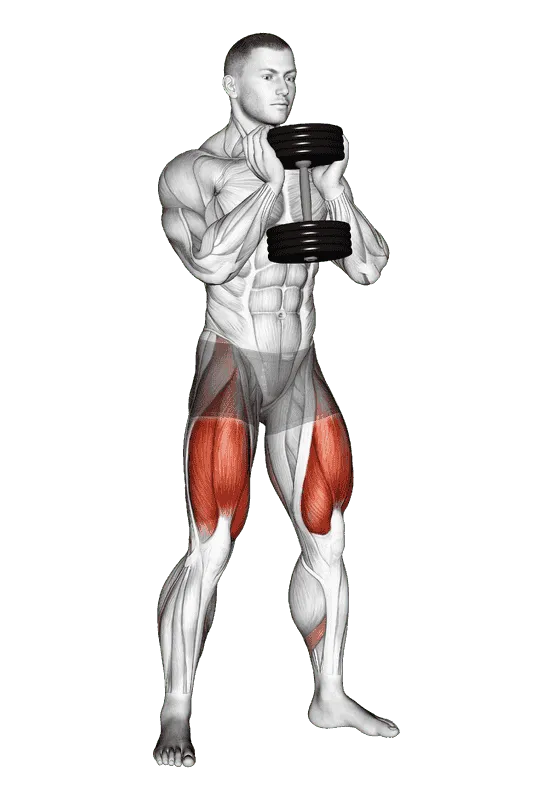
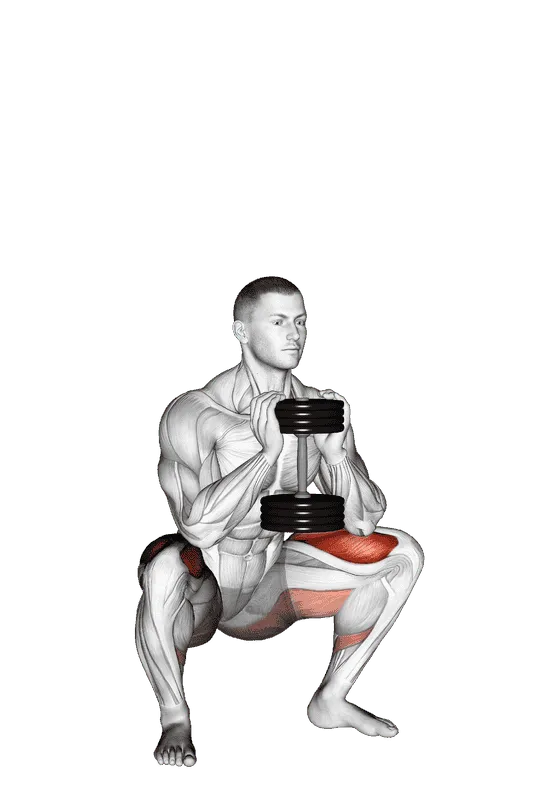
1 Dumbbell Goblet Squat - Sets
- 3
- Reps
- 8–12
- Rest
- 120 s
-
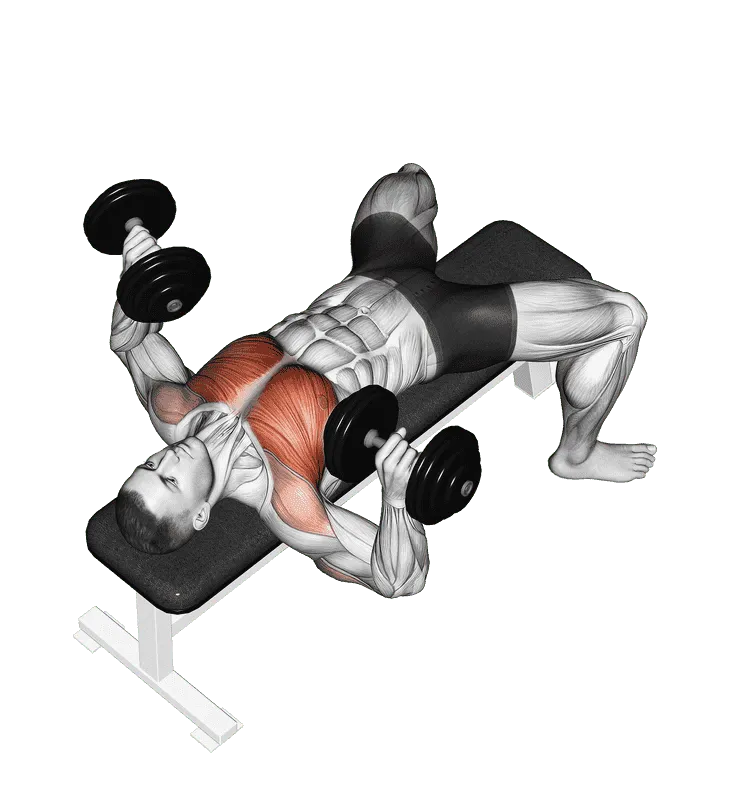
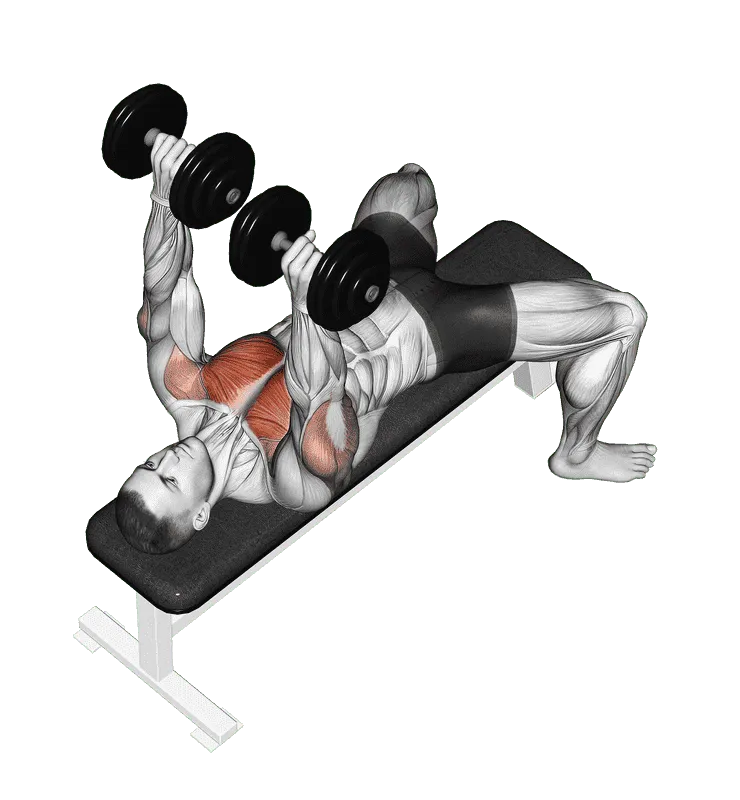
2 Dumbbell Bench Press - Sets
- 3
- Reps
- 8–12
- Rest
- 120 s
-
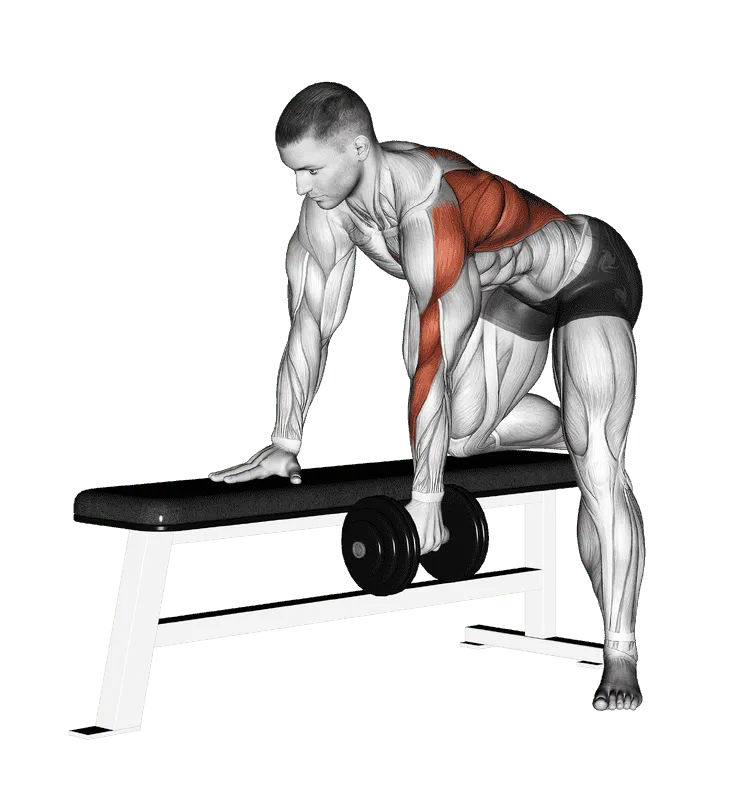
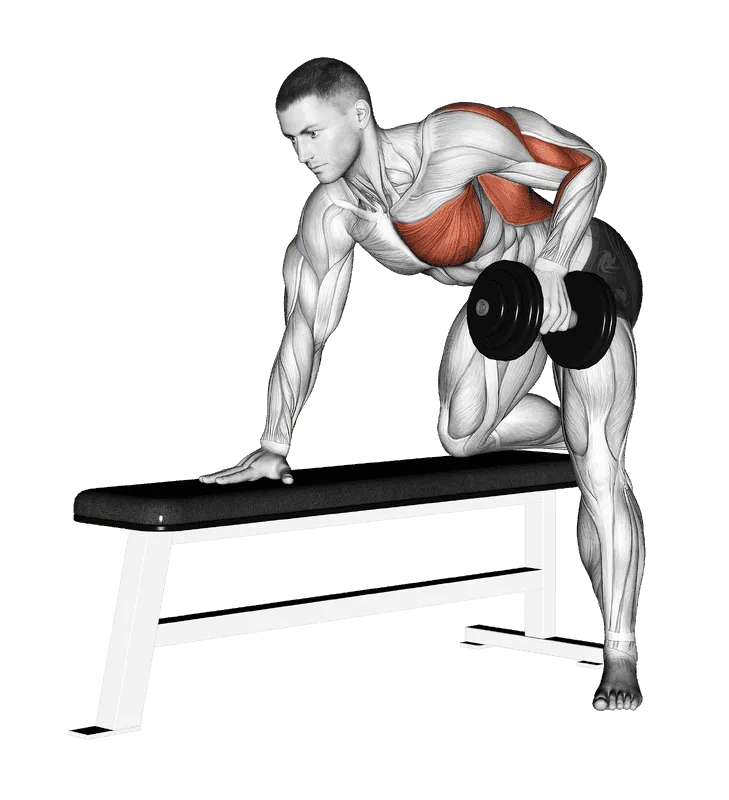
3 Dumbbell Bent-Over Row - Sets
- 3
- Reps
- 10–12
- Rest
- 90 s
-
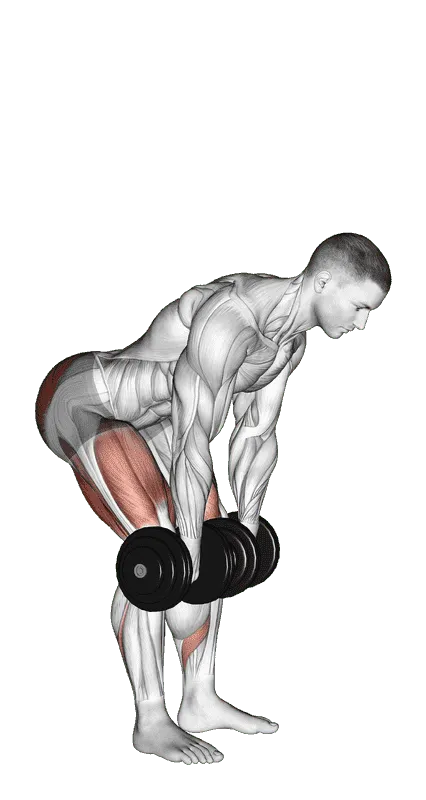
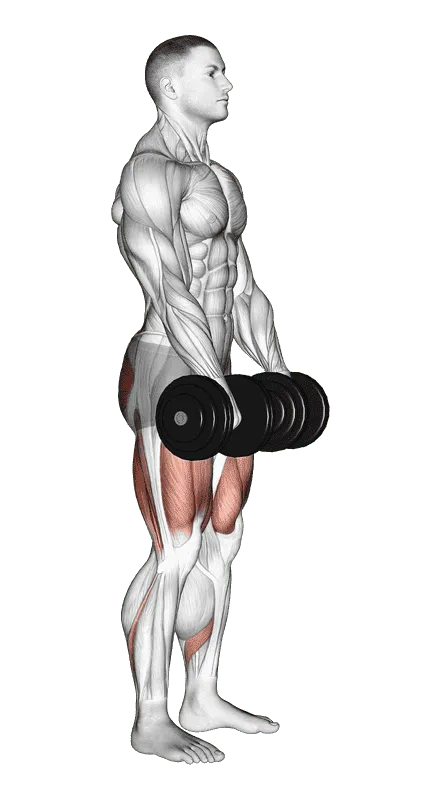
4 Dumbbell Romanian Deadlift - Sets
- 3
- Reps
- 10–12
- Rest
- 90 s
-
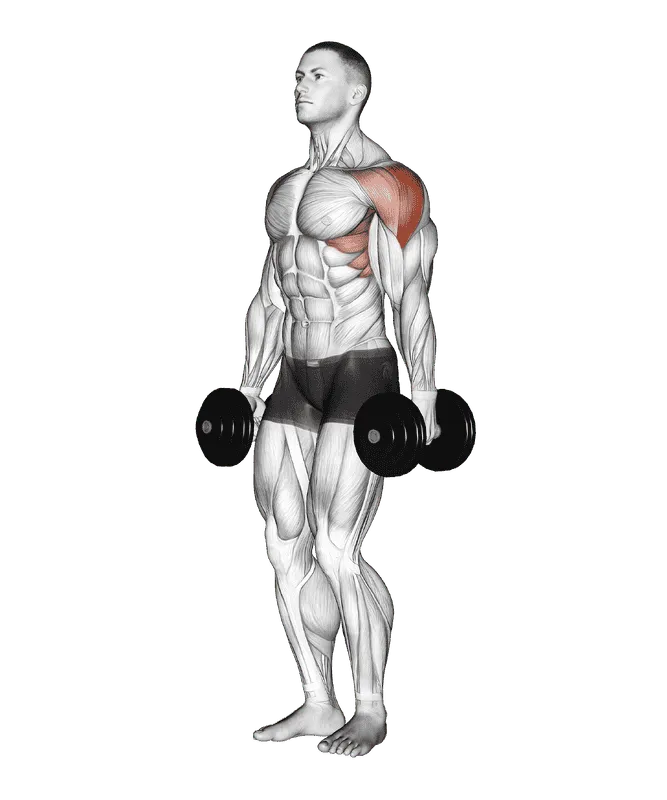
5 Dumbbell Lateral Raise - Sets
- 3
- Reps
- 12–15
- Rest
- 60 s
-
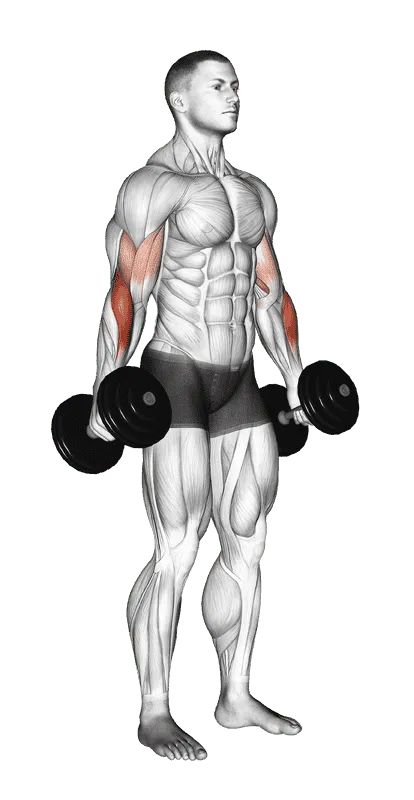
6 Dumbbell Hammer Curl - Sets
- 2
- Reps
- 10–15
- Rest
- 60 s
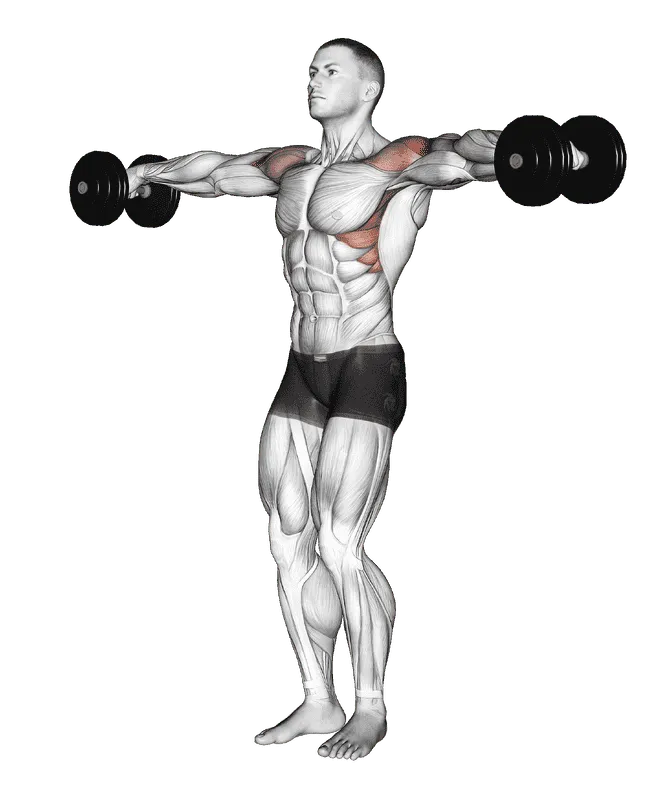
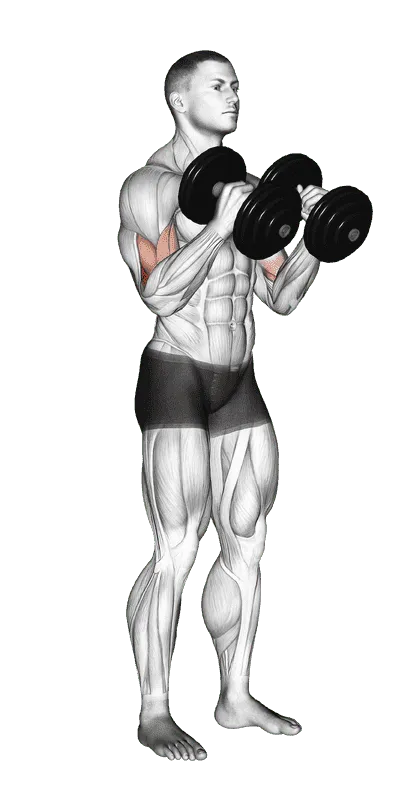
Day 2: lunge, overhead press and hinge
Day 2
-
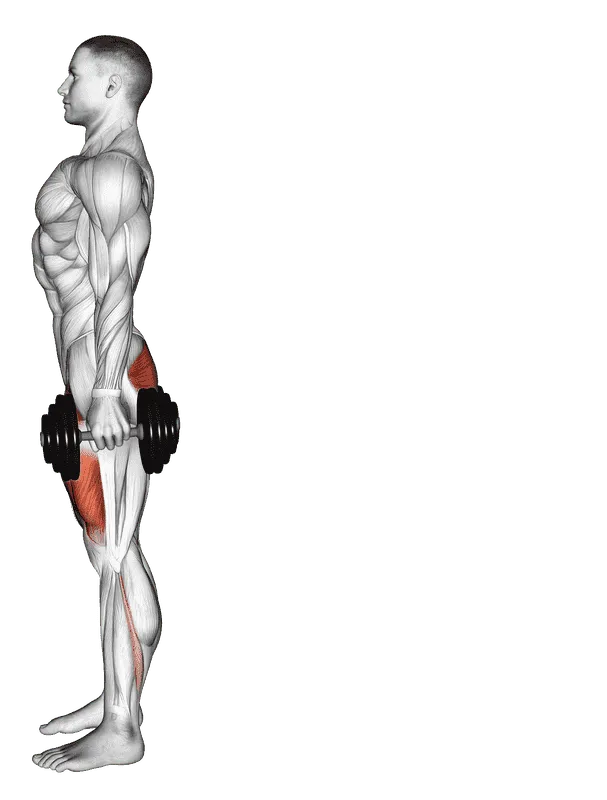
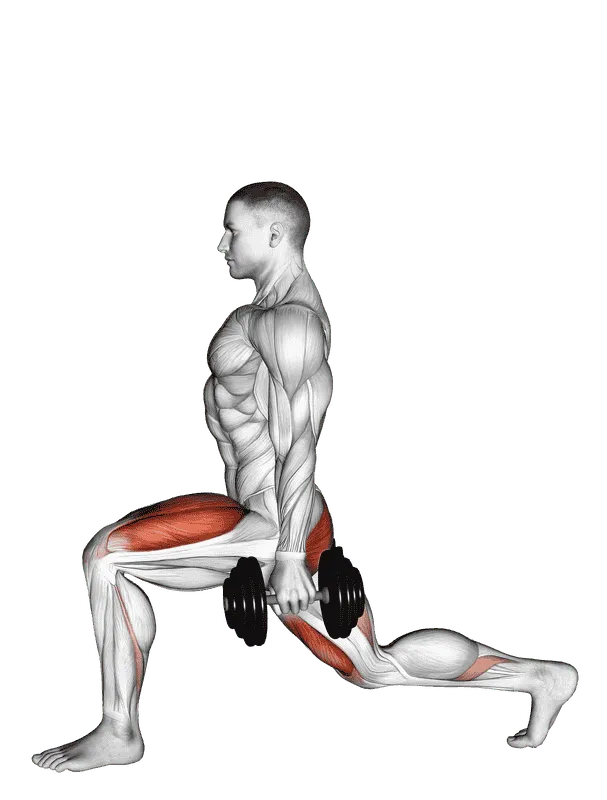
1 Dumbbell Rear Lunge - Sets
- 3
- Reps
- 8–12
- Rest
- 90 s
-
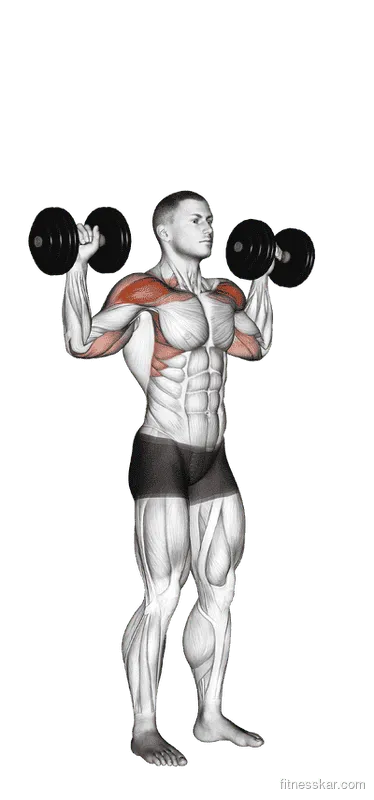
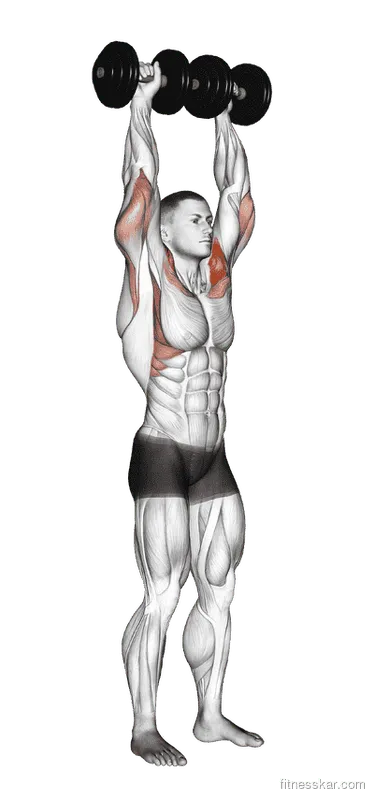
2 Dumbbell Standing Overhead Press - Sets
- 3
- Reps
- 8–12
- Rest
- 120 s
-
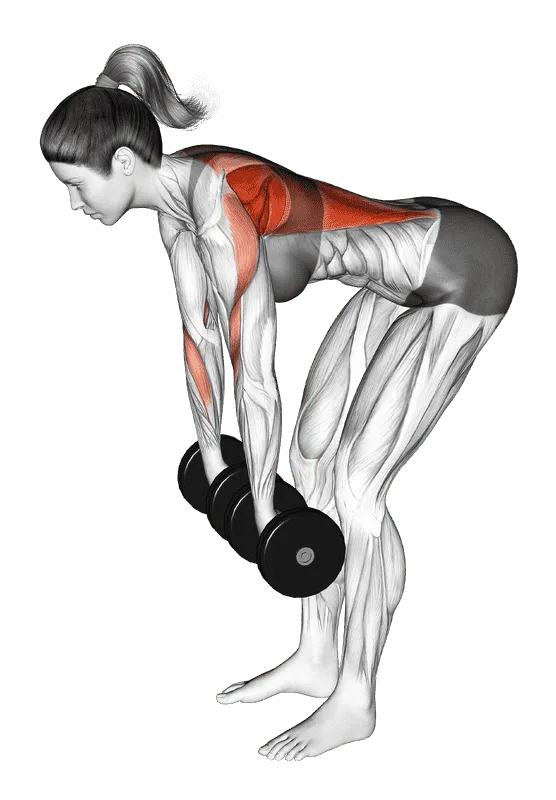
3 Dumbbell Pronated Grip Row - Sets
- 3
- Reps
- 10–12
- Rest
- 90 s
-
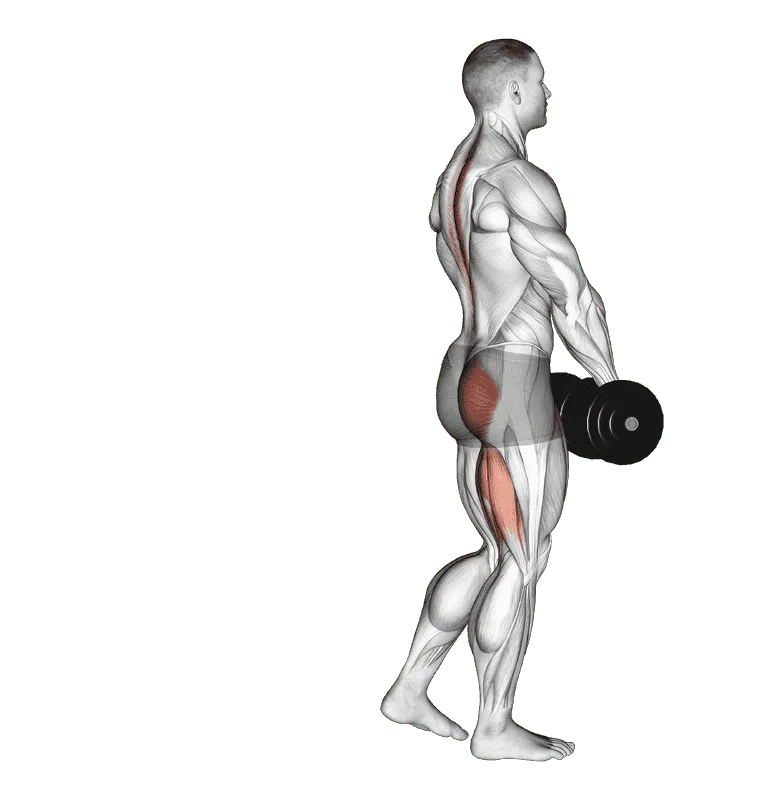
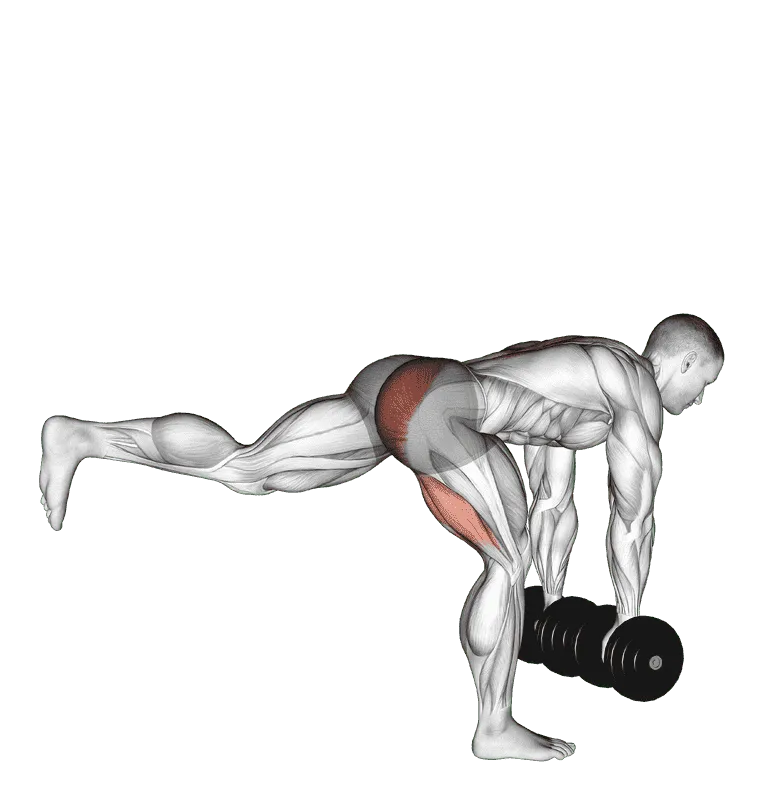
4 Dumbbell Single-Leg Deadlift - Sets
- 3
- Reps
- 8–10
- Rest
- 90 s
-

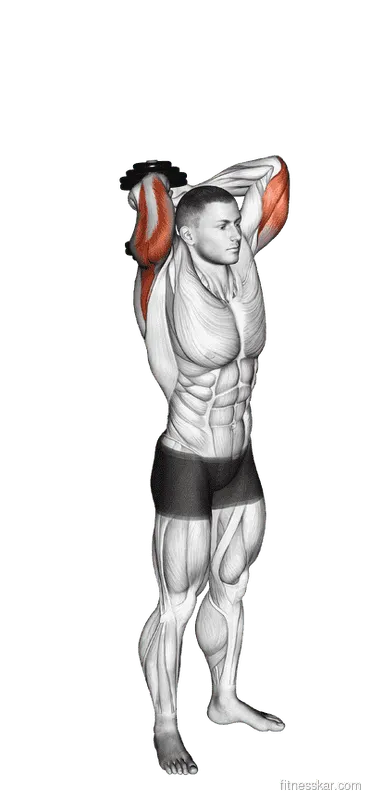
5 Dumbbell Standing Triceps Extension - Sets
- 3
- Reps
- 10–15
- Rest
- 60 s
-
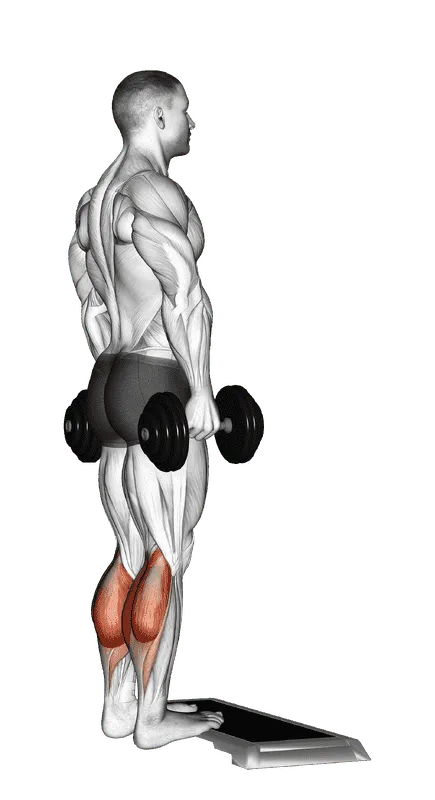
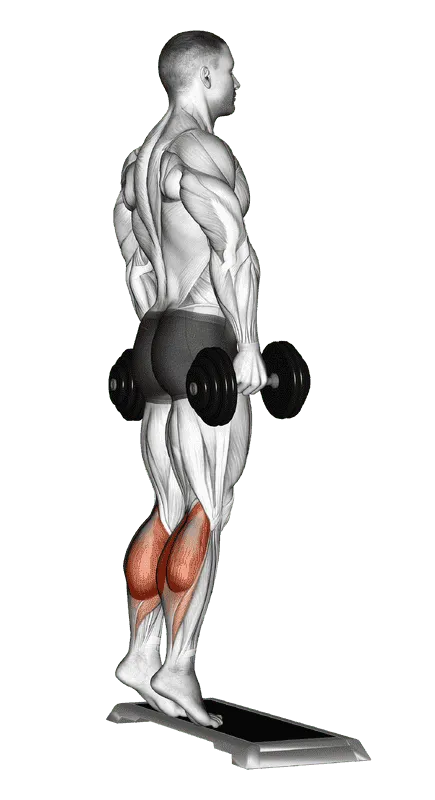
6 Dumbbell Standing Calf Raise - Sets
- 3
- Reps
- 12–20
- Rest
- 60 s

Day 3: split squat, push and carry
Day 3
-

1 Dumbbell Bulgarian Split Squat - Sets
- 3
- Reps
- 8–12
- Rest
- 90 s
-
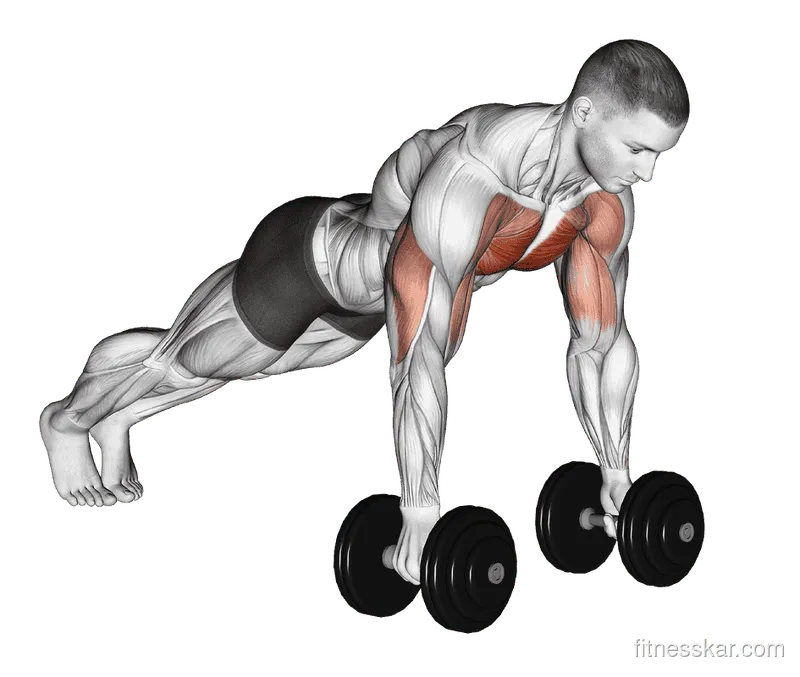
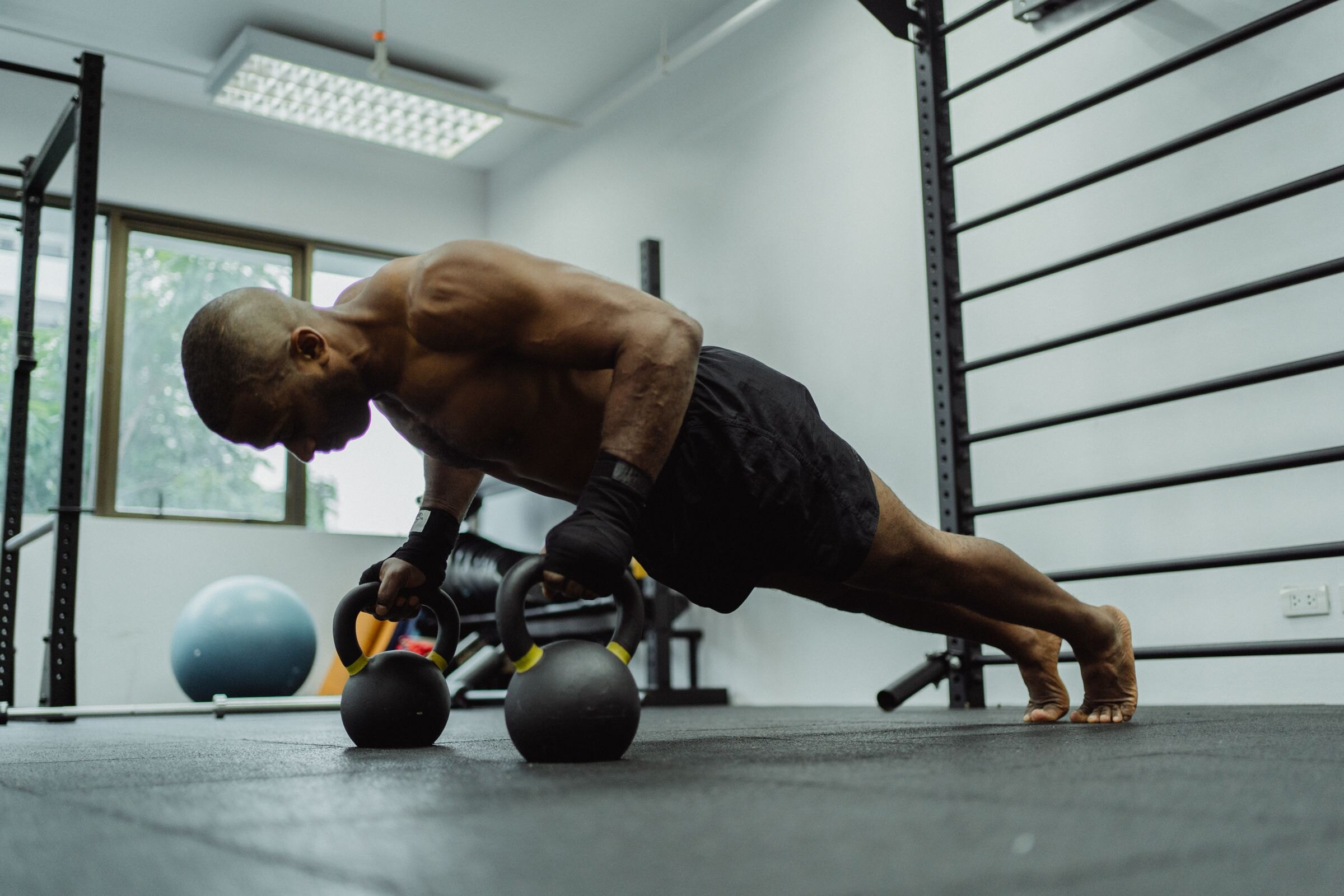
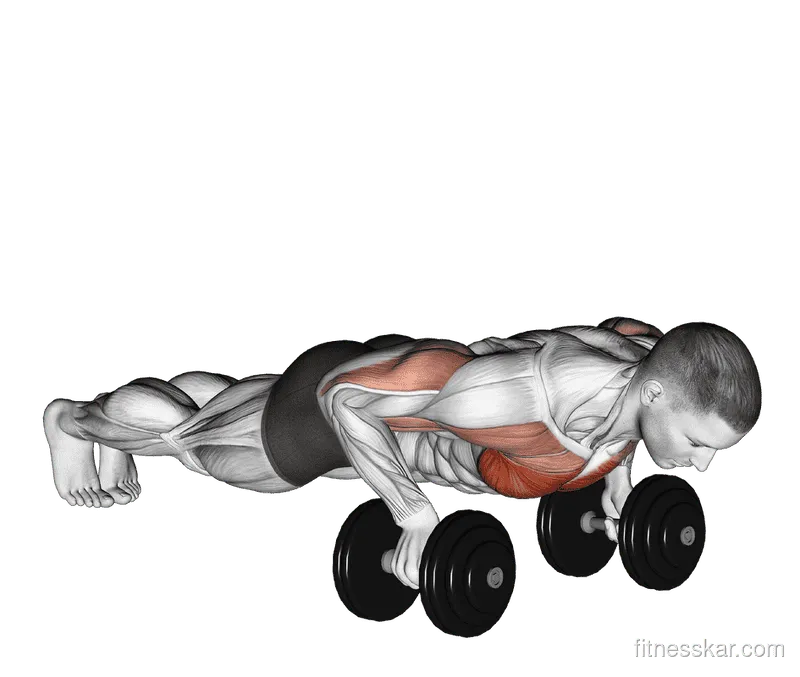
2 Deep Push-Up - Sets
- 3
- Reps
- 8–15
- Rest
- 90 s
-

3 Dumbbell One-Arm Row (Rack Support) - Sets
- 3
- Reps
- 10–12
- Rest
- 90 s
-

4 Dumbbell Rear Lateral Raise - Sets
- 3
- Reps
- 12–15
- Rest
- 60 s
-
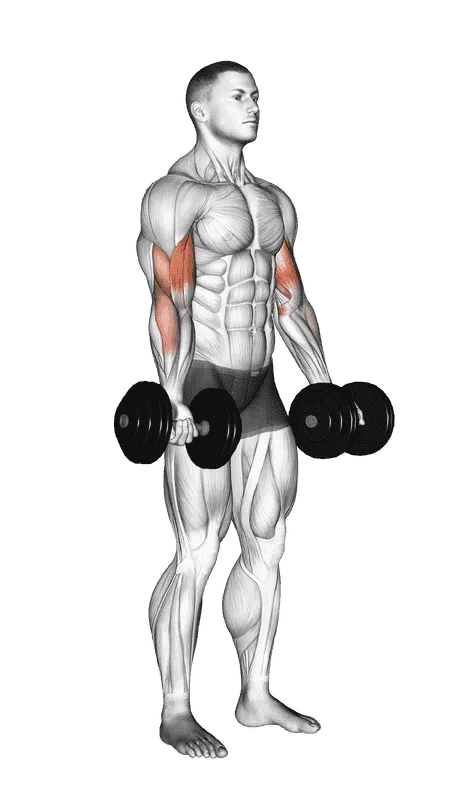
5 Dumbbell Biceps Curl - Sets
- 2
- Reps
- 10–15
- Rest
- 60 s
-
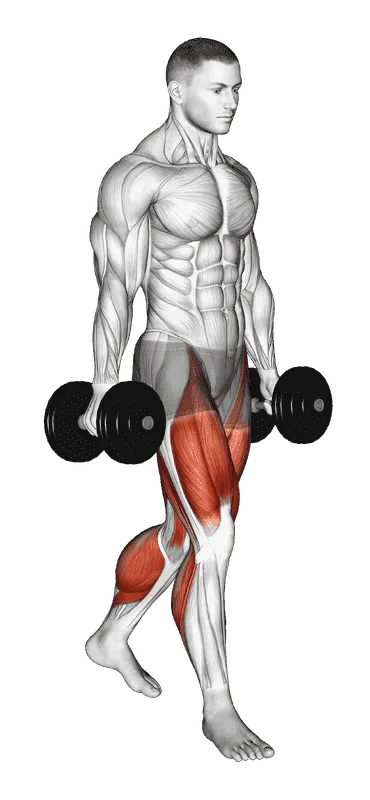
6 Farmer's Walk - Sets
- 3
- Rest
- 90 s
- Duration
- 30–45 sec

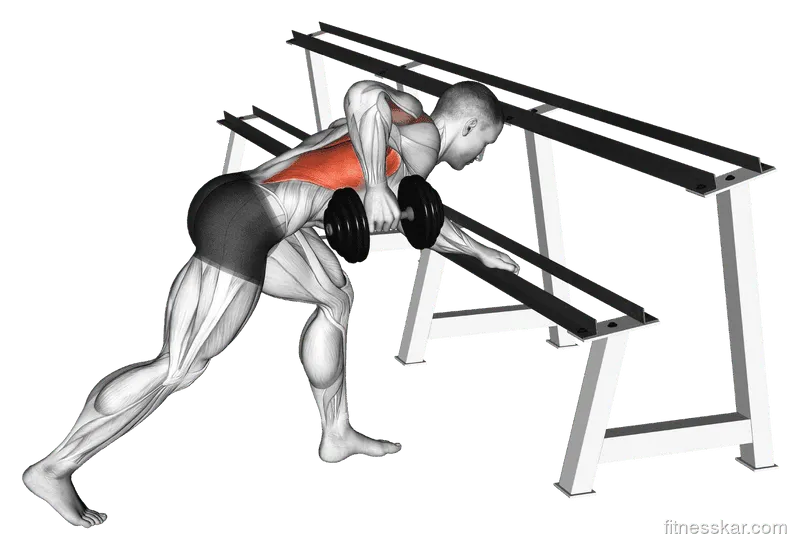

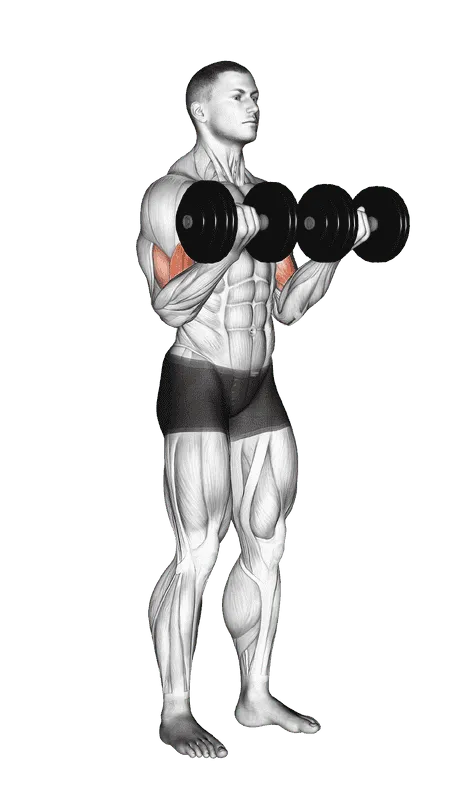
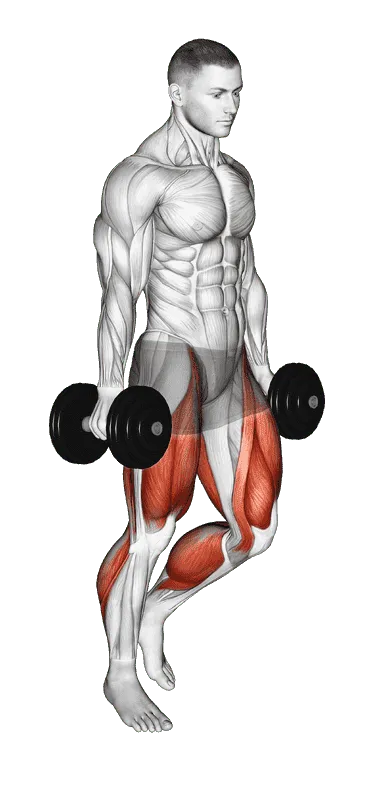
Stop most sets one to three reps short of failure, with clean technique on every rep. Keep a simple log of the weight and reps for each exercise, because it tells you exactly when to progress.
How to progress when your weights are fixed
Progressive overload means asking your muscles to do a little more over time. The classic ACSM guideline is to raise the load by 2 to 10% once you can do one or two reps more than your target.[4] With dumbbells that is often impossible: going from 10 kg to 12.5 kg is a 25% jump, and fixed pairs may only come in bigger steps. Use these tools instead, roughly in this order.
- Add reps first. Work within a range such as 8 to 12. When you reach 12 on every set with good form, it is time to make the exercise harder. In an eight-week study of trained lifters, adding reps at the same load produced leg muscle and strength gains similar to adding load.[5]
- Add a set. Moving from three to four sets for the muscles you most want to grow increases your weekly volume, and more weekly sets are linked to more muscle growth.[6]
- Slow the lowering phase. Taking three seconds to lower the weight, or pausing for a second at the bottom, makes a fixed dumbbell harder and helps you reach a genuinely hard set within your rep range.
- Switch to a harder variation. One-leg and one-arm exercises put the whole dumbbell and more of your body weight on a single limb. Move from goblet squats to Bulgarian split squats, from Romanian deadlifts to single-leg deadlifts, and from two-arm presses to one-arm presses.
- Go higher in reps, and closer to failure. A meta-analysis found that light loads build about as much muscle as heavy ones when every set is taken to failure, although heavy loads build more maximal strength.[7] Sets of 15 to 25 with a lighter dumbbell still work when they are hard.
- Buy heavier dumbbells. Once you can do more than about 25 reps of an exercise, sets get long and uncomfortable, and a heavier pair or a wider adjustable set becomes the more efficient option.
| Tool | Lower-body example | Upper-body example |
|---|---|---|
| Add reps | Goblet squat from 3 × 8 to 3 × 12 | Overhead press from 3 × 8 to 3 × 12 |
| Add a set | Romanian deadlift from 3 to 4 sets | Rows from 3 to 4 sets |
| Slow the tempo | Three-second lowering on split squats | Pause at the bottom of the floor press |
| Harder variation | Bulgarian split squat, single-leg deadlift | Deep push-up, one-arm shoulder press |
| Heavier dumbbells | When you pass about 25 reps | When you pass about 25 reps |
For the principle behind all of this, read our guide to progressive overload.
Want a ready-made program?
If you prefer to follow a structured plan, this free beginner program uses the same approach.
FAQ
Frequently asked questions
Can you build muscle with just dumbbells?
Yes. Dumbbells can train every major muscle group, and research shows that the type of equipment matters much less than effort, volume and progression. Take your sets close to failure, add reps or sets over time, and move to harder variations when needed.
What weight dumbbells should I buy?
An adjustable pair that goes from about 2.5 kg to 20 kg or more per hand suits most beginners. With fixed pairs, start with a light pair for shoulder raises and a heavy pair for squats and Romanian deadlifts.
Do I need a bench?
No. Press on the floor, support rows on a sturdy chair, and use the chair for Bulgarian split squats. A bench adds a few options and a longer range of motion for presses, but it is not essential.
Is a full-body plan better than a split?
If you train three days a week, full-body sessions let you work each muscle two or three times a week. If you train four to six days, a split such as push, pull, legs works well too.
How long until I see results?
Most people notice strength gains within the first few weeks. Visible changes in muscle size take longer, usually a few months of consistent training with enough protein and sleep.
Sources
- Currier BS, D'Souza AC, Singh MAF, et al. American College of Sports Medicine position stand. Resistance training prescription for muscle function, hypertrophy, and physical performance in healthy adults: an overview of reviews. Medicine & Science in Sports & Exercise. 2026. pubmed.ncbi.nlm.nih.gov/41843416/ ↩
- Saeterbakken AH, van den Tillaar R, Fimland MS. A comparison of muscle activity and 1-RM strength of three chest-press exercises with different stability requirements. Journal of Sports Sciences. 2011. pubmed.ncbi.nlm.nih.gov/21225489/ ↩
- Schoenfeld BJ, Ogborn D, Krieger JW. Effects of resistance training frequency on measures of muscle hypertrophy: a systematic review and meta-analysis. Sports Medicine. 2016. pubmed.ncbi.nlm.nih.gov/27102172/ ↩
- American College of Sports Medicine. American College of Sports Medicine position stand. Progression models in resistance training for healthy adults. Medicine & Science in Sports & Exercise. 2009. pubmed.ncbi.nlm.nih.gov/19204579/ ↩
- Plotkin D, Coleman M, Van Every D, et al. Progressive overload without progressing load? The effects of load or repetition progression on muscular adaptations. PeerJ. 2022. pubmed.ncbi.nlm.nih.gov/36199287/ ↩
- Schoenfeld BJ, Ogborn D, Krieger JW. Dose-response relationship between weekly resistance training volume and increases in muscle mass: a systematic review and meta-analysis. Journal of Sports Sciences. 2017. pubmed.ncbi.nlm.nih.gov/27433992/ ↩
- Schoenfeld BJ, Grgic J, Ogborn D, Krieger JW. Strength and hypertrophy adaptations between low- vs. high-load resistance training: a systematic review and meta-analysis. Journal of Strength and Conditioning Research. 2017. pubmed.ncbi.nlm.nih.gov/28834797/ ↩