The push-up is one of the best upper-body exercises you can do, and one of the easiest to scale. With the right variation, it can challenge a complete beginner and an experienced lifter alike.
It also builds real muscle. In an eight-week study, push-ups adjusted to match 40% of a person's bench press max built similar chest and triceps muscle to the bench press at the same load.[1] In trained university students, five weeks of push-ups loaded with elastic bands to a six-rep max produced strength gains similar to bench pressing.[2] And in a four-week trial, men who kept moving to harder push-up variations improved their bench press max, just as a bench-training group did.[3] The key in every case is the same: the push-up has to stay hard.
What makes a push-up harder or easier
Three things change how much work a push-up asks of you:
- Body angle. In a force-plate study, push-ups with the hands raised on a box or done from the knees put less load on the arms than any other version, while push-ups with the feet raised put more.[4]
- Depth. Your arms support more of your weight at the bottom of a push-up than at the top, and the difference is even bigger in knee push-ups.[5] That is why the last few centimeters are the hardest, and why cutting depth makes a set so much easier.
- Hand position. Push-ups with a narrow hand position produced more chest and triceps activity than a wide hand position.[6]
Beyond these, you can add load with a band, add speed with explosive reps, or shift more weight onto one arm.
Perfect push-up technique
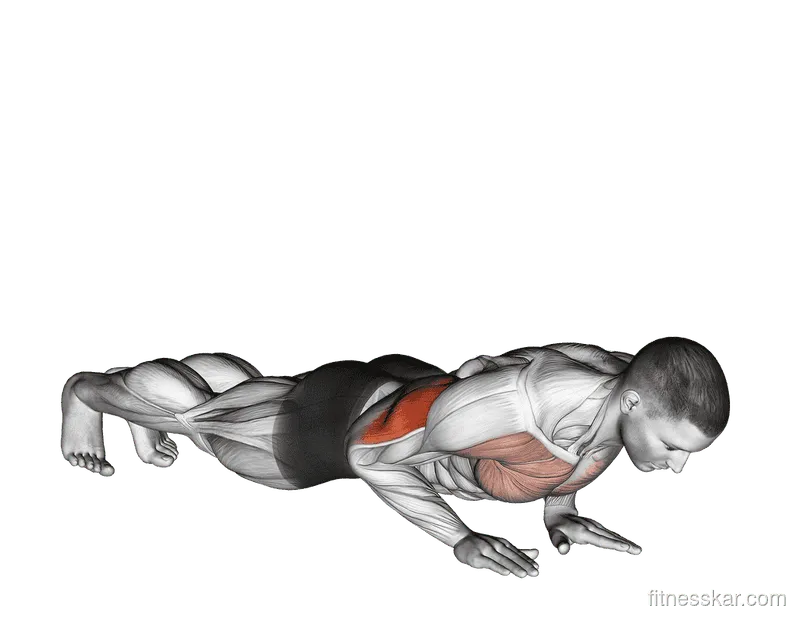
Every variation below uses the same basic form:
- Place your hands slightly wider than your shoulders, fingers pointing forward.
- Squeeze your glutes and brace your abs so your body forms one straight line from head to heels.
- Keep your head in line with your spine; look at the floor just ahead of your hands.
- Lower until your chest is a few centimeters from the floor, with your elbows angled back rather than flared straight out to the sides.
- Press back up until your arms are straight, without letting your hips lead.
The most common mistakes are sagging hips, half reps and a head that drops toward the floor before the chest does. If you cannot keep perfect form, drop one level.
Beginner: build the base
1. Wall push-up
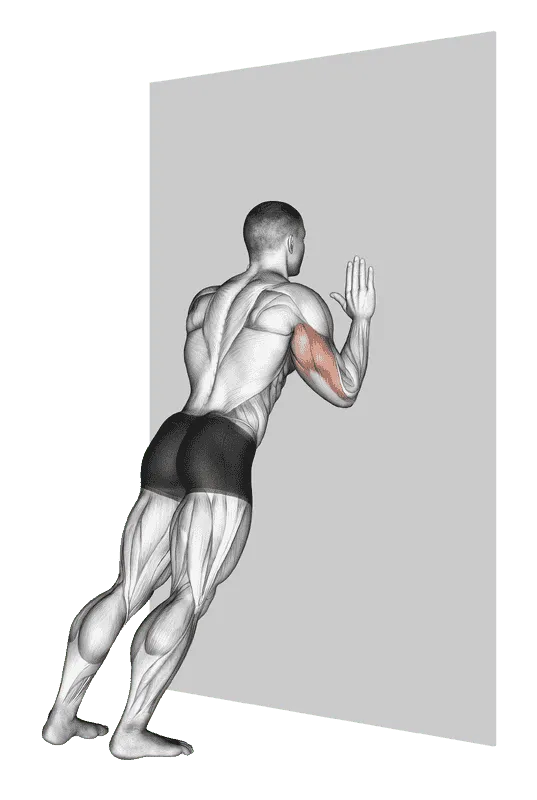
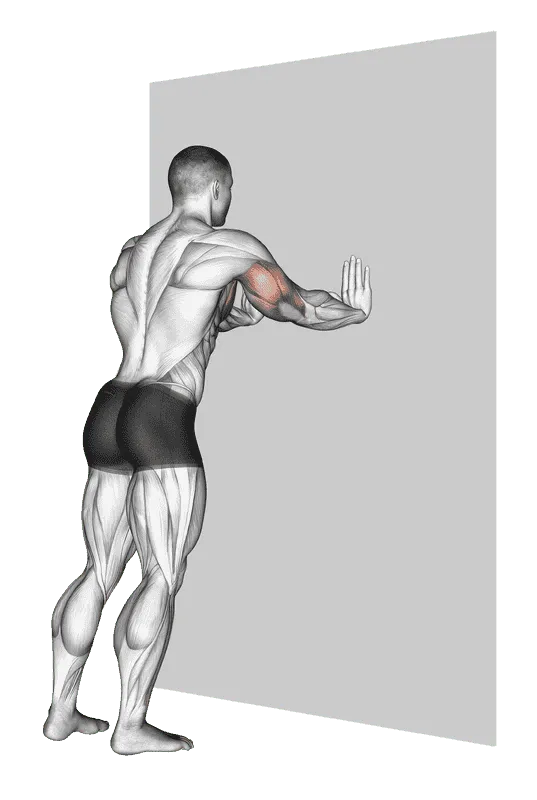
- Sets
- 3
- Reps
- 10–20
- Rest
- 60 s
The easiest version and a perfect place to learn the movement. Step your feet further back to make it harder.
2. Incline push-up
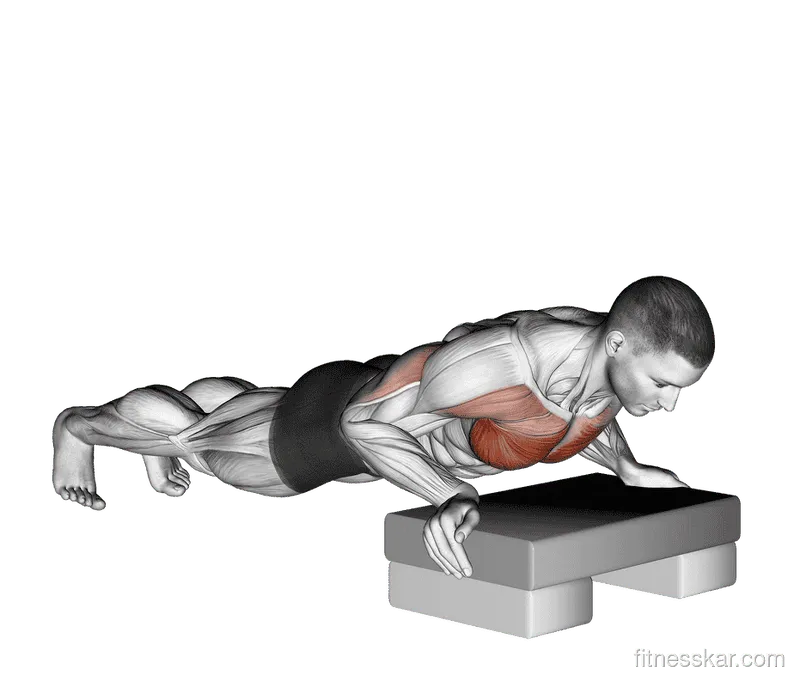
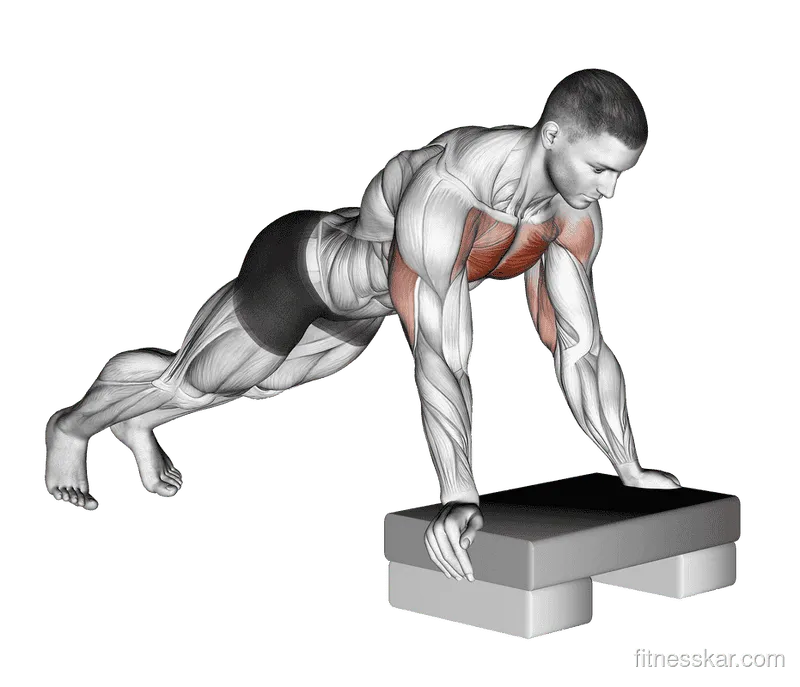
- Sets
- 3
- Reps
- 8–15
- Rest
- 60 s
This is the most adjustable step on the ladder. Work your way down from a kitchen counter to a bench, then to a low stair.
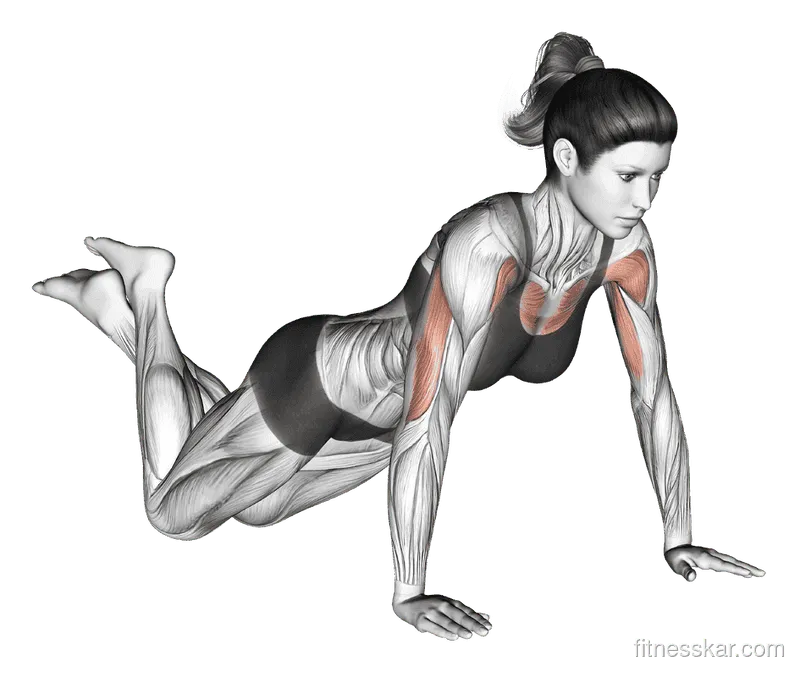
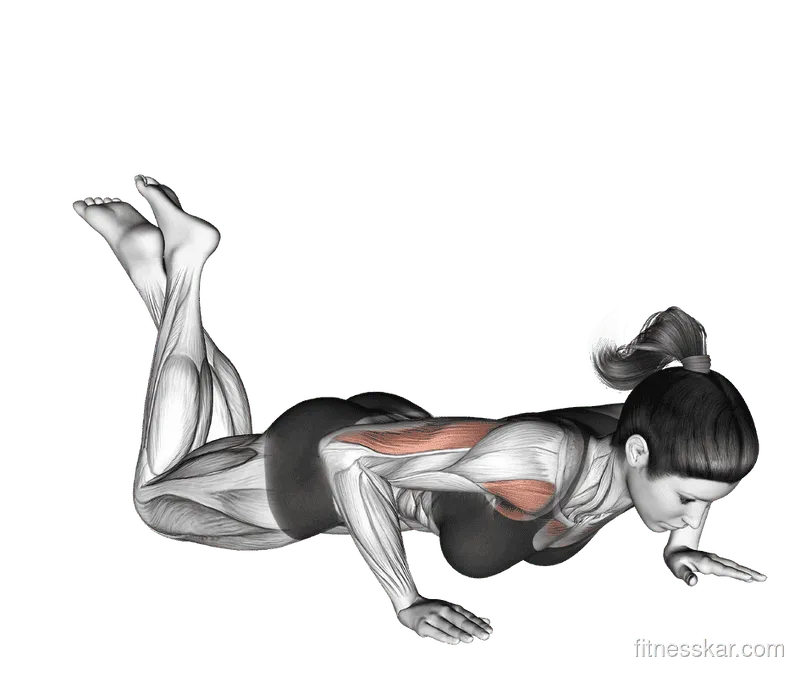
3. Knee push-up
- Sets
- 3
- Reps
- 8–15
- Rest
- 60 s
Knee push-ups are not cheating. As the force-plate study showed, they put less weight on your arms, which makes them a useful step toward the full push-up.
Intermediate: master the full push-up
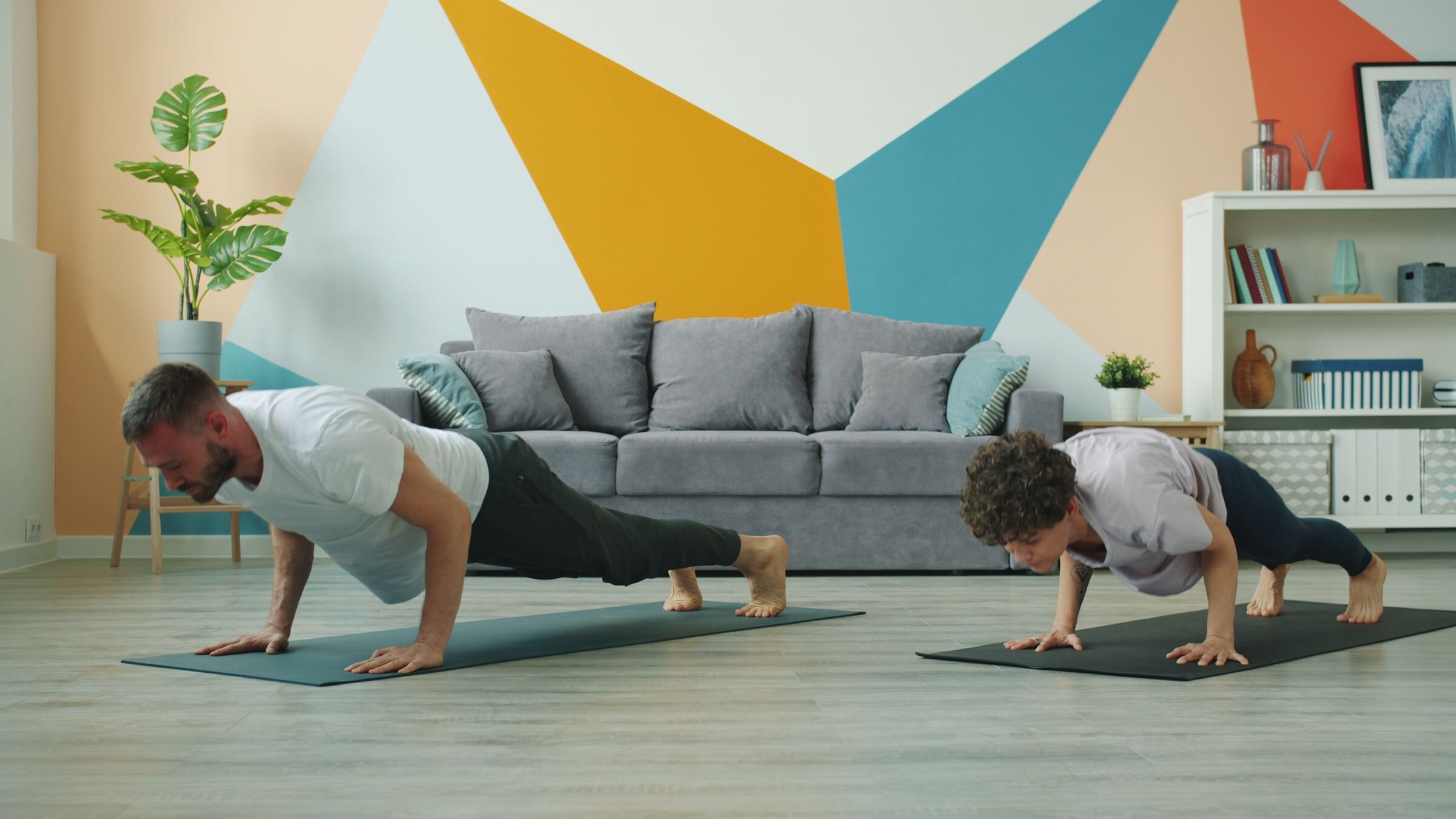
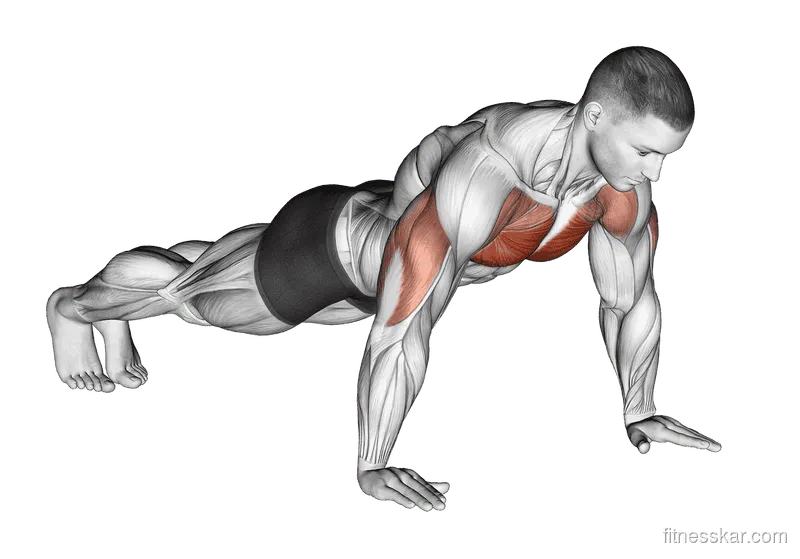
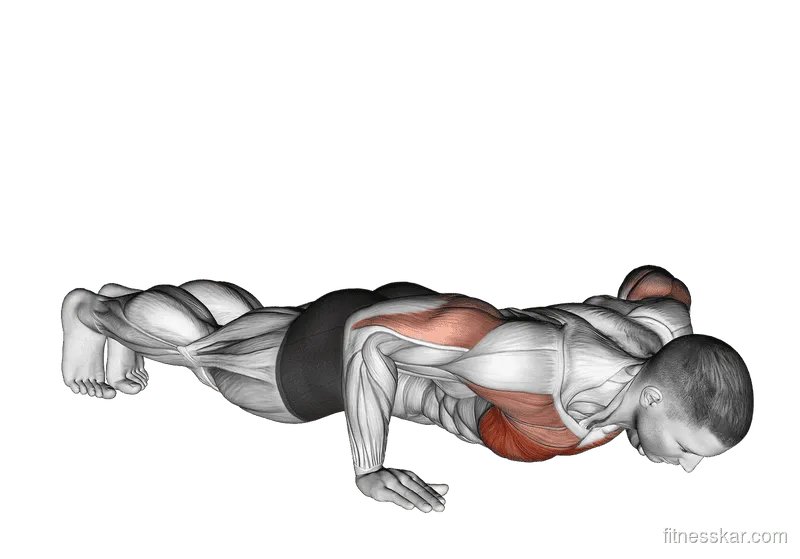
4. Standard push-up
- Sets
- 3
- Reps
- 6–15
- Rest
- 90 s
This is the benchmark. Most of the harder variations assume you can do at least 15 good reps.
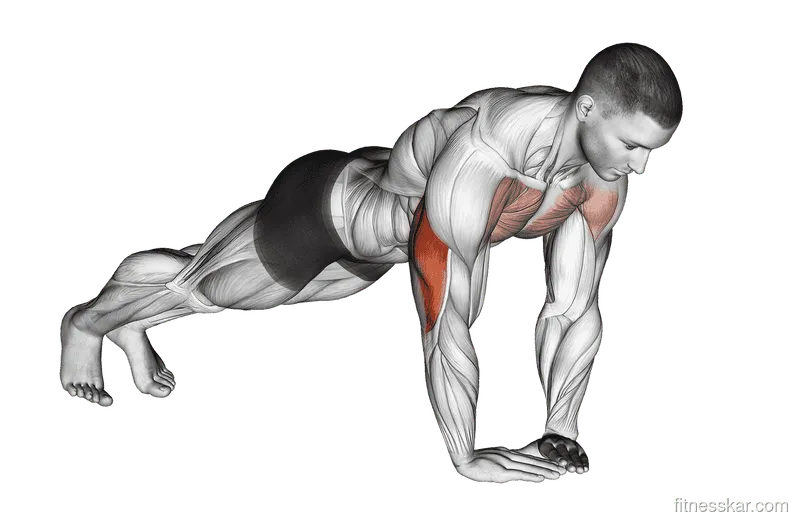
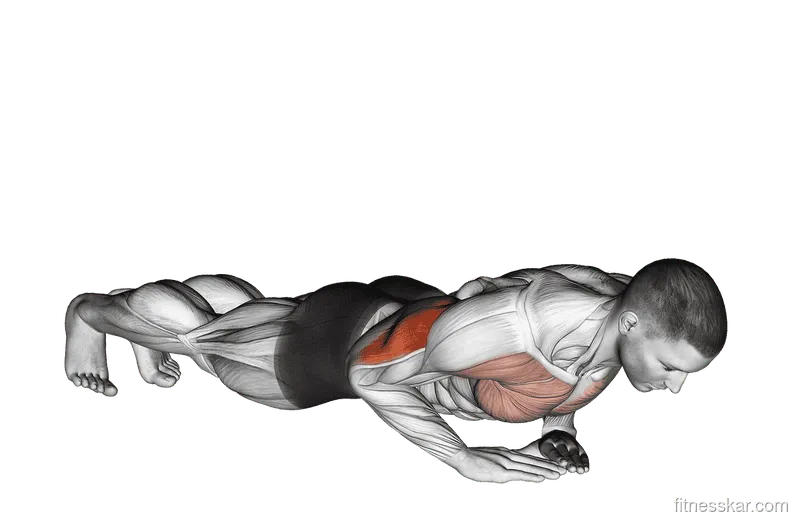
5. Close-grip and diamond push-ups
- Sets
- 3
- Reps
- 6–12
- Rest
- 90 s
Bringing your hands together makes your triceps work harder. Start with the close-grip push-up, with your hands just inside shoulder width, then move to the diamond. If your wrists or elbows complain, go back to the wider grip.
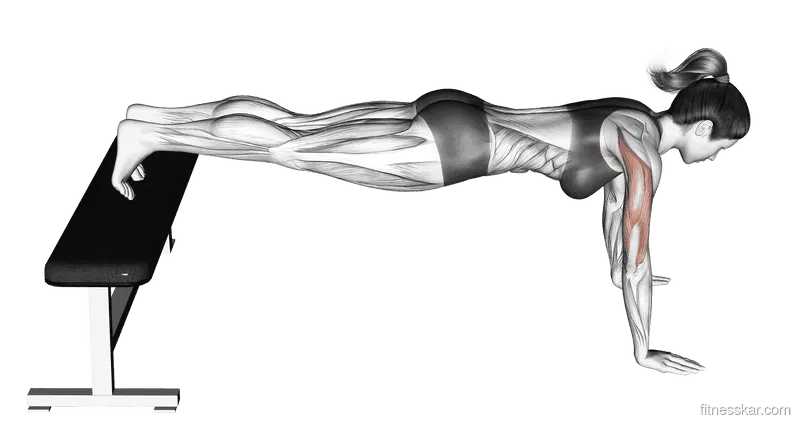
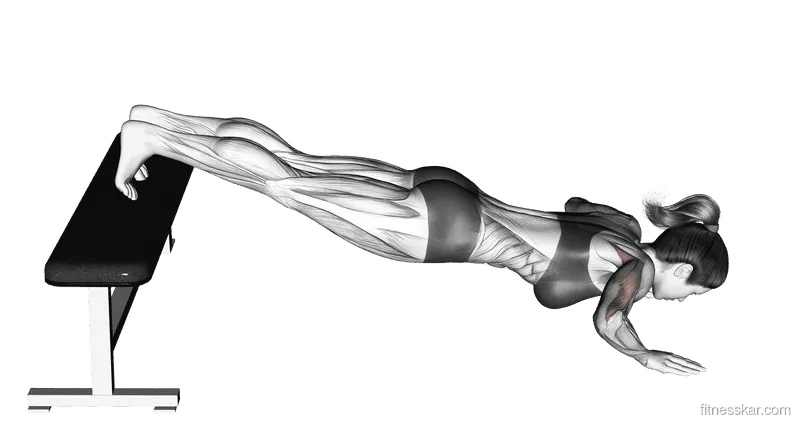
6. Decline push-up
- Sets
- 3
- Reps
- 6–12
- Rest
- 90 s
Raising your feet puts more of your weight on your arms and shoulders, the opposite of the incline push-up. Start with a low step and raise it over time.
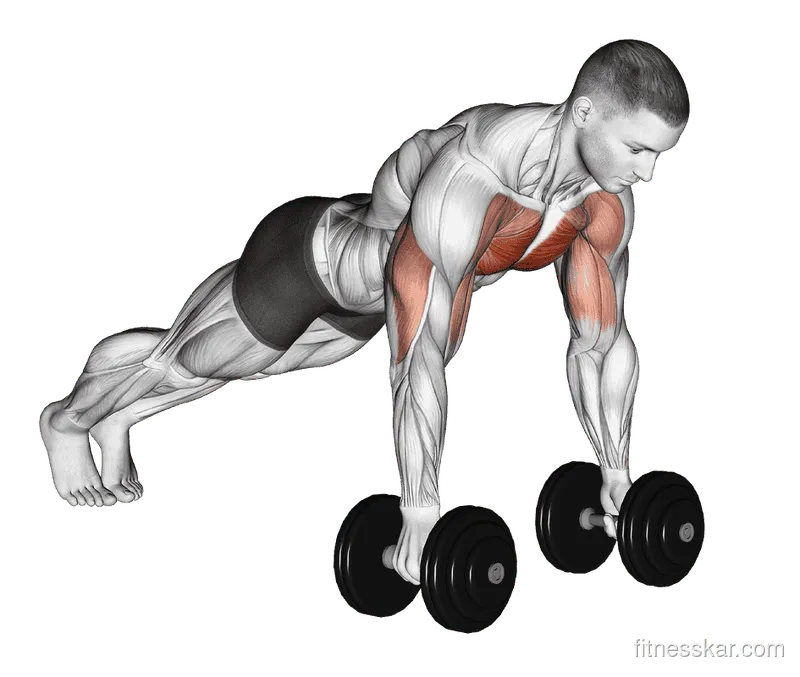
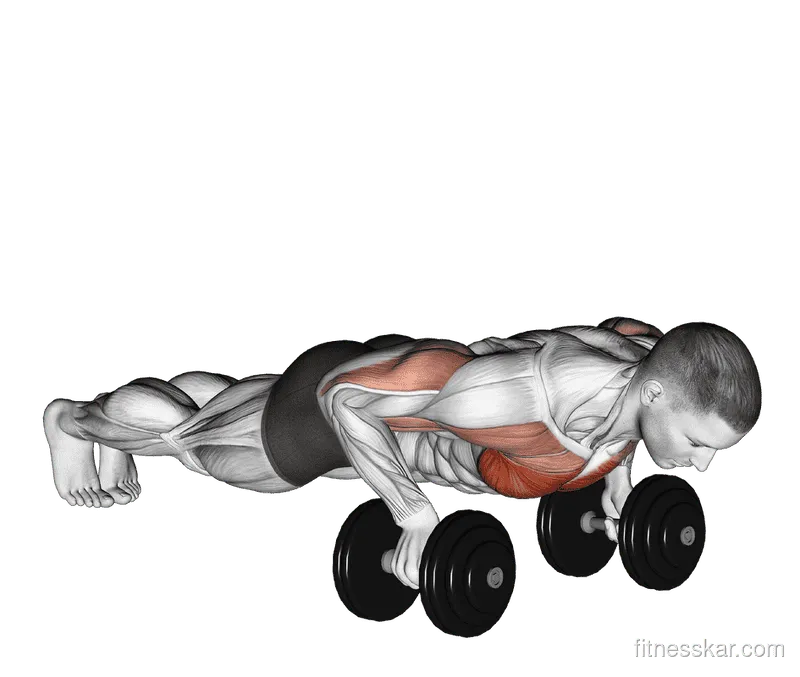
7. Deep push-up
- Sets
- 3
- Reps
- 6–12
- Rest
- 90 s
A deeper range of motion makes the hardest part of the push-up even longer. Go only as deep as your shoulders stay comfortable.
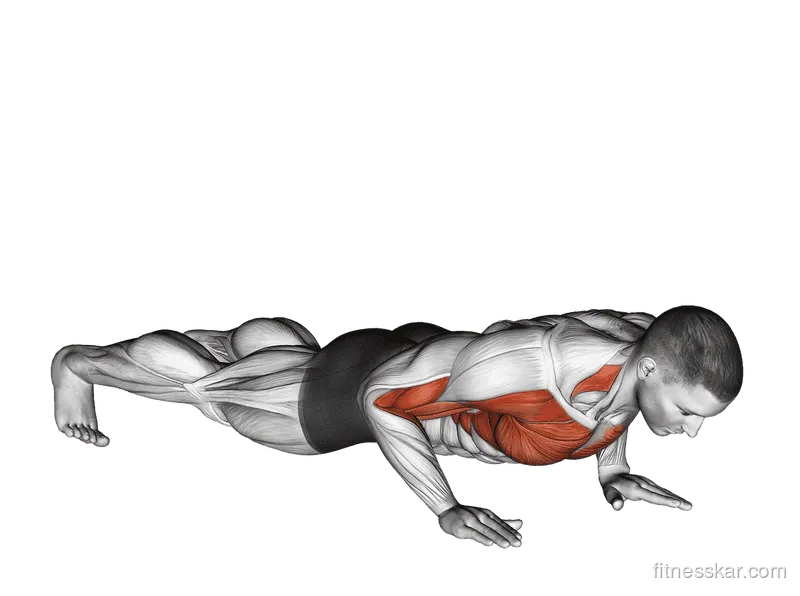
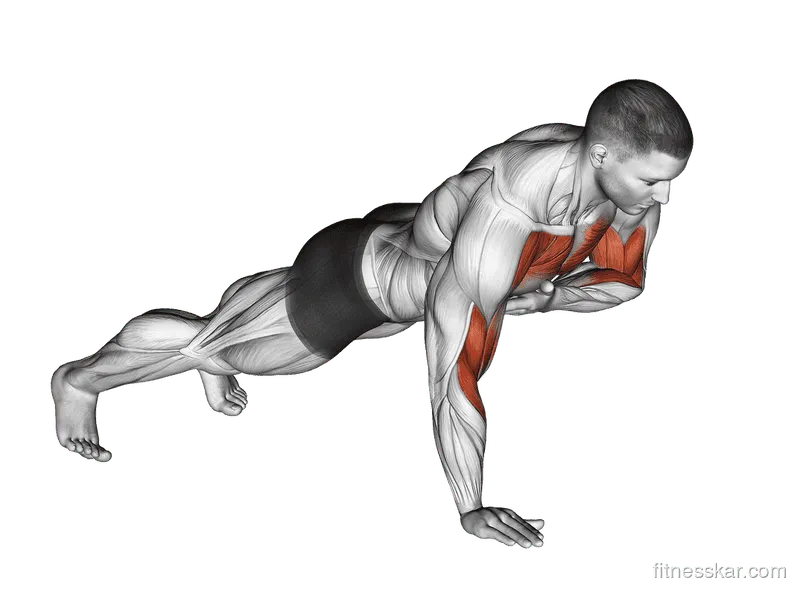
8. Shoulder-tap push-up
- Sets
- 3
- Reps
- 6–10
- Rest
- 90 s
Lifting one hand makes your core resist rotation and puts more weight on the supporting arm for a moment. Widen your feet to make it easier.
Advanced: add load, speed or leverage
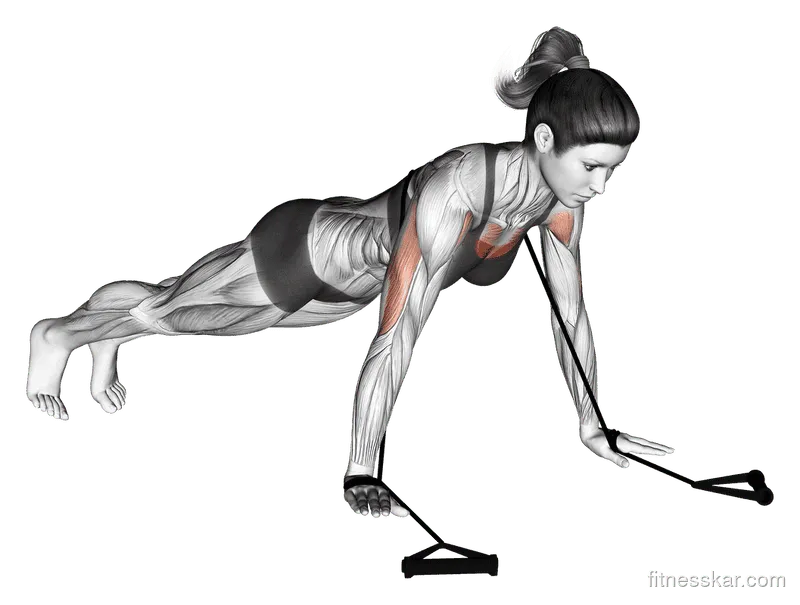
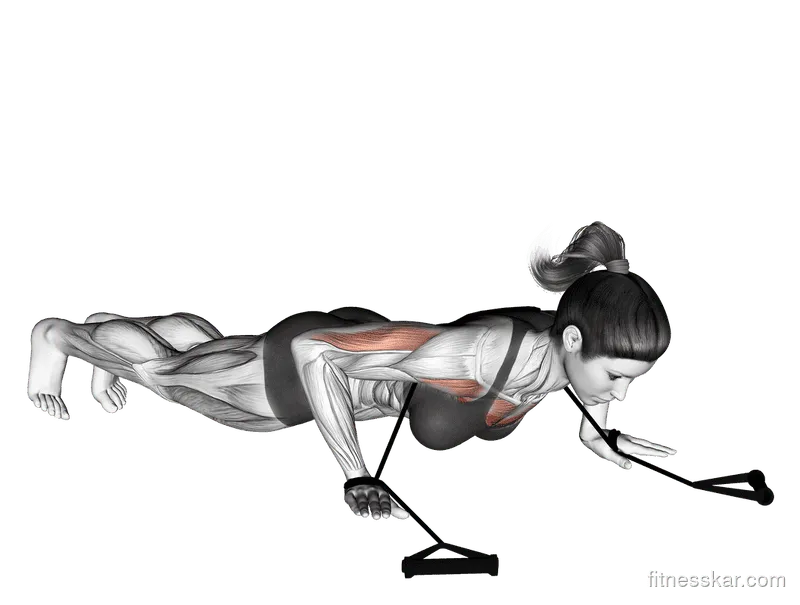
9. Resistance band push-up
- Sets
- 3
- Reps
- 6–10
- Rest
- 120 s
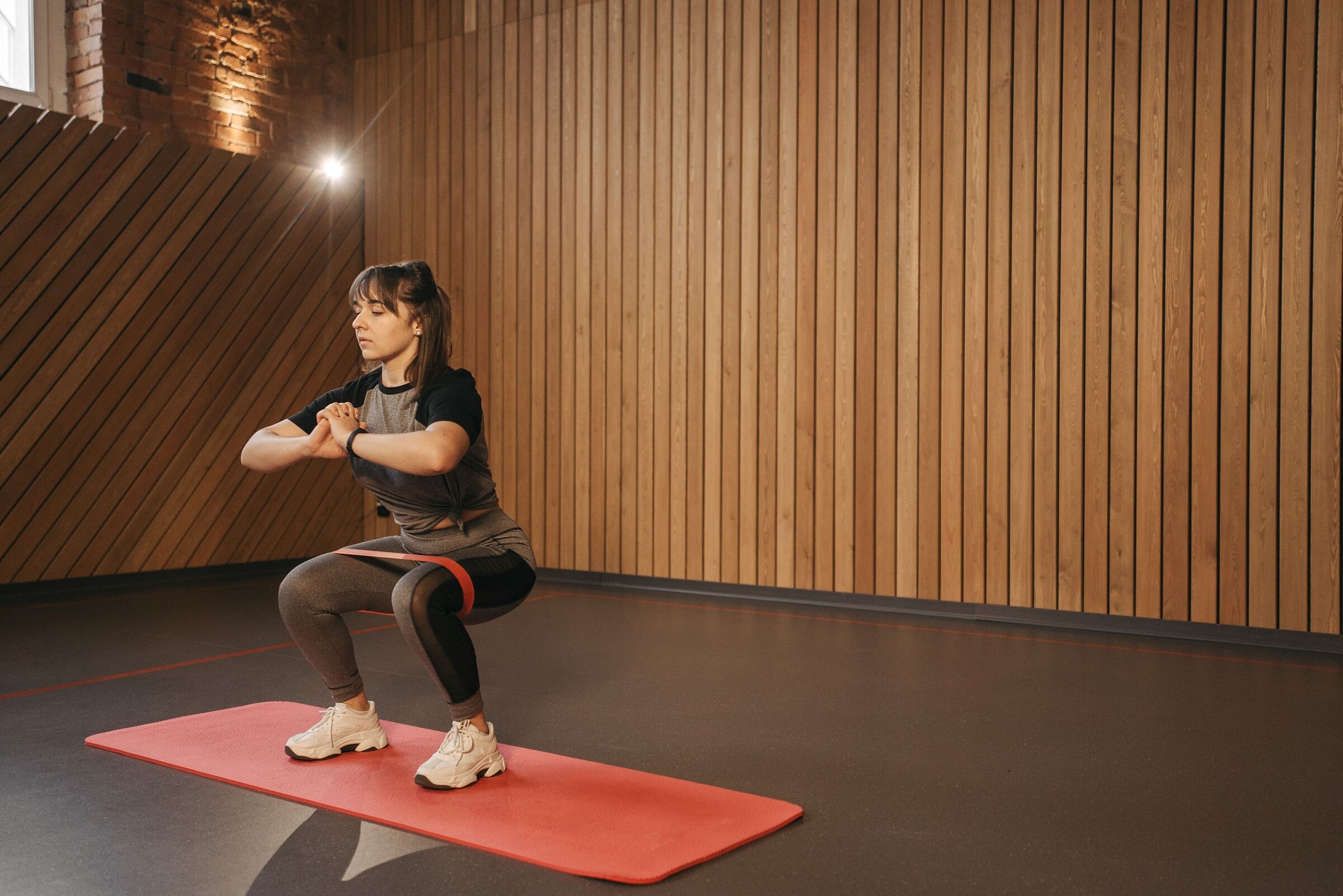
Bands add the most resistance at the top, where push-ups are easiest. This is the method used in the elastic-band study described at the start of this article, and it is the simplest way to keep push-ups heavy when bodyweight reps get too easy.
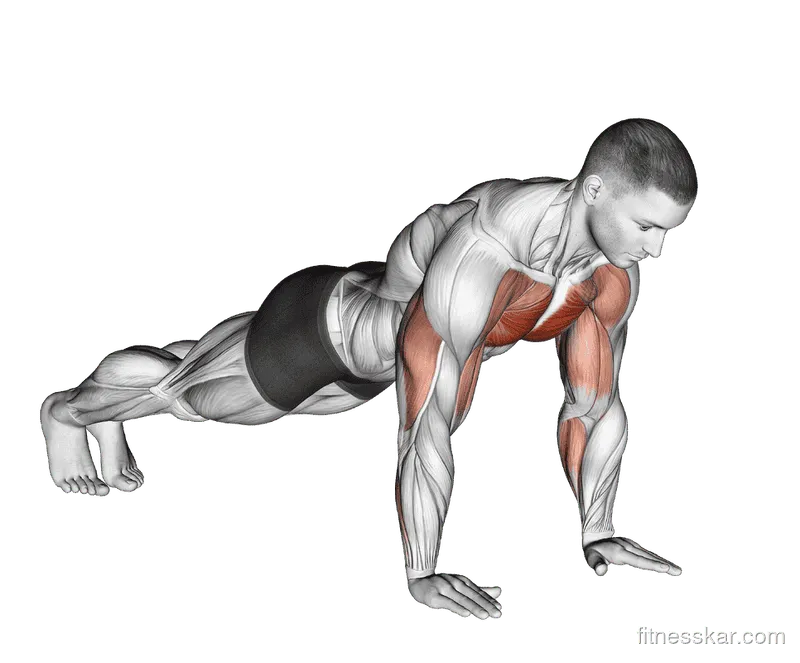
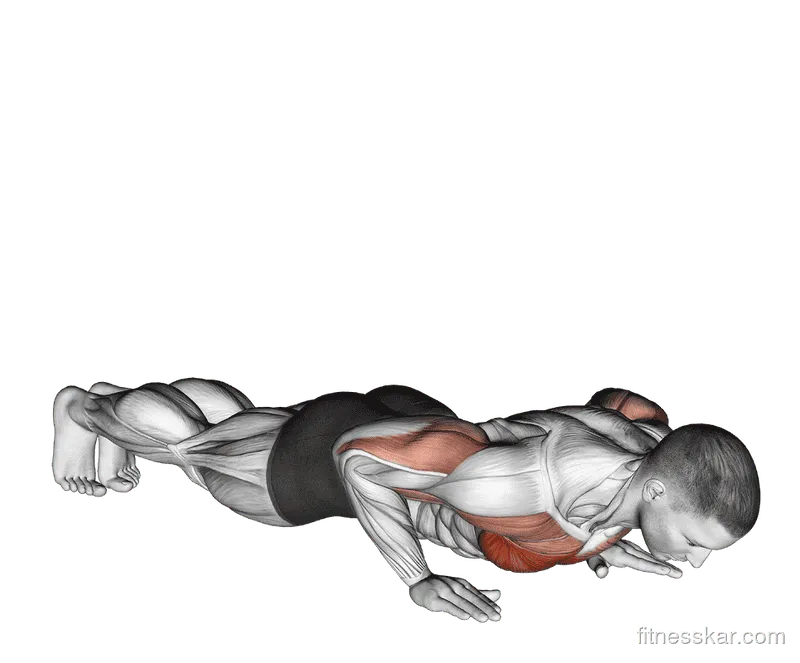
10. Plyometric and clap push-ups
- Sets
- 3
- Reps
- 5–8
- Rest
- 120 s
Explosive push-ups mainly train power. Once you can land them smoothly, progress to the clap push-up. Keep the reps low and stop before you get sloppy.
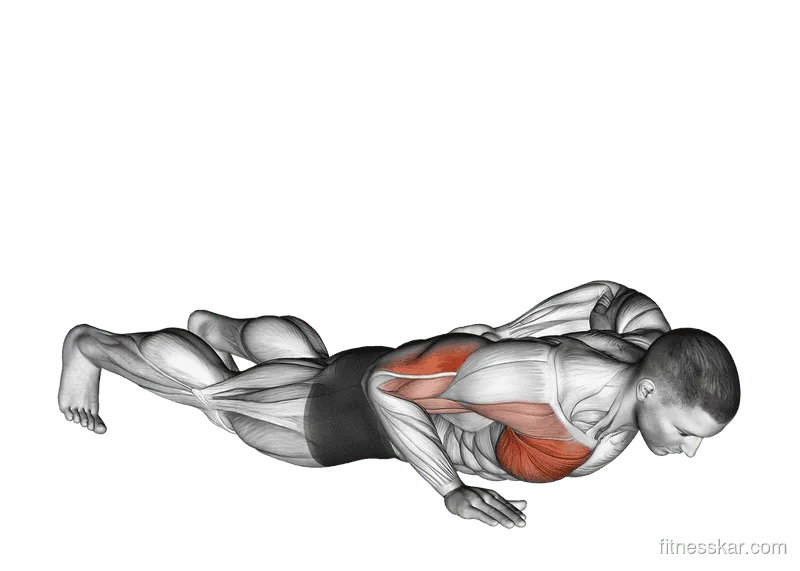
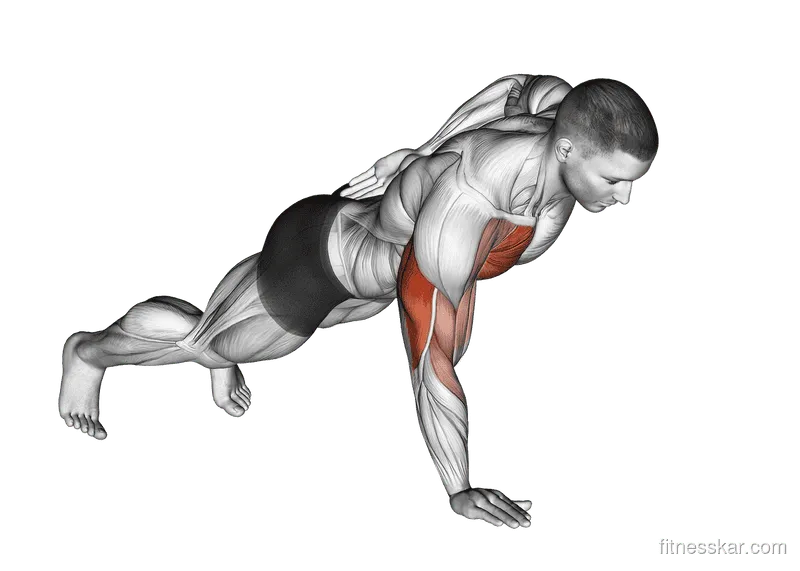
11. One-arm push-up
- Sets
- 3
- Reps
- 3–6
- Rest
- 120 s
The one-arm push-up is the final step for most people. Build up to it with incline one-arm push-ups on a bench, lowering the surface over time.
For your shoulders, the parallel goal is the handstand push-up against a wall, which builds on decline push-ups rather than on the one-arm path.
When to move up a level
Use this simple rule: when you can do 3 sets of 12 to 15 good reps, move to the next level.
If the next level is too hard for more than a few reps, split the difference. Lower the incline a little instead of jumping straight to the floor, or start each set with the harder version and finish it with the easier one. It is also normal to be at different levels for different goals: an advanced version for low-rep strength work and an easier one for higher-rep sets.
How to program push-ups
Train push-ups two or three times a week, with at least one day in between. On each day, do three or four sets and stop most of them one to three reps short of failure. A simple weekly structure:
| Day | What to do |
|---|---|
| Day 1 | 4 sets of 6 to 10 reps of your hardest current variation |
| Day 2 | 3 sets of 12 to 20 reps of one level easier |
| Day 3 (optional) | 3 sets of 8 to 12 reps of a hand-position variation such as the diamond push-up |
Push-ups train only the muscles that push, so balance them with the same number of sets of a pulling exercise such as the inverted row or towel row. You will find both in our guide to the best bodyweight exercises. If you also train in a gym, our chest exercise guide shows how push-ups fit next to presses.
FAQ
Frequently asked questions
How many push-ups should I do a day?
There is no magic daily number. Two or three sessions a week of three or four hard sets build strength and muscle well. If you like to practice every day, keep most of those sets well short of failure.
Are knee push-ups worth doing?
Yes. They put less weight on your arms, which lets you train the full range of motion with good form. Treat them as a step on the way to the full push-up, not as a lesser exercise.
Do push-ups build as much muscle as the bench press?
They can when the load is matched. One study found similar muscle growth with push-ups and bench presses at the same relative load, and another found similar strength gains when push-ups were loaded with elastic bands. Once bodyweight push-ups get easy, you need harder variations or added load to keep growing.
Which push-up works the triceps most?
In an EMG study, push-ups with a narrow hand position produced more triceps and chest activity than a wide hand position, so close-grip and diamond push-ups are the best choices.
What if push-ups hurt my wrists?
Hold push-up handles or a pair of hex dumbbells so your wrists stay straight, and warm up your wrists before training. If the pain continues, stop and have it checked by a doctor or physiotherapist.
Sources
- Kikuchi N, Nakazato K. Low-load bench press and push-up induce similar muscle hypertrophy and strength gain. Journal of Exercise Science & Fitness. 2017. pubmed.ncbi.nlm.nih.gov/29541130/ ↩
- Calatayud J, Borreani S, Colado JC, et al. Bench press and push-up at comparable levels of muscle activity results in similar strength gains. Journal of Strength and Conditioning Research. 2015. pubmed.ncbi.nlm.nih.gov/24983847/ ↩
- Kotarsky CJ, Christensen BK, Miller JS, Hackney KJ. Effect of progressive calisthenic push-up training on muscle strength and thickness. Journal of Strength and Conditioning Research. 2018. pubmed.ncbi.nlm.nih.gov/29466268/ ↩
- Ebben WP, Wurm B, VanderZanden TL, et al. Kinetic analysis of several variations of push-ups. Journal of Strength and Conditioning Research. 2011. pubmed.ncbi.nlm.nih.gov/21873902/ ↩
- Suprak DN, Dawes J, Stephenson MD. The effect of position on the percentage of body mass supported during traditional and modified push-up variants. Journal of Strength and Conditioning Research. 2011. pubmed.ncbi.nlm.nih.gov/20179649/ ↩
- Cogley RM, Archambault TA, Fibeger JF, et al. Comparison of muscle activation using various hand positions during the push-up exercise. Journal of Strength and Conditioning Research. 2005. pubmed.ncbi.nlm.nih.gov/16095413/ ↩