"Macros" are the three macronutrients that supply energy: protein, carbohydrate and fat. Protein and carbohydrate provide about 4 kcal per gram, and fat about 9 kcal per gram. Setting your macros simply means deciding how many grams of each to eat per day. Get the order right and the process is straightforward: calories first, then protein, then fat, then carbs.
Step 1: Set your calories
The ISSN's position stand on diets and body composition is clear: fat loss is driven by a sustained calorie deficit, and gaining lean mass is driven by a sustained calorie surplus together with increasingly demanding training.[1] It also concludes that a wide range of diets, from low-fat to low-carb, can be similarly effective for body composition.[1] So calories come first, and the exact carb-to-fat split is more flexible than most people think.
Estimate your maintenance calories
Start by estimating your resting energy expenditure with the Mifflin–St Jeor equation, developed from measurements in 498 healthy adults:[2]
- Men: 10 × weight (kg) + 6.25 × height (cm) − 5 × age (years) + 5
- Women: 10 × weight (kg) + 6.25 × height (cm) − 5 × age (years) − 161
Then multiply the result by your physical activity level (PAL). An FAO/WHO/UNU expert report classifies sedentary or lightly active lifestyles as a PAL of 1.40–1.69, active lifestyles as 1.70–1.99, and vigorously active lifestyles as 2.00–2.40. The same report notes that an hour of moderate-to-vigorous exercise every day can raise a desk worker's PAL from about 1.55 to 1.75.[3] If you have an office job and train three or four times a week, 1.6 is a reasonable starting point.
Any equation gives you the average for people like you, not a measurement of you. Treat the number as a first estimate and let your weight over the next few weeks confirm or correct it. The calculator below does the math for you.
Macro calculator
- Protein
- g
- Fat
- g
- Carbohydrates
- g
Protein 1.6–2.2 g per kg of body weight, fat about 25% of calories, carbohydrates fill the rest.
Set your target
- To lose fat: aim to lose about 0.5–1% of your body weight per week. Evidence-based guidelines for natural bodybuilders recommend this pace to keep as much muscle as possible.[4] In a study of elite athletes, those who cut their energy intake by about 19% lost about 0.7% of body weight per week and still gained lean mass, while a group that cut about 30% did not.[5] A starting deficit of about 20% below maintenance is sensible. If you have a lot of fat to lose, you can diet a little more aggressively; the leaner you are, the slower you should go.[1]
- To gain muscle: eat about 10–20% above maintenance, aiming to gain about 0.25–0.5% of body weight per week as a beginner or intermediate lifter. Advanced lifters should use a smaller surplus.[6] For more on choosing between the two, read bulking vs. cutting.
Step 2: Set your protein
Protein protects and builds muscle, so set it next.
- Muscle gain: 1.6–2.2 g per kg of body weight per day, spread over three to six meals.[6]
- Fat loss: go higher. For lean, trained lifters dieting for a contest, guidelines recommend 2.3–3.1 g per kg of lean body mass.[4] For someone at about 15% body fat, that is roughly 2.0–2.6 g per kg of total body weight.
These targets are for healthy adults. If you have kidney disease or reduced kidney function, diabetes or another medical condition, or you are pregnant or breastfeeding, check your calorie and protein targets with your doctor first.
For more detail, including how to split protein across your meals, see how much protein you need to build muscle.
Step 3: Set your fat
Don't cut fat to the bone. The ISSN's sports nutrition review notes that higher-fat diets appear to maintain testosterone levels better than low-fat diets.[7]
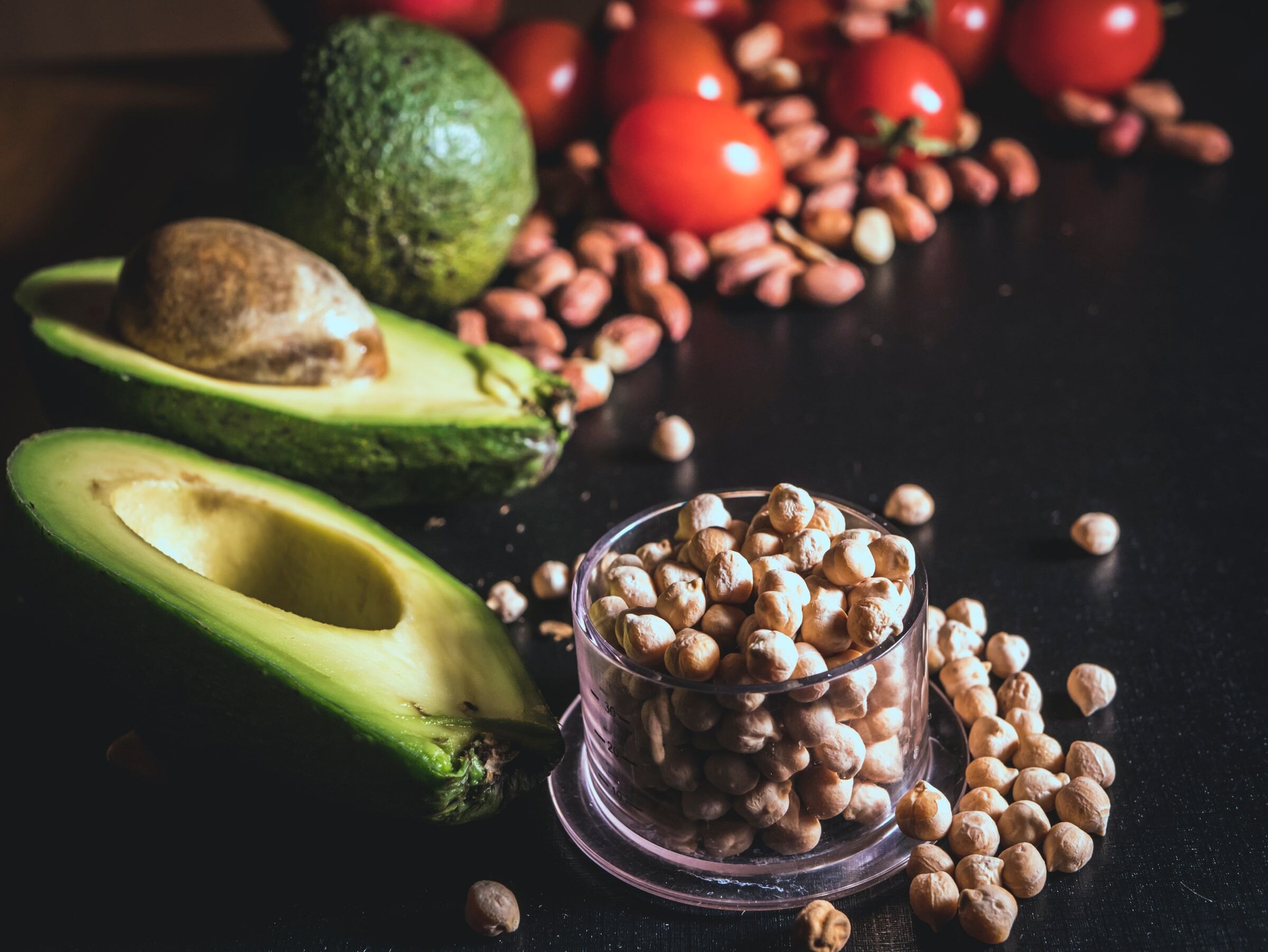
- A normal diet for general fitness includes about 0.5–1.5 g of fat per kg of body weight, or 25–35% of calories.[7] Off-season bodybuilding guidelines use the same 0.5–1.5 g/kg range.[6]
- When the goal is fat loss, intakes of 0.5–1 g/kg are commonly recommended, which can mean fat supplies as little as 20% of calories.[7] Contest-prep guidelines suggest 15–30% of calories from fat.[4]
Step 4: Fill the rest with carbohydrates
Carbohydrate fuels hard training, so it gets the calories that remain.
- People training for general fitness can usually meet their needs with about 3–5 g/kg per day, while athletes doing 2–3 hours of intense training on most days need about 5–8 g/kg.[7]
- When building muscle, off-season guidelines recommend at least 3–5 g/kg per day to support resistance training.[6]
To convert, subtract your protein and fat calories from your target, then divide what is left by 4.
Two worked examples
Example 1: Alex wants to build muscle
Alex is 30, weighs 70 kg, is 175 cm tall, works at a desk and lifts four times a week.
| Step | Calculation | Result |
|---|---|---|
| Resting energy | 10 × 70 + 6.25 × 175 − 5 × 30 + 5 | about 1,650 kcal |
| Maintenance | 1,650 × 1.6 | about 2,640 kcal |
| Target (+10%) | 2,640 × 1.1 | about 2,900 kcal |
| Protein (1.8 g/kg) | 70 × 1.8 = 126 g | 504 kcal |
| Fat (1.0 g/kg) | 70 × 1.0 = 70 g | 630 kcal |
| Carbs (the rest) | (2,900 − 504 − 630) ÷ 4 | about 440 g (6.3 g/kg) |
At 0.25–0.5% per week, Alex should gain about 0.2–0.35 kg a week. If his weekly average weight hasn't moved after two to three weeks, he adds about 150 kcal a day, mostly from carbs.
Example 2: Sara wants to lose fat
Sara is 35, weighs 68 kg, is 165 cm tall, trains three times a week and walks daily.
| Step | Calculation | Result |
|---|---|---|
| Resting energy | 10 × 68 + 6.25 × 165 − 5 × 35 − 161 | about 1,375 kcal |
| Maintenance | 1,375 × 1.6 | about 2,200 kcal |
| Target (−20%) | 2,200 × 0.8 | about 1,750 kcal |
| Protein (2.0 g/kg) | 68 × 2.0 = 136 g | 544 kcal |
| Fat (0.8 g/kg) | 68 × 0.8 = 54 g | 486 kcal |
| Carbs (the rest) | (1,750 − 544 − 486) ÷ 4 | 180 g (2.6 g/kg) |
At 0.5–1% per week, Sara should lose about 0.35–0.7 kg a week.
Adjust as you go
- Weigh yourself under the same conditions several mornings a week and compare weekly averages. Day-to-day swings are mostly water.
- If you are losing faster than 1% a week, eat a little more; if slower than 0.5%, eat a little less. Change intake in small steps of about 100–200 kcal a day, taken from carbs or fat.
- Recalculate after every 4–5 kg of weight change, because your needs change with your body weight.
Do your macros have to be exact?
No. Hitting your calories and protein does most of the work, and the split between carbs and fat can follow your preferences and training. Landing within about 5–10 g of your protein target and roughly 100 kcal of your calorie target on most days is plenty.
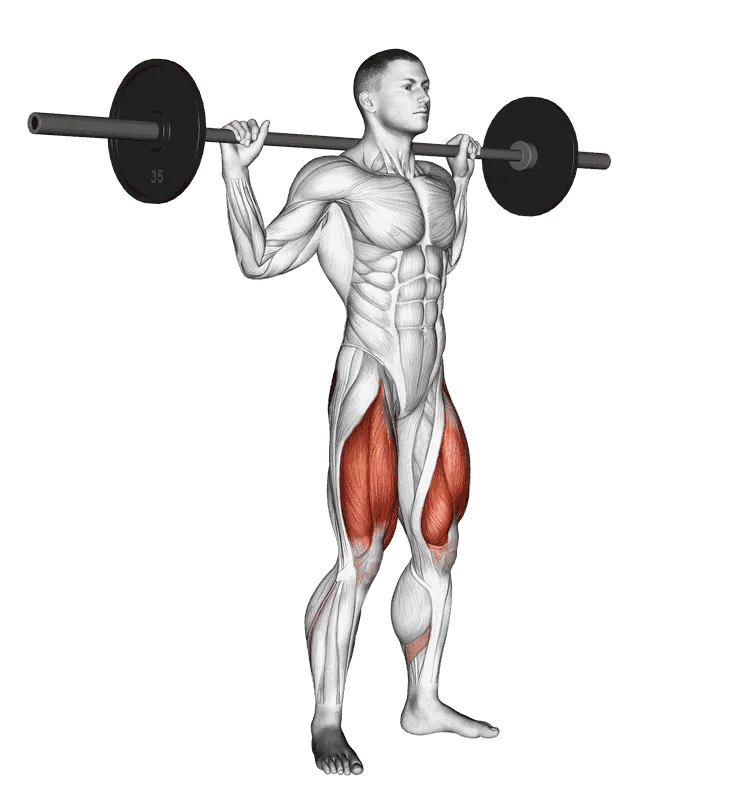
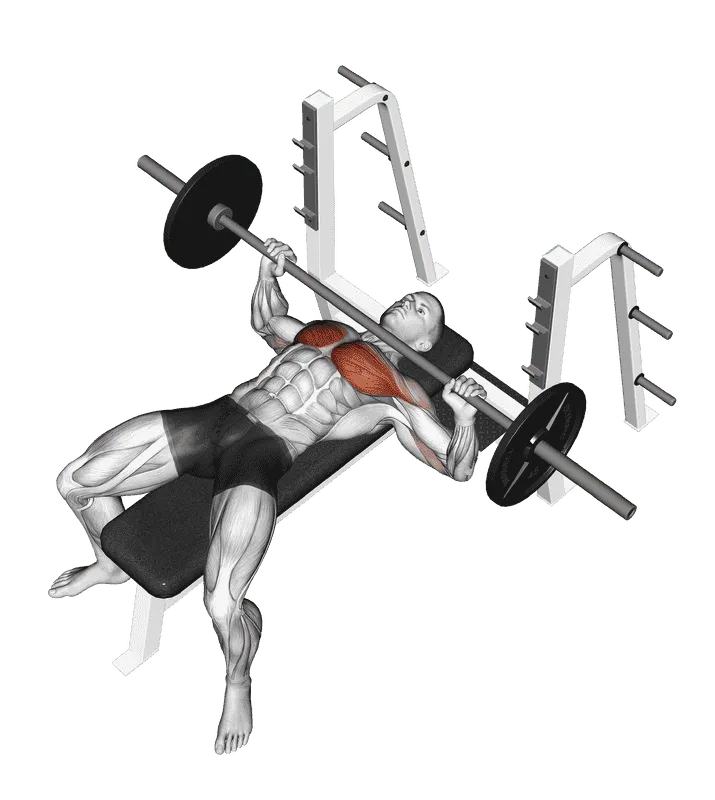
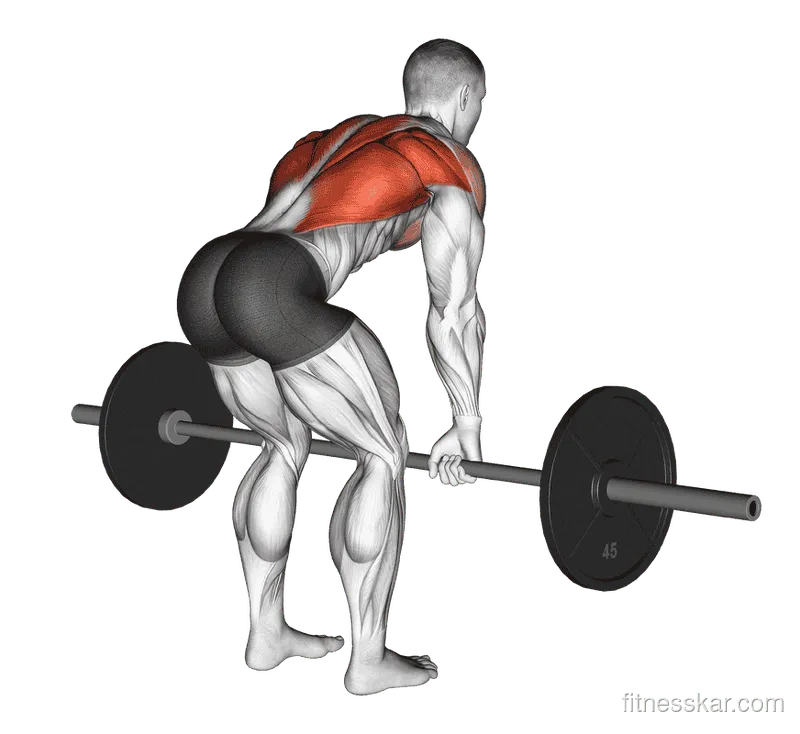
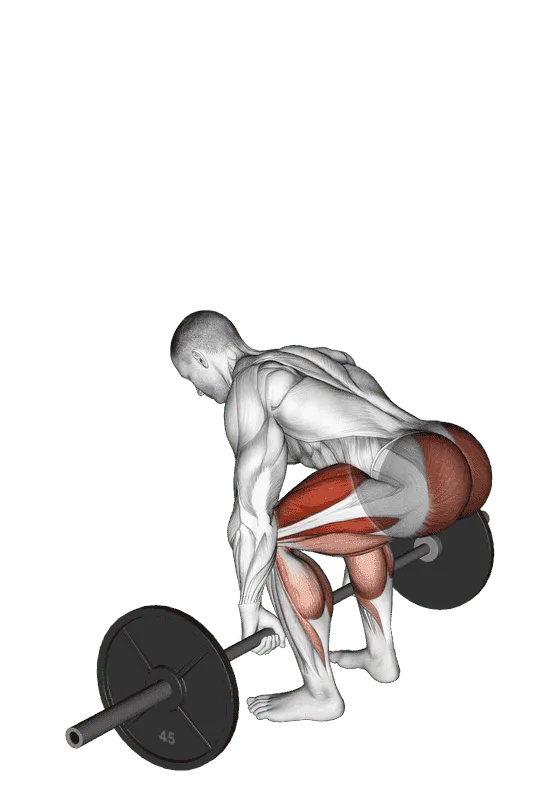
Macros also can't replace training. Progressive work on big lifts such as the barbell squat, bench press, bent-over row and deadlift is what tells your body to build or keep muscle.
Frequently asked questions
Frequently asked questions
Should I count macros or just calories?
If your goal is to change your weight, calories matter most. Tracking protein as well is the most useful addition, because it protects muscle when you diet and supports growth when you eat more. Tracking carbs and fat is optional.
Is 40/30/30 a good macro split?
Percentages are a clumsy way to set macros because they don't scale with your body weight. At 1,500 kcal, 30% protein is only about 113 g; at 3,500 kcal, it is about 263 g. Setting protein and fat in grams per kilogram first, then filling the rest with carbs, gives more sensible numbers.
Do I need different macros on rest days?
No. Keeping the same numbers every day is simplest. Some people move a few carbs from rest days to training days, which is fine as long as the weekly totals stay the same.
How often should I recalculate my macros?
After every 4–5 kg of weight change, or whenever your weekly average weight hasn't moved in the expected direction for two to three weeks.
Sources
- Aragon AA, Schoenfeld BJ, Wildman R, et al. International Society of Sports Nutrition position stand: diets and body composition. Journal of the International Society of Sports Nutrition. 2017. doi.org/10.1186/s12970-017-0174-y ↩
- Mifflin MD, St Jeor ST, Hill LA, et al. A new predictive equation for resting energy expenditure in healthy individuals. The American Journal of Clinical Nutrition. 1990. doi.org/10.1093/ajcn/51.2.241 ↩
- FAO, WHO, UNU. Human energy requirements: report of a joint FAO/WHO/UNU Expert Consultation. Food and Agriculture Organization of the United Nations. 2004. fao.org/4/y5686e/y5686e07.htm ↩
- Helms ER, Aragon AA, Fitschen PJ. Evidence-based recommendations for natural bodybuilding contest preparation: nutrition and supplementation. Journal of the International Society of Sports Nutrition. 2014. doi.org/10.1186/1550-2783-11-20 ↩
- Garthe I, Raastad T, Refsnes PE, et al. Effect of two different weight-loss rates on body composition and strength and power-related performance in elite athletes. International Journal of Sport Nutrition and Exercise Metabolism. 2011. doi.org/10.1123/ijsnem.21.2.97 ↩
- Iraki J, Fitschen P, Espinar S, Helms E. Nutrition recommendations for bodybuilders in the off-season: a narrative review. Sports. 2019. doi.org/10.3390/sports7070154 ↩
- Kerksick CM, Wilborn CD, Roberts MD, et al. ISSN exercise & sports nutrition review update: research & recommendations. Journal of the International Society of Sports Nutrition. 2018. doi.org/10.1186/s12970-018-0242-y ↩