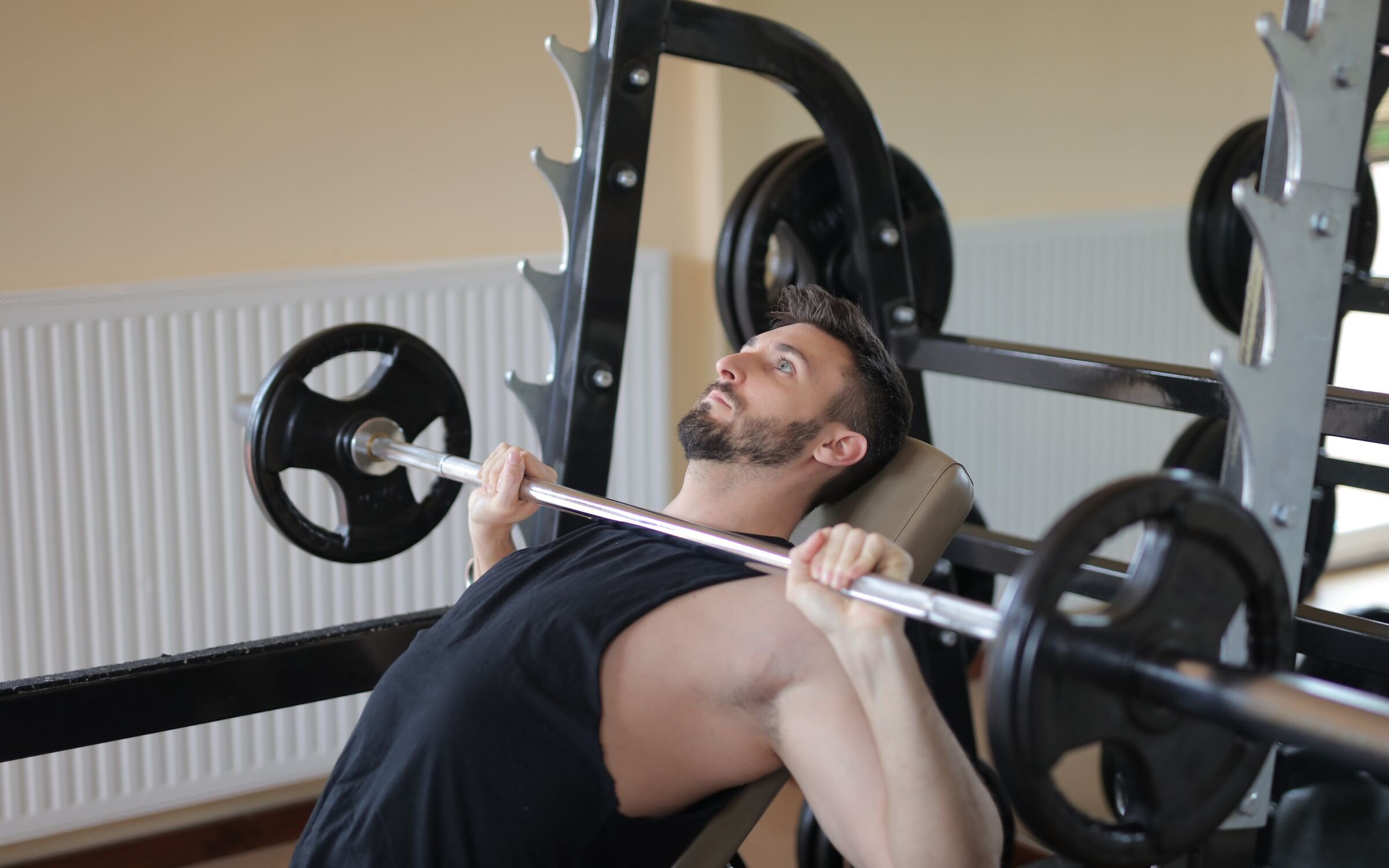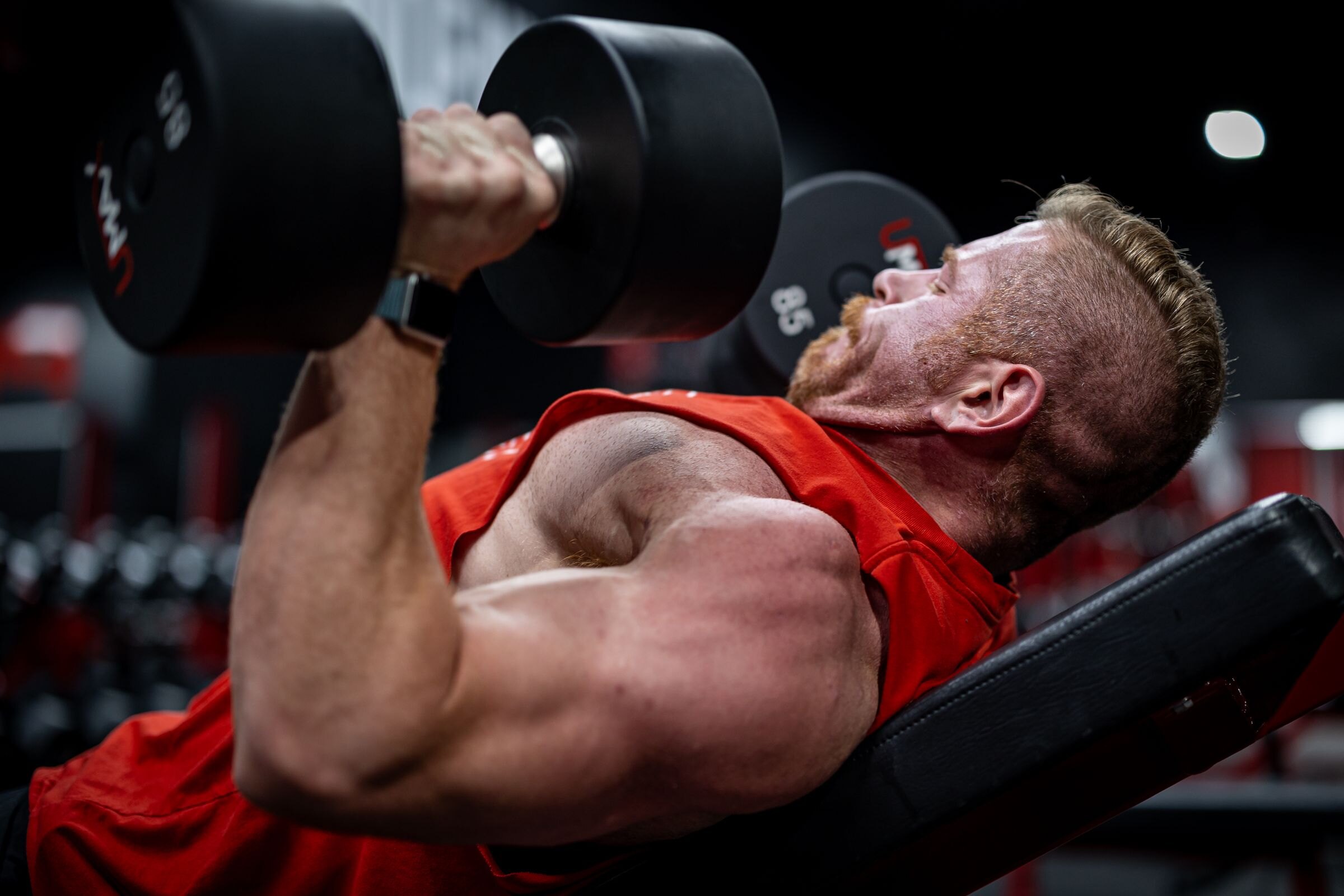
A bigger chest comes from a simple recipe: enough hard sets for your pecs each week, a mix of pressing and fly movements, and loads that keep creeping up. The exact exercises matter less than most gym debates suggest, but some make better building blocks than others.
Below are the eight chest exercises we would build any program around, with the sets, reps, rest times and cues that make each one work, plus a weekly plan and the mistakes that most often stall progress.
How your chest grows
Your chest is mostly one muscle, the pectoralis major. Its smaller clavicular head (your upper chest) starts at the collarbone, and its larger sternocostal head (your mid and lower chest) starts at the breastbone and ribs. Both pull your upper arm across your body, which is why presses and flys train them, and why changing the bench angle shifts the emphasis between them.
Three things drive chest growth more than exercise choice:
- Weekly volume. More hard sets per week lead to more growth; in a large meta-analysis, each additional weekly set was linked to a little more muscle gain.[1] Most lifters do well with 10 to 20 weekly sets for the chest. Our guide to how many sets per muscle per week helps you find your number.
- Effort. A set only counts if it ends close to failure, roughly one to three reps short of it.
- A wide range of loads. Muscle grows with heavy sets of 5 and with lighter sets of 20 or more, as long as the sets are hard.[2] Mixing both is the practical sweet spot.
The 8 best chest exercises
Use this list to build your chest workouts. Pick two or three exercises per session rather than all eight; the plan further down shows how to combine them.
-
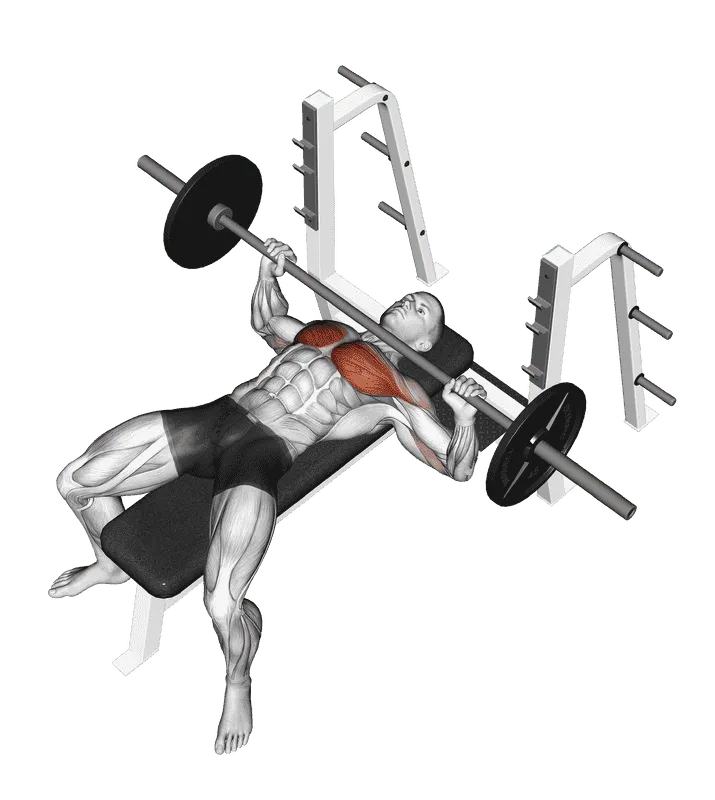
1 Barbell Bench Press - Sets
- 3–4
- Reps
- 5–8
- Rest
- 180 s
-
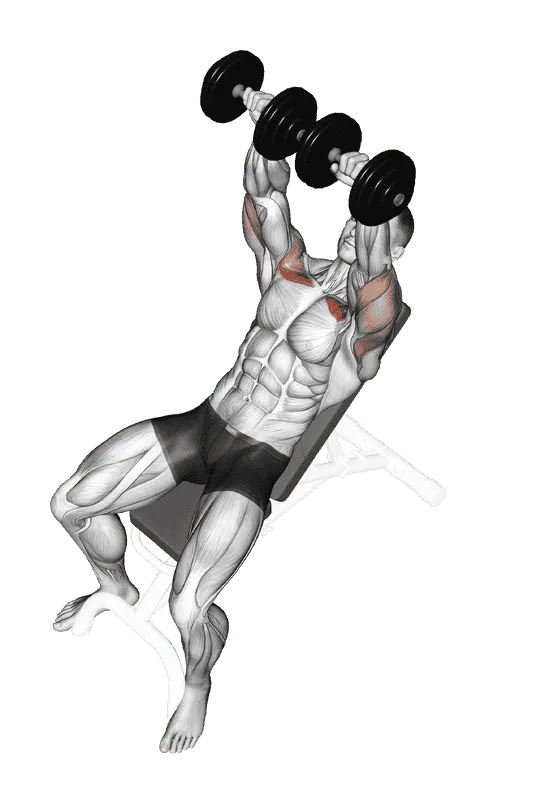
2 Dumbbell Incline Bench Press - Sets
- 3
- Reps
- 8–12
- Rest
- 120 s
-
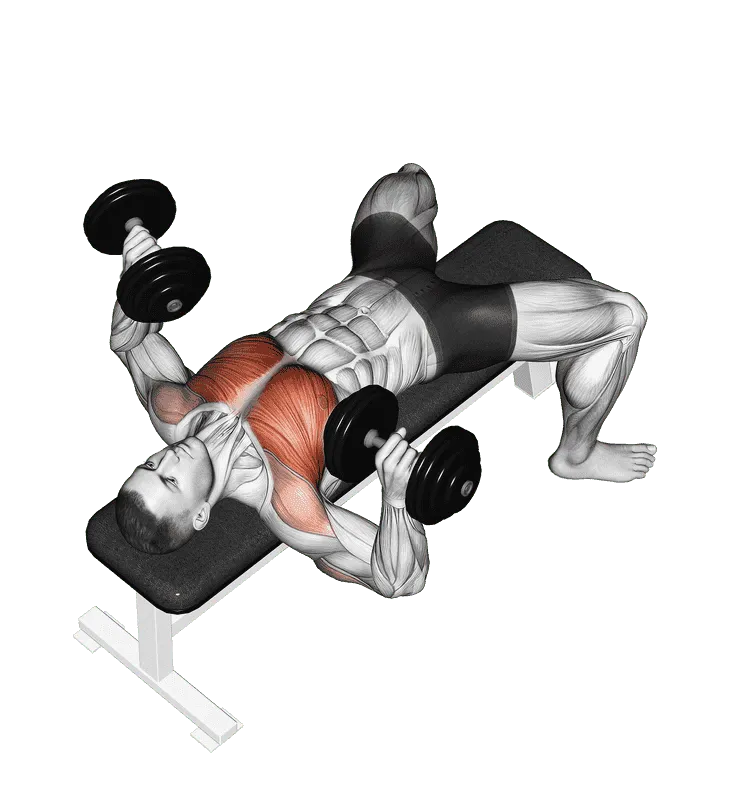
3 Dumbbell Bench Press - Sets
- 3
- Reps
- 8–12
- Rest
- 120 s
-
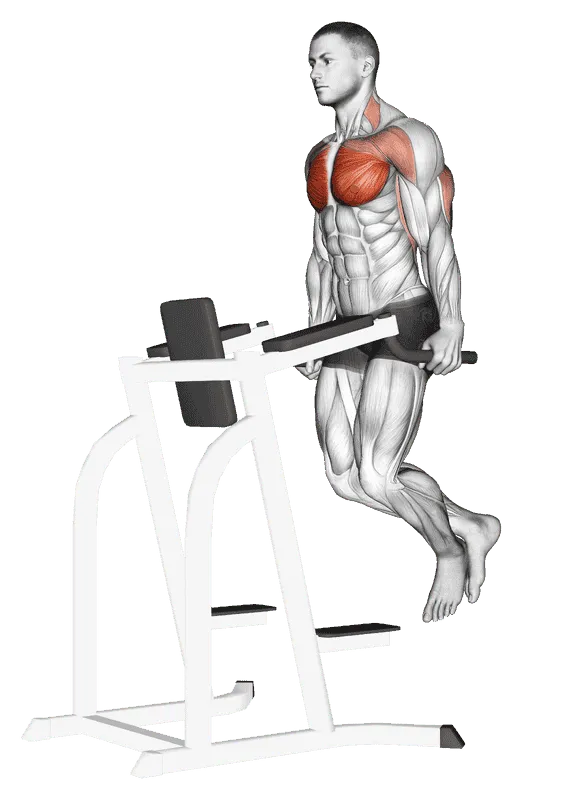
4 Chest Dip - Sets
- 3
- Reps
- 6–12
- Rest
- 120 s
-
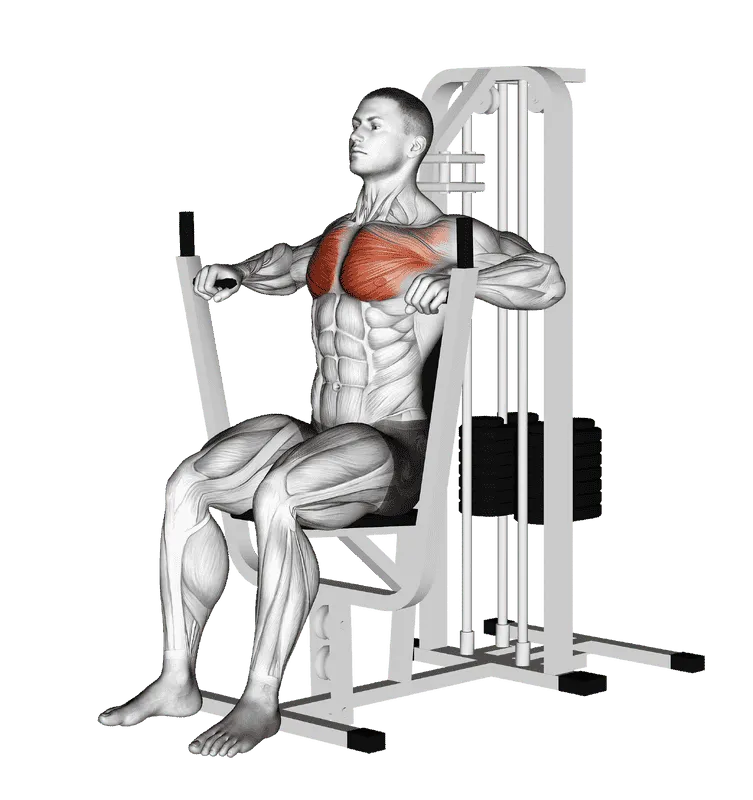
5 Lever Chest Press - Sets
- 3
- Reps
- 10–15
- Rest
- 90 s
-
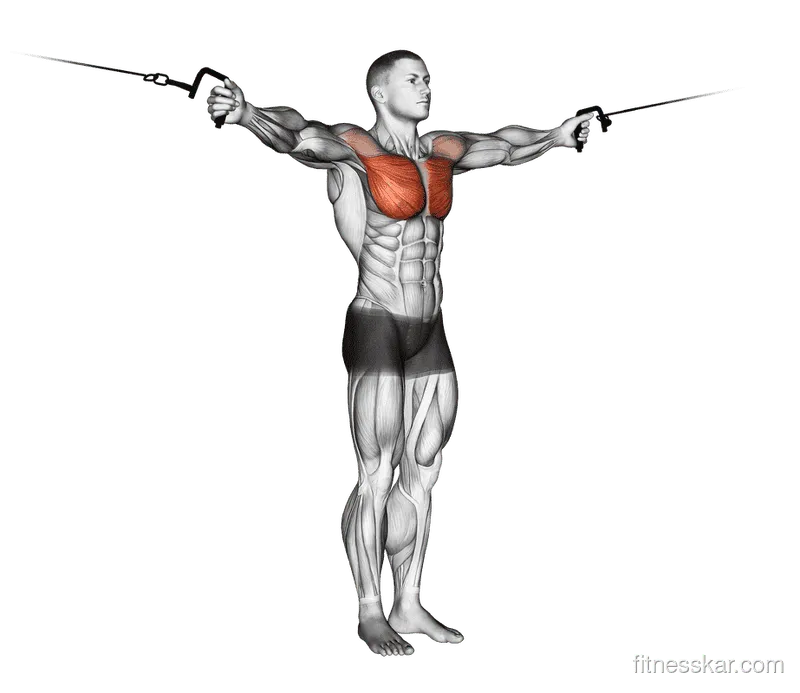
6 Cable Crossover - Sets
- 2–3
- Reps
- 12–15
- Rest
- 90 s
-
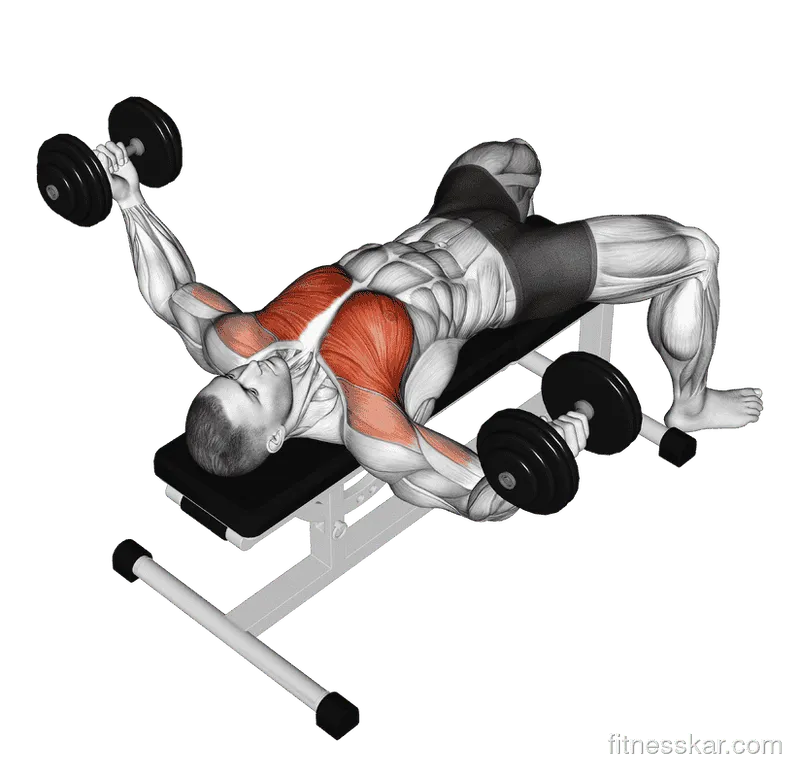
7 Dumbbell Fly - Sets
- 2–3
- Reps
- 10–15
- Rest
- 90 s
-
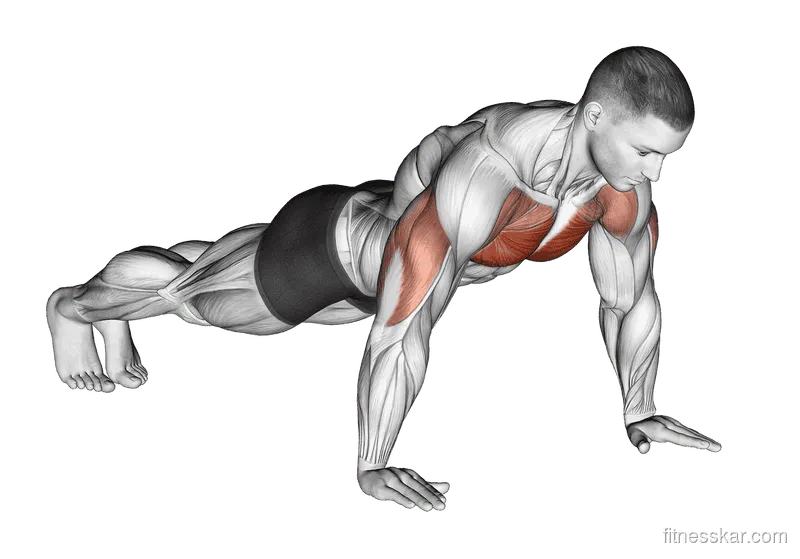
8 Push-Up - Sets
- 2–3
- Reps
- 10–25
- Rest
- 90 s
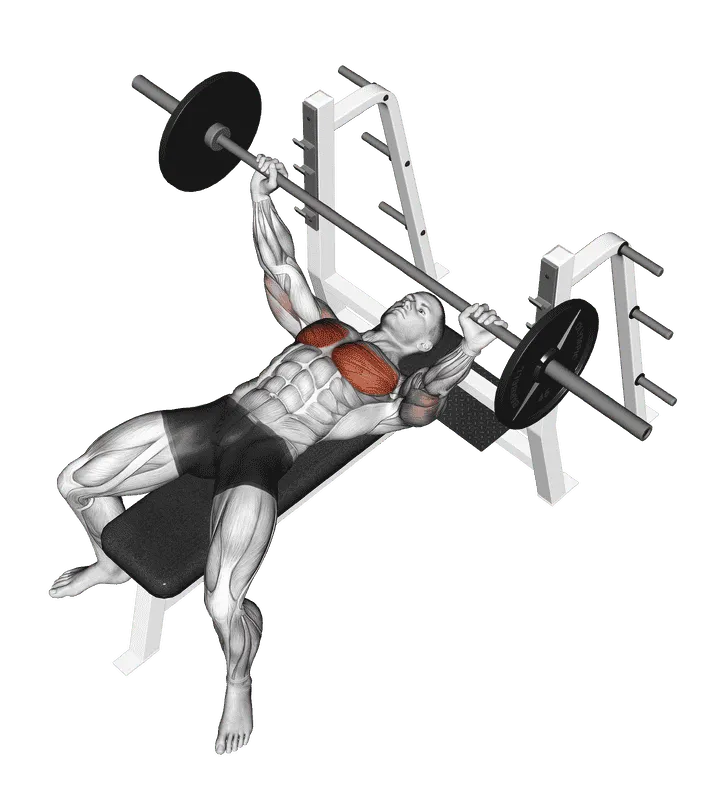

1. Barbell bench press
The barbell bench press lets you handle the heaviest loads of any chest exercise and makes progress easy to measure, which is why it anchors most chest programs. It also trains your front delts and triceps.
- Squeeze your shoulder blades together and down before you unrack the bar, and keep them pinned.
- Plant your feet and keep a small, natural arch in your lower back.
- Lower the bar under control to your lower chest, elbows tucked to roughly 45 to 70 degrees from your torso.
- Press up and slightly back until the bar is over your shoulders again, without bouncing it off your chest.
For a full technique breakdown, read our guide on how to bench press.
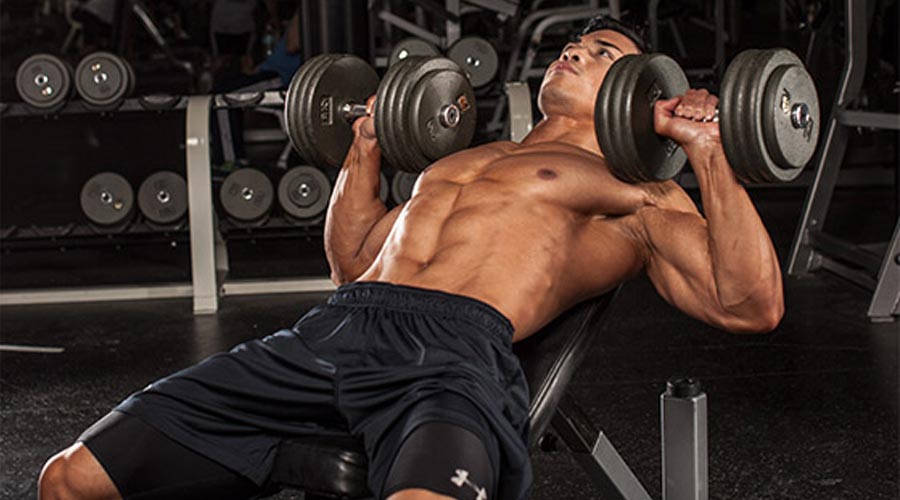
2. Incline dumbbell press
If your upper chest lags, incline pressing is the fix. In an EMG study, the clavicular head was significantly more active with the bench at 44 degrees than on a flat bench,[3] and in an eight-week training study in untrained men, the incline bench press produced the largest growth in the upper part of the chest.[4] The dumbbell incline bench press adds a longer range of motion and lets each arm work on its own. The barbell incline bench press works just as well if you prefer a bar.
- Set the bench to about 30 to 45 degrees; the steeper you go beyond that, the more it turns into a shoulder press.
- Lower the dumbbells to the sides of your upper chest until you feel a deep stretch.
- Press up and slightly in, without clanging the dumbbells together.
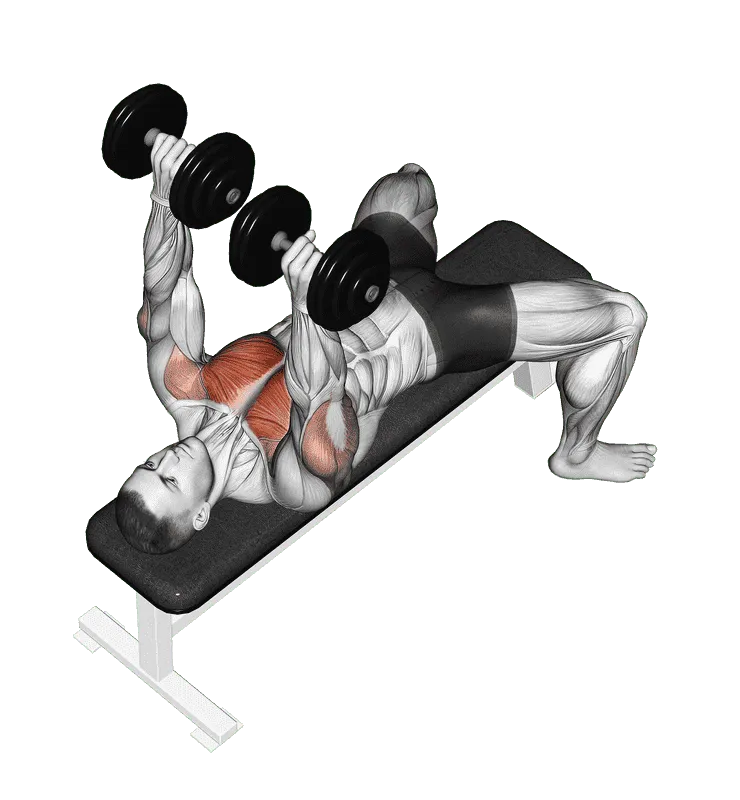
3. Flat dumbbell press
The dumbbell bench press trains the same muscles as the barbell version. In one study, chest and front-delt activity were similar whether lifters pressed with a barbell, dumbbells or a Smith machine, although their dumbbell maximum was about 14 to 17 percent lighter.[5] What you gain is a deeper stretch at the bottom and a free path for your shoulders, which many lifters find easier on their joints.
- Kick the dumbbells up from your thighs as you lie back.
- Keep your wrists stacked directly over your elbows.
- Lower until the dumbbells are level with your chest, then press.
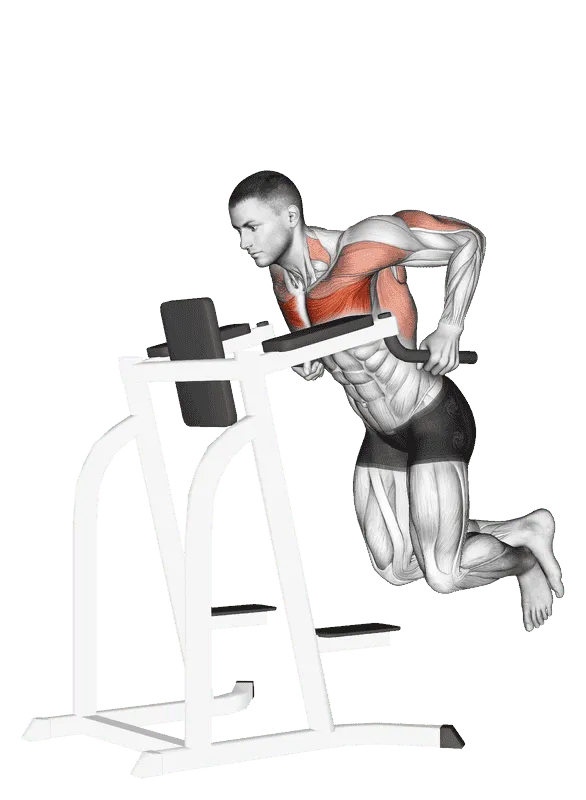
4. Chest dip
The chest dip is a strong bodyweight builder for the lower chest and triceps, and it's easy to load with a dip belt once bodyweight reps get easy. Leaning your torso forward shifts more of the work to your chest.
- Start at the top with your arms straight and your shoulders pushed down, away from your ears.
- Lean forward about 20 to 30 degrees and let your elbows drift slightly out.
- Lower until your upper arms are roughly parallel to the floor, then press back up.
Dips put a big stretch on the front of the shoulder. If you feel pain there, shorten the range, switch to the assisted chest dip, or leave dips out.
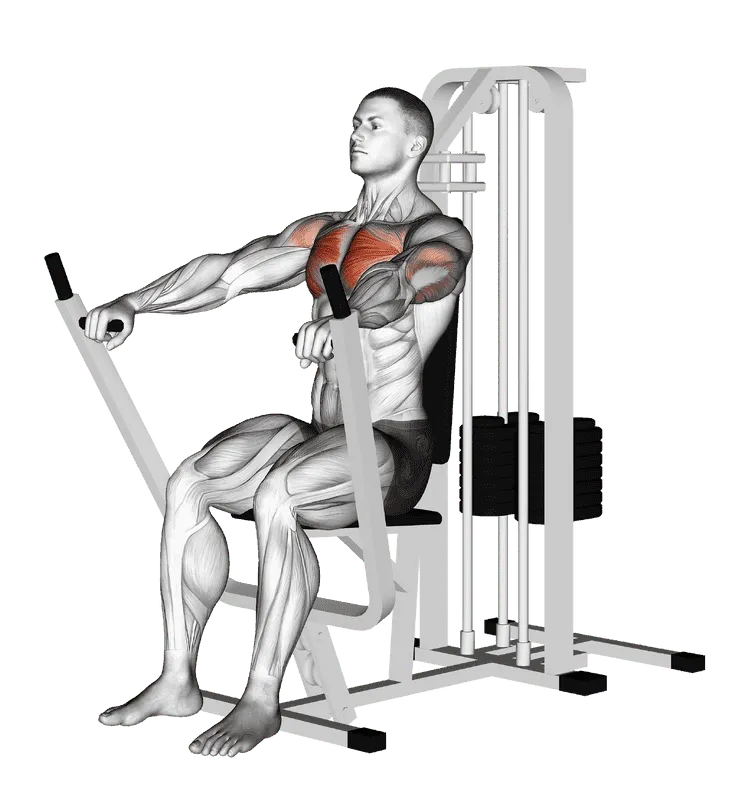
5. Machine chest press
A lever chest press takes balance out of the equation, so you can push sets close to failure safely without a spotter. That makes it ideal as a second or third chest exercise, when you're already tired. The Smith machine bench press serves the same purpose.
- Set the seat so the handles line up with the middle of your chest.
- Keep your shoulder blades back against the pad.
- Take two to three seconds to lower the weight on every rep.
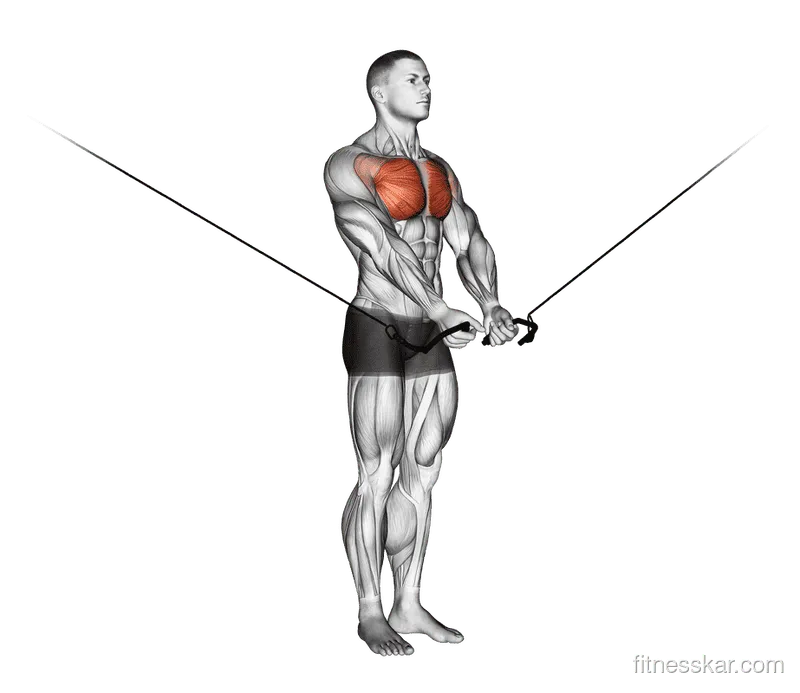
6. Cable crossover
The cable crossover keeps tension on your pecs through the whole range, including the squeezed position where free-weight flys go slack. The pulley height changes the angle: set the pulleys low and sweep your hands up and together to emphasize the upper chest, or set them high and sweep down for the lower chest.
- Take a staggered stance and lean slightly forward.
- Keep a soft bend in your elbows and hold that angle throughout.
- Bring your hands together in a wide arc, pause, then let the cables pull your arms back until you feel a stretch.
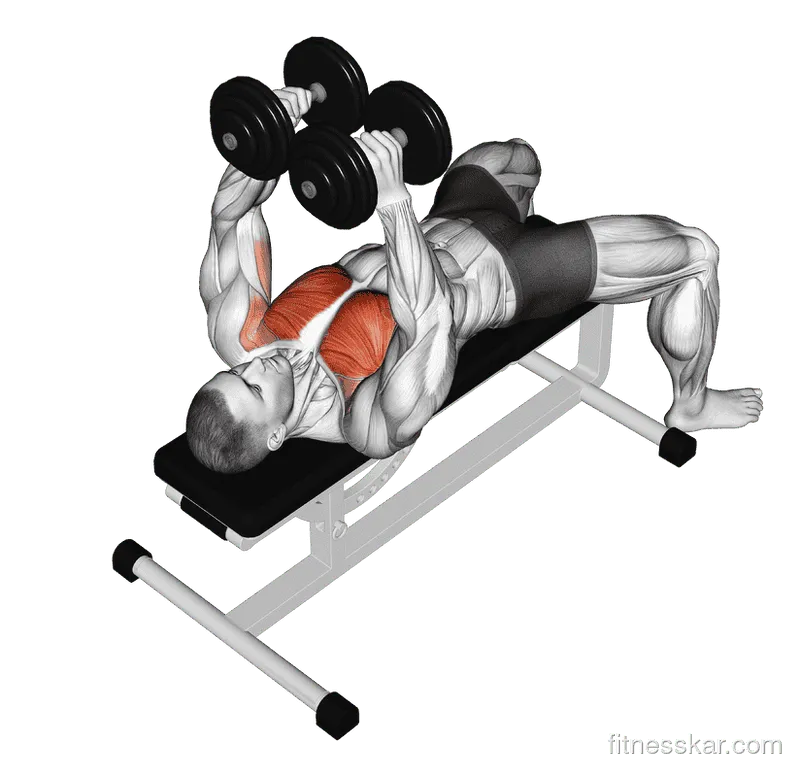
7. Dumbbell fly
The dumbbell fly loads your chest hardest at the bottom, in the stretched position, with little help from your triceps. Do it after your presses with moderate weights; it isn't an exercise to max out on. The lever pec deck fly is a more stable machine alternative.
- Lie on a flat bench with the dumbbells above your chest, palms facing each other.
- With a slight bend in your elbows, open your arms in a wide arc until you feel a strong stretch.
- Bring the dumbbells back up by squeezing your chest, as if you were hugging a tree.
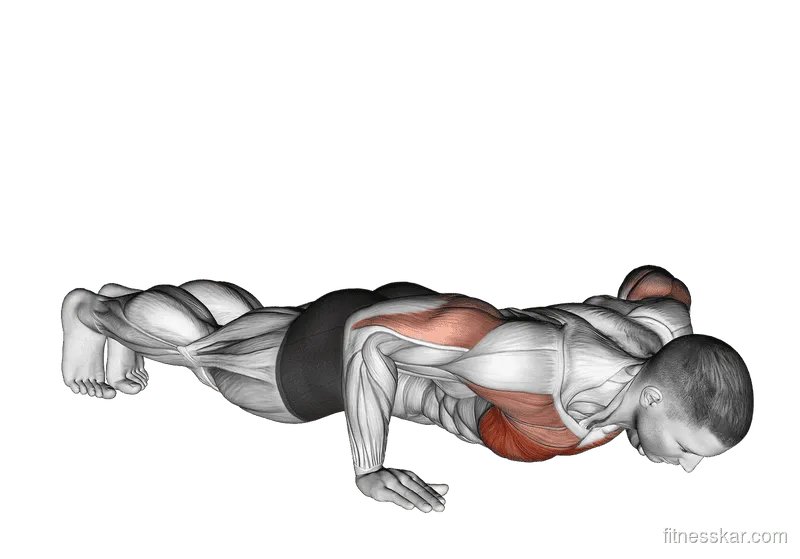
8. Push-up
The push-up needs no equipment and builds real muscle. In an eight-week study, push-ups produced muscle and strength gains similar to bench pressing with a matched load, about 40 percent of a one-rep max.[6] Once bodyweight push-ups get easy, add load or elevate your feet so each set stays hard.
- Place your hands slightly wider than shoulder-width.
- Brace your abs and glutes so your body moves as one straight line.
- Lower until your chest nearly touches the floor, elbows about 45 degrees from your body.
How to program your chest training
Train your chest twice a week and spread your weekly sets across both sessions. Start each workout with a heavy press, then add one or two exercises that train a different angle or the stretched position. Take most sets to within one to three reps of failure, and add a rep or a little weight whenever you can. If you follow a push/pull/legs split, each push day covers one of these workouts.
Rest long enough to repeat your performance. For muscle growth, a meta-analysis found a small advantage for resting longer than 60 seconds between sets, with no clear extra benefit beyond about 90 seconds.[7] Heavy presses still tend to go better with two to three minutes of rest, so use the longer end for your first exercise and 60 to 90 seconds for flys.
| Level | Chest sets per week | Workout A | Workout B |
|---|---|---|---|
| Beginner | 10 | Bench press 3 × 6-8, push-up 2 × 10-20 | Incline dumbbell press 3 × 8-12, cable crossover 2 × 12-15 |
| Intermediate | 15 | Bench press 4 × 5-8, chest dip 3 × 8-12 | Incline dumbbell press 3 × 8-12, machine chest press 3 × 10-12, cable crossover 2 × 12-15 |
| Advanced | 20 | Bench press 4 × 5-8, incline barbell press 3 × 6-10, dumbbell fly 3 × 10-15 | Incline dumbbell press 4 × 8-12, chest dip 3 × 8-12, cable crossover 3 × 12-15 |
Prefer a ready-made session? This free routine is one hard chest workout you can run once a week alongside a lighter second chest day. You can also browse every chest exercise in the library.
Common chest-training mistakes
- Bouncing and half reps. Bouncing the bar off your chest or stopping halfway cuts out the stretched part of the rep. Control the lowering and use your full range on every rep.
- Flared elbows. Pressing with your elbows at 90 degrees to your torso loads the front of the shoulder. Tuck them to roughly 45 to 70 degrees.
- Losing your shoulder blades. If your shoulders roll forward at the top of each rep, the front delts take over. Keep your shoulder blades pinned back.
- Only flat pressing. A program with no incline work leaves the upper chest undertrained.
- Too many easy sets. Sets that end far from failure do less for growth than hard ones. Count only the sets that finish one to three reps short of failure.
- Never adding weight or reps. Log your workouts and aim to beat last week by a rep or a small load increase.
Frequently asked questions
Frequently asked questions
How many chest exercises should I do per workout?
Two or three is enough for most people: one heavy press plus one or two exercises that hit a different angle or the stretched position. Your weekly number of hard sets matters more than the number of exercises.
Are push-ups enough to build a bigger chest?
They can be, especially early on. Push-ups build muscle about as well as bench pressing with a similar load, but you need to keep making them harder with a weighted vest, a band or elevated feet as you get stronger.
Do I need decline presses for the lower chest?
No. Flat presses and dips already train the lower chest hard. The barbell decline bench press is a fine option if you enjoy it, but it isn't essential.
Dumbbells or barbell: which is better for chest growth?
Both work. Chest activity is similar, the barbell lets you handle more weight (in one study, dumbbell maximums were about 17 percent lighter), and dumbbells give a deeper stretch and let each side work on its own. Most good programs use both.
How often should I train chest?
Twice a week is a good default. It lets you split 10 to 20 weekly sets into two quality sessions instead of one marathon workout.
Sources
- Schoenfeld BJ, Ogborn D, Krieger JW. Dose-response relationship between weekly resistance training volume and increases in muscle mass: a systematic review and meta-analysis. Journal of Sports Sciences. 2017. pubmed.ncbi.nlm.nih.gov/27433992/ ↩
- Schoenfeld BJ, Grgic J, Van Every DW, Plotkin DL. Loading recommendations for muscle strength, hypertrophy, and local endurance: a re-examination of the repetition continuum. Sports (Basel). 2021. pubmed.ncbi.nlm.nih.gov/33671664/ ↩
- Trebs AA, Brandenburg JP, Pitney WA. An electromyography analysis of 3 muscles surrounding the shoulder joint during the performance of a chest press exercise at several angles. Journal of Strength and Conditioning Research. 2010. pubmed.ncbi.nlm.nih.gov/20512064/ ↩
- Chaves SFN, Rocha-Júnior VA, Encarnação IGA, et al. Effects of horizontal and incline bench press on neuromuscular adaptations in untrained young men. International Journal of Exercise Science. 2020. pubmed.ncbi.nlm.nih.gov/32922646/ ↩
- Saeterbakken AH, van den Tillaar R, Fimland MS. A comparison of muscle activity and 1-RM strength of three chest-press exercises with different stability requirements. Journal of Sports Sciences. 2011. pubmed.ncbi.nlm.nih.gov/21225489/ ↩
- Kikuchi N, Nakazato K. Low-load bench press and push-up induce similar muscle hypertrophy and strength gain. Journal of Exercise Science and Fitness. 2017. pubmed.ncbi.nlm.nih.gov/29541130/ ↩
- Singer A, Wolf M, Generoso L, et al. Give it a rest: a systematic review with Bayesian meta-analysis on the effect of inter-set rest interval duration on muscle hypertrophy. Frontiers in Sports and Active Living. 2024. pubmed.ncbi.nlm.nih.gov/39205815/ ↩