The barbell bench press is one of the most popular upper-body strength lifts in the gym, and for good reason: it lets you press heavy loads with your chest, shoulders and triceps from a stable position. It is also the lift where small technique details decide both how much you can press and how your shoulders feel years from now.
This guide walks you through the setup, the rep itself, breathing and safety, then the mistakes that most often stall progress and the variations worth adding to your training.
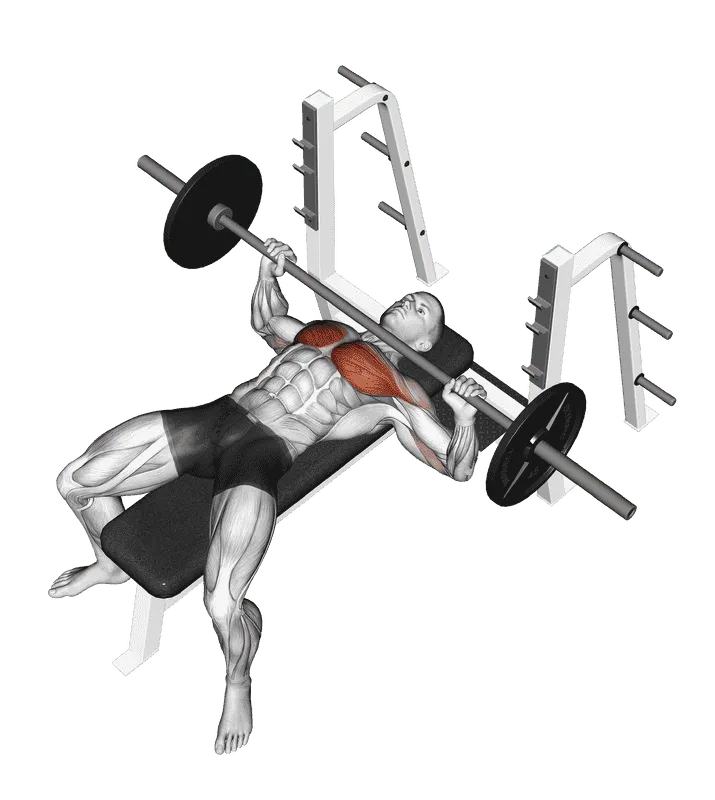
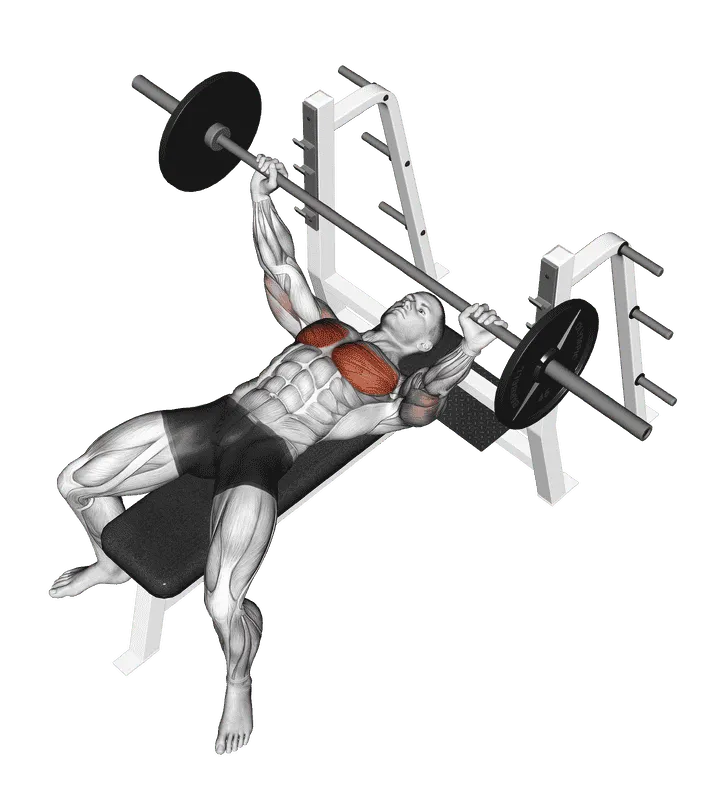
- Sets
- 3–5
- Reps
- 3–8
- Rest
- 180 s
What the bench press works
The bench press is a horizontal push. Your chest (pectoralis major) and the front of your shoulders drive the bar off your chest, and your triceps finish the lockout. Your upper back, lats and legs don't move the bar, but they create the stable base you press from. That's why a good bench press setup involves your whole body.
Setup: five checkpoints before you unrack
1. Eyes under the bar
Lie back so your eyes are roughly under the bar. Too far toward the uprights and you'll clip the hooks on every rep; too far down the bench and the unrack becomes a long, unstable reach.
2. Grip width
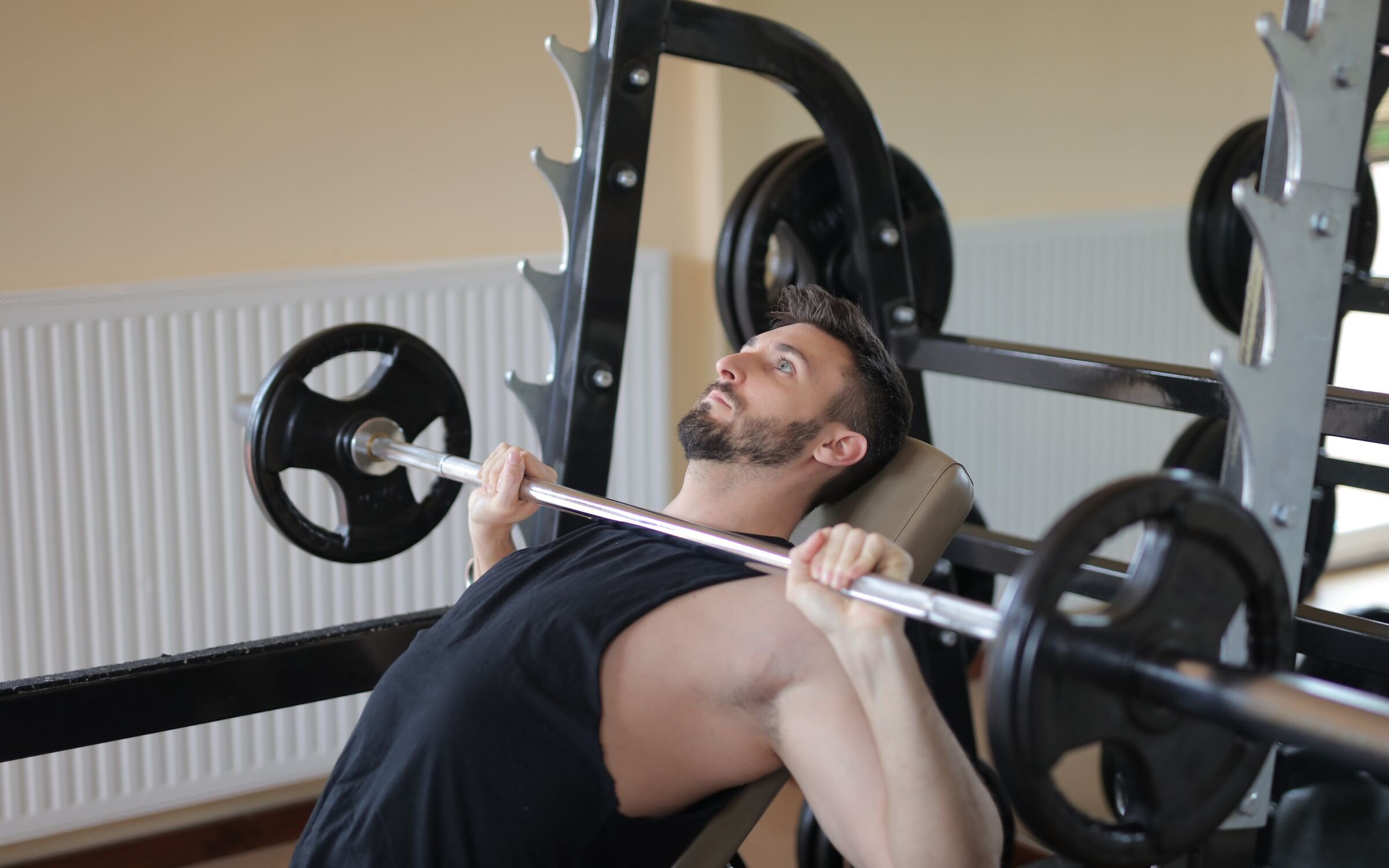
Grip the bar so your forearms are close to vertical at the bottom of the rep when someone looks at you from the front. For most lifters, that's a grip a little wider than shoulder width. In a study of national-level bench press athletes, the six-rep max was 5.8–11.1% heavier with a medium or wide grip than with a narrow grip, while chest and shoulder muscle activity was similar across the three widths.[1] A narrow grip lowers the weight you can lift, which is why the close-grip bench press is used as a triceps-focused variation rather than as your default.
Wrap your thumbs around the bar. The thumbless "suicide" grip earns its nickname: if the bar rolls out of your hands, it lands on your chest or neck. Set the bar low in your palm, stacked over your forearm bones, instead of letting your wrists bend back.
3. Shoulder blades back and down
Squeeze your shoulder blades together, pull them down toward your back pockets, and keep them there for the whole set. This gives you a stable shelf to press from and keeps the front of your shoulders in a more comfortable position at the bottom of the rep.
4. A moderate arch
With your shoulder blades pinned, a natural arch in your upper back follows. Your head, upper back and glutes stay on the bench. Competitive powerlifters exaggerate the arch because it shortens the distance the bar travels. In a study of 15 competitive lifters, the arched-back technique allowed about 4.2 kg more on a one-rep max, while the flat-back style moved the bar farther and faster at 50 to 90 percent of their max, with similar chest muscle activity in both.[2] For general strength training, a moderate arch you can hold comfortably is all you need.
5. Feet planted and leg drive
Plant your feet flat on the floor, slightly behind your knees and wide enough to feel stable. Leg drive means pushing your feet into the floor as if you were sliding yourself toward the head of the bench. It tightens your whole body and presses your upper back into the pad. Your butt stays on the bench the entire time.
The rep: unrack, lower, touch, press
- Unrack with straight arms. Press the bar off the hooks and bring it forward until it sits over your shoulders. A spotter can give you a lift-off so you don't lose your shoulder position.
- Lower under control. Take about one to two seconds on the way down. Let your elbows tuck to a moderate angle, neither pinned to your sides nor flared straight out at 90 degrees.
- Touch the lower chest. The bar usually meets your body around the lower part of your breastbone. Touch lightly; don't bounce it off your ribs.
- Press up and slightly back. Drive the bar up and back toward the spot over your shoulders where you unracked it. The bar path is a gentle diagonal, not a straight vertical line.
- Lock out and reset. Finish with your elbows straight and the bar over your shoulders, then take your next breath.
This matches what researchers saw when they filmed expert and novice lifters: the experts lowered the bar more slowly and kept the bar path closer to their shoulders.[3]
Breathing and bracing
Take a big breath into your belly before each rep, hold it while you lower the bar and drive it up, and breathe out near the top. This brief breath-hold, a form of the Valsalva maneuver, is practically unavoidable when you lift heavy loads (above roughly 80% of your maximum) or take lighter sets to failure. It raises the pressure inside your abdomen, which may help keep your trunk rigid, and it also raises your blood pressure during the effort.[4]
Safety: never bench heavy without a plan
In U.S. emergency department data from 1990 to 2007, the most common way people got hurt weight training was a weight dropping on them (65.5% of injuries), and 90.4% of the injuries involved free weights.[5] On the bench press, a failed rep leaves the bar over your chest and neck, so build a safety net into every heavy set:
- Bench in a rack with safety arms set just below the height of your chest at the bottom of the rep, in your arched position. If you miss a rep, lower the bar onto the arms and slide out.
- Use a spotter who stands at your head, gives you a lift-off if you want one, and agrees on a clear signal before the set.
- No safeties and no spotter? Switch to dumbbells or a machine, or stop every set with at least two or three reps in reserve.
- Keep your thumbs wrapped around the bar on every rep.
Common bench press mistakes
| Mistake | Why it's a problem | Fix |
|---|---|---|
| Bouncing the bar off your chest | Uses momentum and punishes your ribs and sternum | Touch lightly; pause for one second on some sets |
| Elbows flared straight out | Puts your shoulders in a less stable position | Tuck to a moderate angle on the way down |
| Butt lifting off the bench | Changes the lift and strains your lower back | Drive your feet toward your head, not up |
| Shoulder blades drifting apart | You lose your stable base halfway through the set | Reset your shoulder blades before every set |
| Wrists bent back | Leaks force and irritates your wrists | Stack the bar over your forearm bones |
| Bar landing on your belly or neck | Longer lever arm and a harder lockout | Touch the lower chest; press back over your shoulders |
| Grinding every set to failure | Technique breaks down and fatigue piles up | Leave one or two reps in reserve on most sets |
How to program the bench press
For most people, benching two or three times per week works well. Beginners can start with three sets of five to eight reps and add a small amount of weight when every set is completed with good form. Intermediate lifters often combine a heavier day (sets of three to five) with a lighter, higher-rep day (sets of eight to twelve). Rest two to three minutes between heavy sets.
If you want a number to base your training on, learn how to estimate or safely test your one-rep max. And if you're deciding between heavy, low-rep work and moderate-weight volume, read our guide to strength vs. hypertrophy training.
Bench press variations worth knowing
Variations and when to use them
-
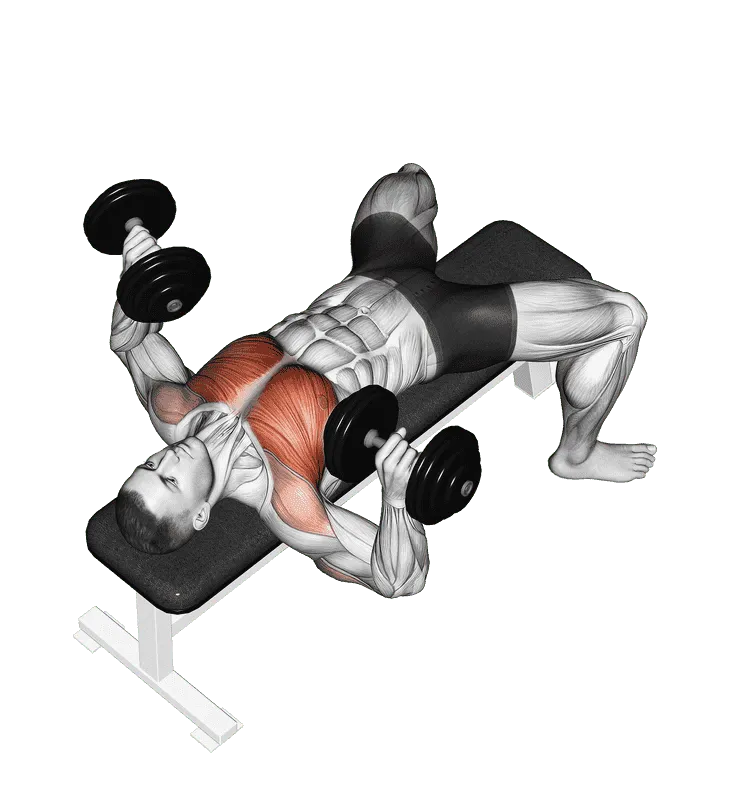
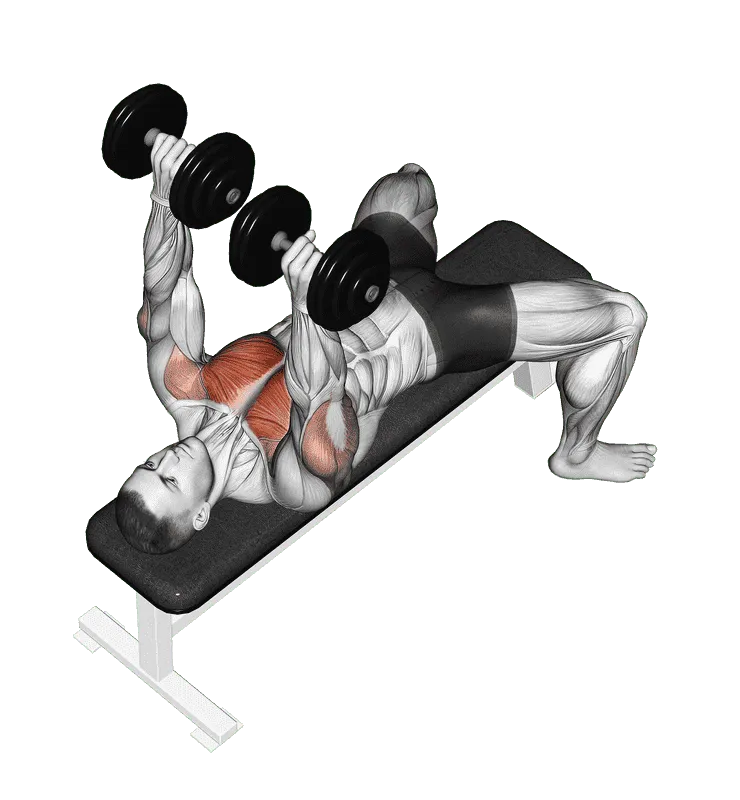
Dumbbell Bench Press - Sets
- 3
- Reps
- 8–12
- Rest
- 120 s
-
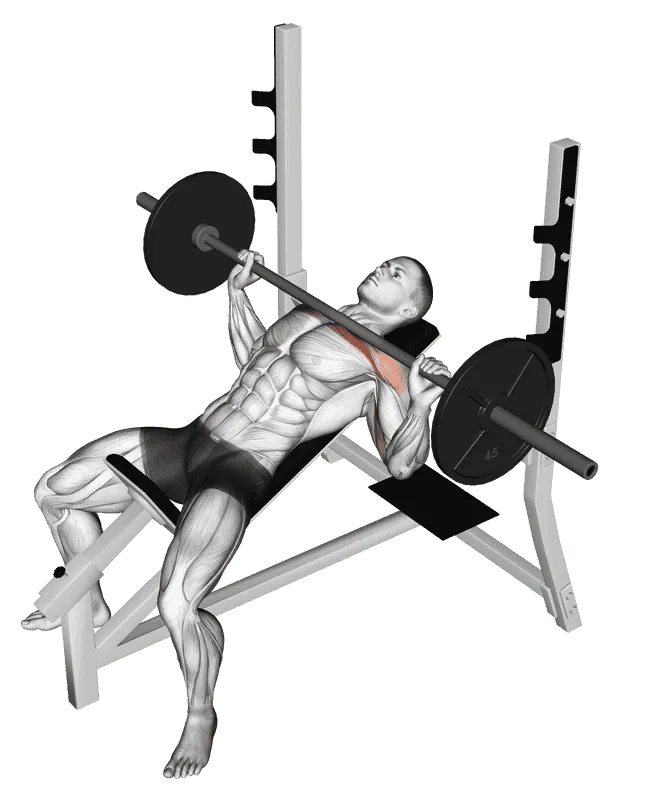
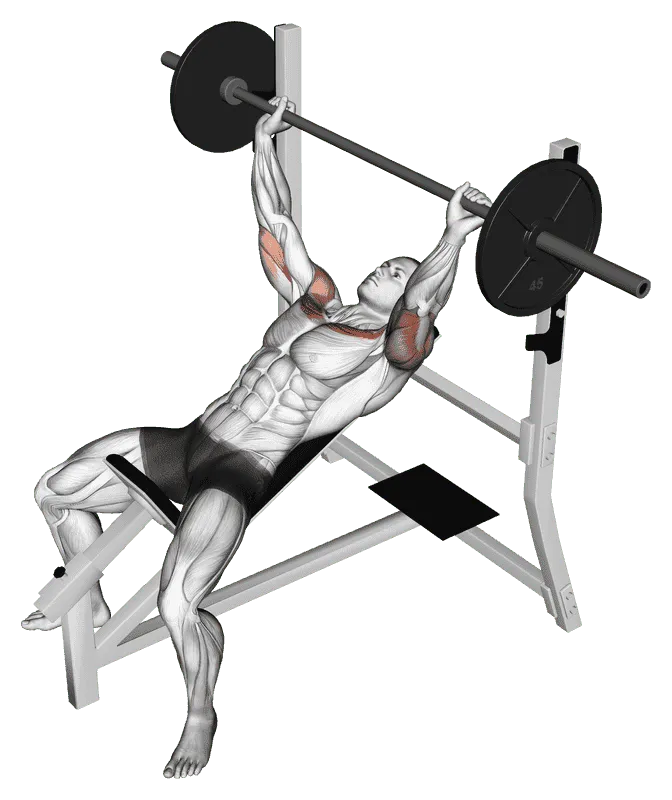
Barbell Incline Bench Press - Sets
- 3
- Reps
- 6–10
- Rest
- 150 s
-

Barbell Close-Grip Bench Press - Sets
- 3
- Reps
- 6–10
- Rest
- 150 s
-
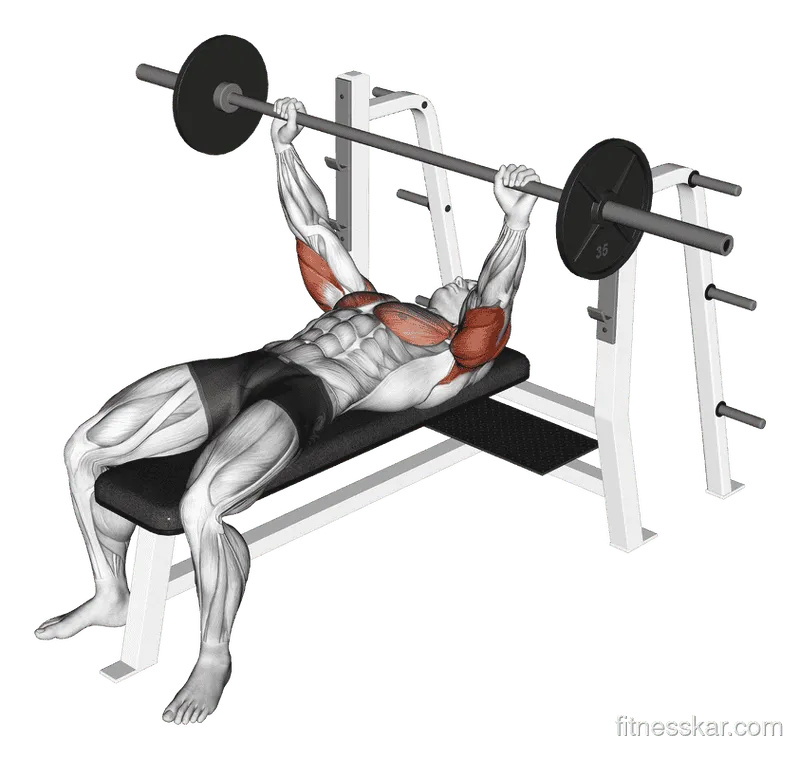
Barbell Pin Press - Sets
- 3
- Reps
- 3–5
- Rest
- 180 s
-
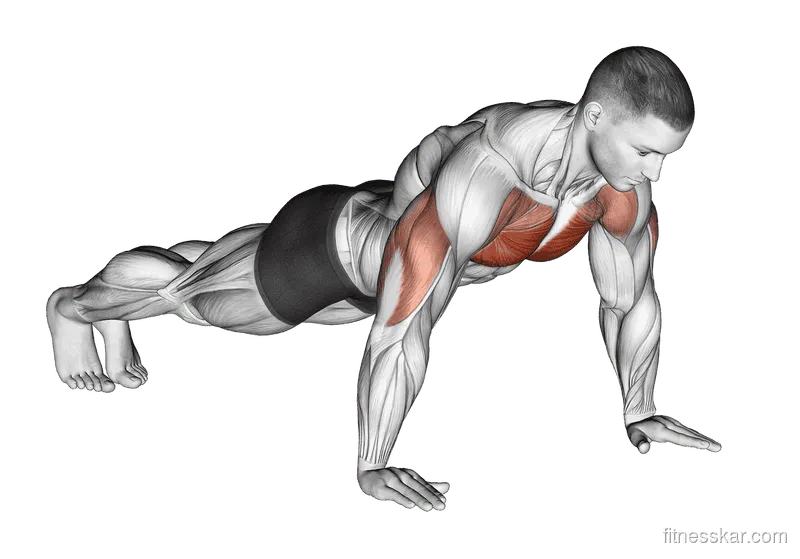
Push-Up - Sets
- 3
- Reps
- 8–20
- Rest
- 90 s
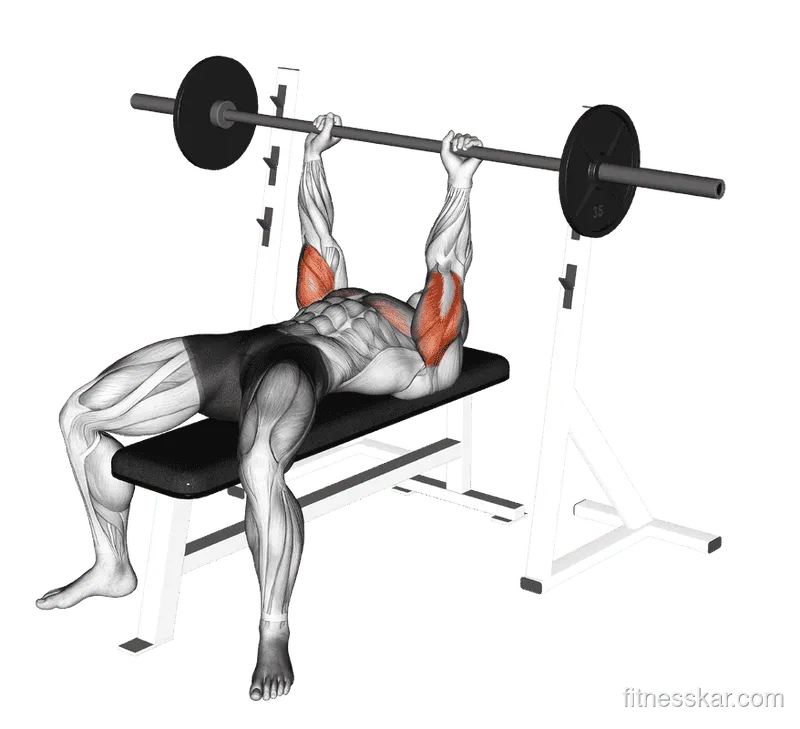
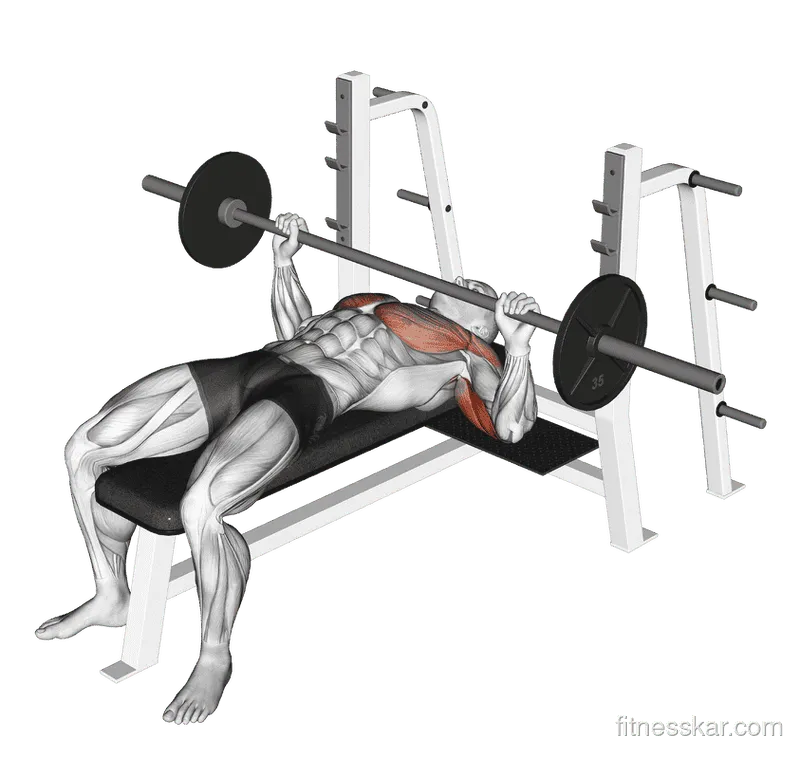
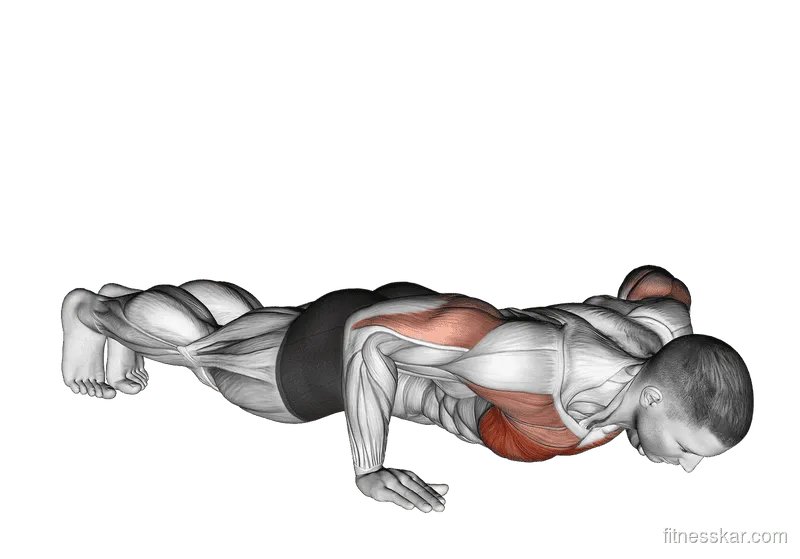
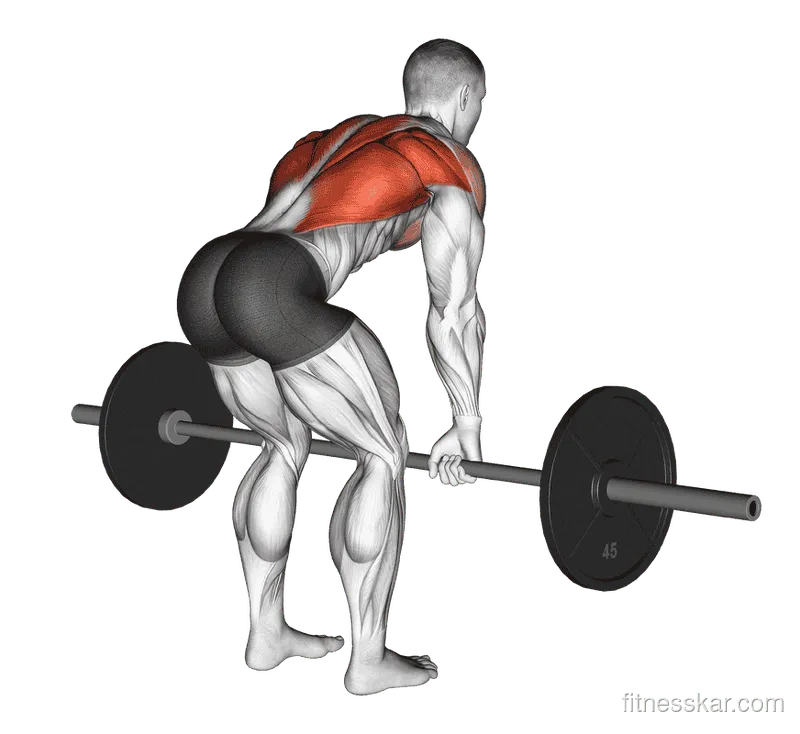
Balance all that pressing with rows such as the barbell bent-over row so your upper back keeps up with your chest, and browse more chest exercises in the exercise library.
Frequently asked questions
How wide should my grip be on the bench press?
Start with a grip where your forearms are close to vertical at the bottom of the rep, usually a little wider than shoulder width. Research on trained lifters found that medium and wide grips allowed heavier loads than a narrow grip, with similar chest activity, so move your hands closer only when you want to emphasize your triceps.
Should the bar touch my chest on every rep?
Yes, for a full range of motion. Touch lightly around your lower breastbone without bouncing. Partial variations like the pin press are useful additions, not replacements.
Is arching my back on the bench press bad for my spine?
A moderate arch that comes from pinning your shoulder blades, with your butt on the bench, is normal technique and most people tolerate it well. If arching gives you back pain, reduce it and keep your feet flat.
How often should I bench press?
Two or three sessions per week suits most lifters. Beginners progress well on three sets of five to eight reps; more experienced lifters usually alternate heavier and lighter days.
Can I bench press without a spotter?
Yes, as long as you bench inside a power rack with the safety arms set just below your chest. Without safeties or a spotter, use dumbbells or a machine, and end every set with at least two or three reps in reserve.
Sources
- Saeterbakken AH, Mo DA, Scott S, Andersen V. The Effects of Bench Press Variations in Competitive Athletes on Muscle Activity and Performance. Journal of Human Kinetics. 2017. pubmed.ncbi.nlm.nih.gov/28713459/ ↩
- Bartolomei S, Caroli E, Coloretti V, Rosaci G, Cortesi M, Coratella G. Flat-Back vs. Arched-Back Bench Press: Examining the Different Techniques Performed by Power Athletes. Journal of Strength and Conditioning Research. 2024. pubmed.ncbi.nlm.nih.gov/38551927/ ↩
- Madsen N, McLaughlin T. Kinematic factors influencing performance and injury risk in the bench press exercise. Medicine and Science in Sports and Exercise. 1984. pubmed.ncbi.nlm.nih.gov/6493018/ ↩
- Hackett DA, Chow CM. The Valsalva maneuver: its effect on intra-abdominal pressure and safety issues during resistance exercise. Journal of Strength and Conditioning Research. 2013. pubmed.ncbi.nlm.nih.gov/23222073/ ↩
- Kerr ZY, Collins CL, Comstock RD. Epidemiology of weight training-related injuries presenting to United States emergency departments, 1990 to 2007. American Journal of Sports Medicine. 2010. pubmed.ncbi.nlm.nih.gov/20139328/ ↩