If you want to build a resilient, athletic body that performs as impressively as it looks, loaded carries are the single most valuable exercise pattern missing from your routine. At its core, a loaded carry is deceptively simple: you pick up heavy weights and walk with them while maintaining rigid, upright posture. Yet this basic human movement pattern delivers physiological benefits that traditional stationary lifts cannot replicate. By forcing your body to stabilize an external load while continuously transferring force from one foot to the other, loaded carries forge ironclad core stability, build extraordinary grip strength, thicken the upper back and traps, and elevate cardiovascular conditioning without damaging your joints.
While typical gym training isolates muscles across fixed planes of motion, real-world athletic power requires coordinated full-body tension. When you execute a heavy Farmer's Walk or an asymmetrical suitcase carry, your body must coordinate dozens of muscle groups simultaneously to resist spinal flexion, lateral bending, and rotational shearing. Legendary strength coach Dan John famously classified loaded carries as the fifth fundamental human movement pattern—alongside the squat, hinge, push, and pull. Whether your goal is breaking through a stubborn deadlift plateau, eliminating chronic lower back instability, or stripping off body fat through high-density conditioning, loaded carries provide the transformative missing link.
The Biomechanics of Loaded Carries: How Carrying Builds Unbreakable Strength
Traditional core training in commercial gyms remains dominated by dynamic spinal flexion exercises such as crunches and sit-ups. However, functional spinal biomechanics research has conclusively demonstrated that the primary biological purpose of your core musculature is not to create motion, but to resist unwanted motion. Your abdominal wall, erector spinae, and deep pelvic stabilizers function as a rigid biological corset designed to transmit force between your lower and upper body while shielding your vulnerable spinal discs from destructive shear and torsional forces.
Every time you take a step during a loaded carry, you enter a unipedal (single-leg) stance phase. As your trailing foot leaves the ground, gravity immediately attempts to collapse your pelvis downward on the unsupported side, buckle your lumbar spine laterally, and pull your ribcage out of alignment. To keep your torso upright and your spine neutral, your nervous system must orchestrate an immediate, high-threshold muscular contraction across your entire kinetic chain.
Spinal Stiffness and Intra-Abdominal Pressure (IAP)
The cornerstone of spinal protection during loaded carries is intra-abdominal pressure (IAP). When you brace your midsection as if anticipating a punch, your diaphragm contracts downward, your pelvic floor lifts upward, and your transversus abdominis and obliques tighten circumferentially around your abdominal cavity. This creates a pressurized hydraulic cylinder that unloads the lumbar vertebrae and distributes compressive stress evenly across the surrounding musculoskeletal structures.
In a landmark biomechanical investigation examining various carrying styles and spinal kinetics, Dr. Stuart McGill and his research team demonstrated that loaded carries generate exceptional levels of core muscle activation and spinal stiffness while maintaining safe compressive force profiles.[1] The researchers discovered that carrying loads in one hand (asymmetrical carrying) challenged the spinal stabilization system in unique ways, eliciting massive activation in the contralateral quadratus lumborum (QL) and internal/external obliques to actively counteract lateral bending moments.[1] Furthermore, McGill demonstrated that dividing a load symmetrically across two hands produced remarkably low spinal shear stresses relative to the total mass moved, proving that bilateral carries provide a high-load, joint-friendly stimulus.[1]
Unilateral Locomotion and the Lateral Subsystem
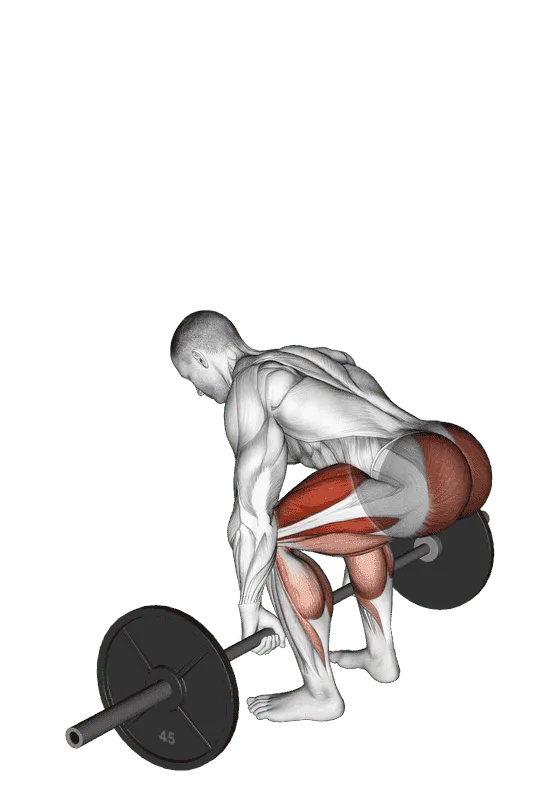
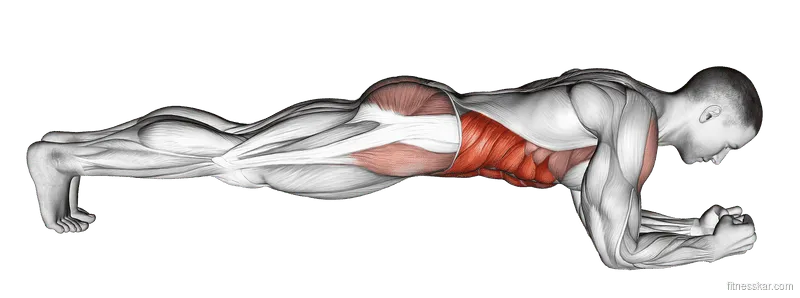
While bilateral exercises like the barbell deadlift and front plank build immense sagittal-plane strength (resisting forward and backward bending), they do not adequately challenge your lateral stabilization subsystem. This subsystem consists of the:
- Contralateral Quadratus Lumborum (QL): Bridges your lower ribs to your iliac crest, preventing your torso from collapsing toward the weighted side.
- Ipsilateral Gluteus Medius: Stabilizes your pelvis during the single-leg stance phase, preventing pelvic drop (Trendelenburg gait).
- Internal and External Obliques: Work synergistically to resist both rotational torque and lateral spine flexion.
- Adductor Complex: Anchors the femur to maintain neutral knee and hip tracking as you stride forward.
When you walk with a heavy dumbbell or kettlebell held in only one hand (the suitcase carry), this entire lateral chain must fire reflexively with every step. If any link in this kinetic chain is weak or inhibited, your torso will visibly tilt, your hip will shift outward, and your stride will stutter. Mastering unilateral carries restores muscular balance between your left and right sides, directly improving your stability in bilateral compound exercises like the squat and deadlift.
Humeral Centration and Upper Back Hypertrophy
Loaded carries do not merely build your midsection; they build tremendous upper body structural integrity. When you hold heavy weights at your sides, the downward gravitational pull exerts axial traction on your shoulder joints. In response, your rotator cuff muscles (supraspinatus, infraspinatus, teres minor, and subscapularis) contract isometrically to center the humeral head firmly within the glenoid fossa—a mechanical phenomenon known as joint centration.
Simultaneously, your upper, middle, and lower trapezius, along with your rhomboids and levator scapulae, must maintain continuous isometric tension to prevent your shoulders from rolling forward into kyphotic posture. Unlike standard barbell shrugs, which subject the upper back to brief, pulsed contractions, a 45-second heavy farmer's walk forces your scapular stabilizers to maintain maximum tension under constant movement. This sustained time-under-tension stimulates significant myofibrillar hypertrophy across the entire shoulder girdle and upper back.
Grip Strength: The Neuro-Mechanical Engine of Force Transfer
Your hands and wrists represent the ultimate mechanical bottleneck in resistance training. You cannot lift or manipulate a load that your fingers cannot hold. If your grip gives out halfway through a heavy pull, your central nervous system reflexively downregulates motor unit recruitment in the prime movers (your lats, glutes, and hamstrings) to protect the smaller peripheral joints from catastrophic failure—a protective biological mechanism known as neural inhibition.
Loaded carries develop what strength coaches categorize as support grip and crush grip endurance. While barbell deadlifts challenge your grip for only three to five seconds per repetition, a loaded carry requires sixty to ninety seconds of unrelenting isometric tension.
Furthermore, epidemiological and clinical research consistently identifies grip strength as a powerful independent biomarker of neuromuscular vitality, cardiovascular health, and biological aging. Incorporating regular loaded carries into your weekly training preserves hand function, reinforces tendon tensile strength in your forearms, and eliminates the need for lifting straps on your heaviest compound movements.
5 Essential Loaded Carry Variations
To maximize your results, you must choose the appropriate carry variation for your specific training objective. Each variation alters the position of the center of mass relative to your base of support, shifting the biomechanical demand onto different muscle groups.
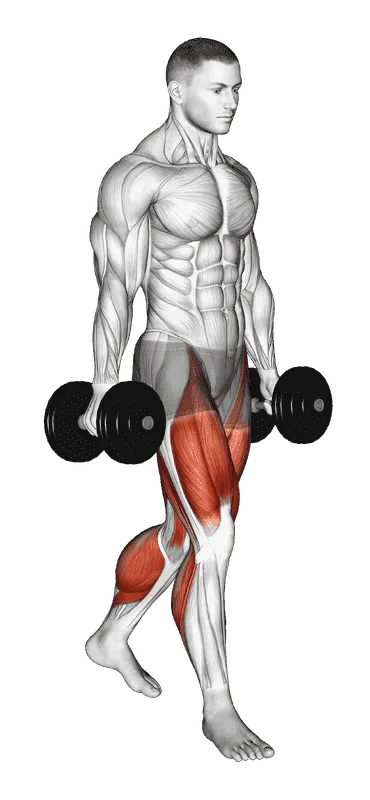
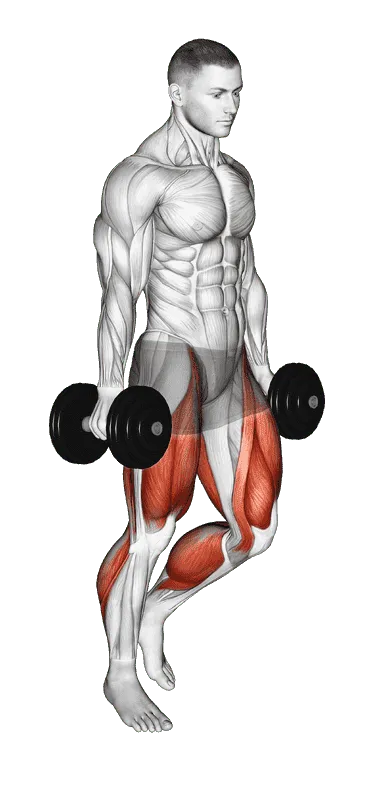
1. The Farmer's Walk (Bilateral Heavy Carry)
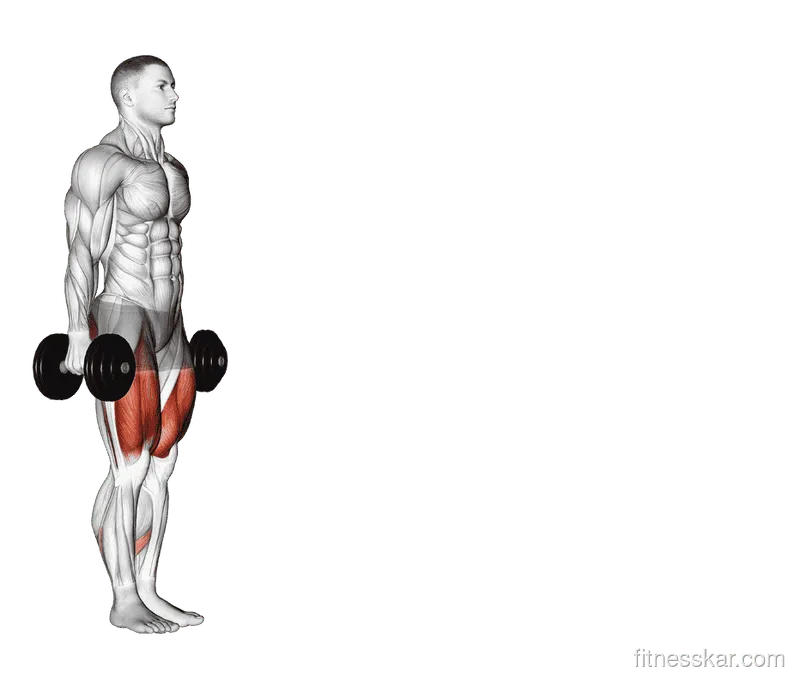
The gold standard of loaded carries. You hold a heavy dumbbell, kettlebell, or specialized farmer's walk handle in each hand alongside your hips and walk with smooth, measured strides.
- Primary Stimulus: Maximum grip strength, trapezius hypertrophy, spinal compression tolerance, and systemic work capacity.
- Biomechanical Demand: Bilateral anti-extension and anti-lateral flexion. The load is held close to your center of gravity, allowing you to move the absolute heaviest weights.
- Execution Cue: "Pack your shoulders down and back, pull your chin into your neck, squeeze the handles as hard as possible, and take short, heel-to-toe strides as if walking on a straight tightrope."
- Sets
- 4–5
- Reps
- 30–40 meters
- Rest
- 90 s
- Tempo
- Controlled
2. The Suitcase Carry (Unilateral Anti-Lateral Flexion)
Hold a single heavy weight in one hand while keeping your opposite arm extended slightly away from your body for balance. Walk without leaning toward or away from the weight.
- Primary Stimulus: Contralateral quadratus lumborum, external and internal obliques, ipsilateral gluteus medius, and asymmetric pelvic stability.
- Biomechanical Demand: Pure anti-lateral flexion. Your nervous system must continuously fight the rotational and lateral tipping torque created by the unbalanced load.
- Execution Cue: "Imagine a carpenter's level resting across your collarbones; keep the bubble perfectly centered. If your weighted shoulder drops even one inch, the set is over."
3. The Front-Rack Carry (Anterior Core and Thoracic Extension)
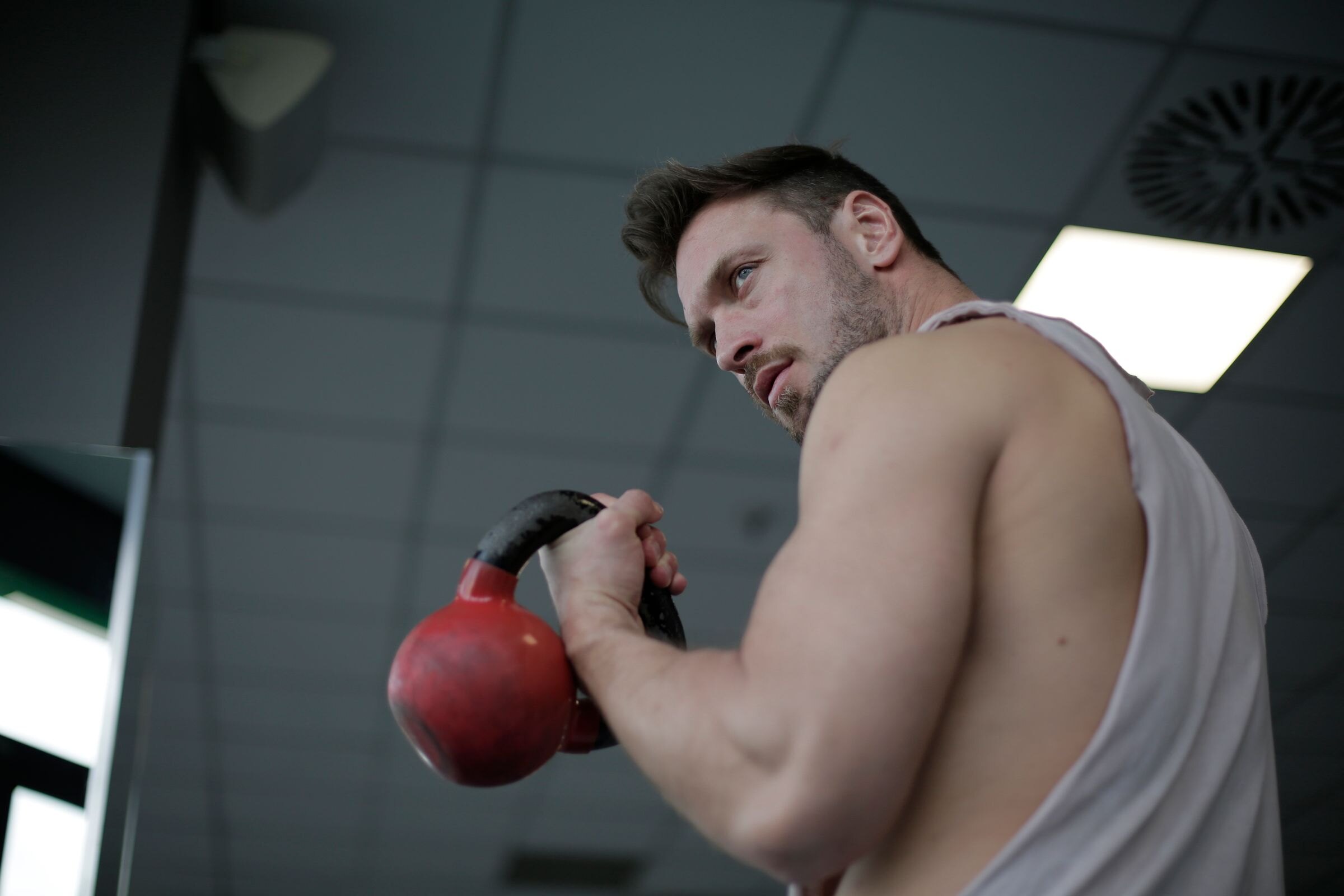
Clean two kettlebells or dumbbells to the front-rack position, resting the bell portions against the crook of your elbows with your wrists straight and elbows tucked against your ribcage.
- Primary Stimulus: Anterior core (rectus abdominis), thoracic extensor musculature, serratus anterior, and diaphragmatic breathing under load.
- Biomechanical Demand: Extreme anti-extension. Holding the weight in front of your chest extends the external moment arm, aggressively pulling your thoracic spine into flexion.
- Execution Cue: "Do not lean back into lumbar hyperextension. Pull your ribs down toward your belt line, brace your abs, and breathe into your belly while keeping your elbows glued to your chest."
4. The Waiter's Walk (Single-Arm Overhead Carry)
Press a single kettlebell or dumbbell overhead until your elbow is fully locked and your upper arm aligns directly with your ear. Walk forward with complete control.
- Primary Stimulus: Glenohumeral joint stability, rotator cuff isometric endurance, upward scapular rotation, and cross-body core stabilization.
- Biomechanical Demand: Anti-lateral flexion and dynamic shoulder centration under shifting gravitational vectors.
- Execution Cue: "Push the ceiling away to lock your scapula against your ribcage. Keep your gaze locked forward and do not allow your lower ribs to flare upward."
5. The Bear Hug / Sandbag Carry (Ultimate Functional Anterior Loading)
Wrap both arms around a heavy sandbag, medicine ball, or stone, clasping your hands together tightly against your sternum.
- Primary Stimulus: Full-body anterior chain, lats, biceps, thoracic spine extension, and maximum aerobic/anaerobic conditioning.
- Biomechanical Demand: High compressive and shear loading on the anterior core with intense thoracic extensor recruitment.
- Execution Cue: "Hinge back, scoop the bag into your lap, stand tall, and squeeze the bag into your chest. Take rapid, aggressive steps while breathing high in your chest."
Biomechanical Comparison of Carry Variations
| Carry Variation | Primary Core Demand | Primary Upper Body Demand | Relative Load Capacity | Primary Training Outcome |
|---|---|---|---|---|
| Farmer's Walk | Anti-Extension & Anti-Shear | Traps, Forearms, Upper Back | Maximum (100%+) | Maximal Grip & Total-Body Strength |
| Suitcase Carry | Anti-Lateral Flexion & Anti-Rotation | Contralateral Grip & Obliques | Moderate (40–60%) | Core Asymmetry & Pelvic Alignment |
| Front-Rack Carry | Anterior Core & Anti-Flexion | Thoracic Extensors & Shoulders | Moderate (50–70%) | Postural Endurance & Breathing Mechanics |
| Waiter's Walk | Scapular & Diagonal Core | Rotator Cuff & Deltoids | Low to Moderate (20–35%) | Shoulder Health & Overhead Stability |
| Bear Hug Carry | Anterior Core & Biceps/Lats | Upper Back & Forearm Flexors | High (60–80%) | Work Capacity & Functional Conditioning |
Metabolic Conditioning Without Joint Breakdown
One of the greatest challenges facing strength athletes and lifters is developing cardiovascular work capacity without sabotaging muscular recovery or degrading joint cartilage. Traditional conditioning tools—such as road running, jump rope, or plyometric jumping—impose repetitive, high-impact ground reaction forces that travel directly through your ankle, knee, and hip joints. Furthermore, high-velocity eccentric movements cause substantial microtrauma to muscle fibers, creating delayed-onset muscle soreness (DOMS) that can compromise your subsequent lifting sessions.
Loaded carries solve this problem through concentric-dominant locomotion. When you walk with a load, your legs absorb minimal landing impact because your feet do not undergo the airborne freefall phase characteristic of sprinting. There is virtually no eccentric deceleration phase; your muscles work primarily through high-tension isometric stabilization and low-impact concentric propulsion.
To optimize cardiovascular output while protecting your connective tissues, pair loaded carries with other non-impact functional movements, such as the kettlebell swing, sled pushes, and dumbbell walking lunges. Applying the principles of joint durability ensures your tendons and cartilage adapt at the same pace as your cardiovascular engine.
Step-by-Step Programming Frameworks
To integrate loaded carries into your weekly routine, choose one of the three evidence-based protocols below based on your primary objective.
Protocol A: Heavy Strength and Grip Builder (Primary Strength Focus)
Use this protocol at the beginning of your training session after your warm-up, or directly following your primary compound lift (such as the barbell deadlift or trap bar deadlift).
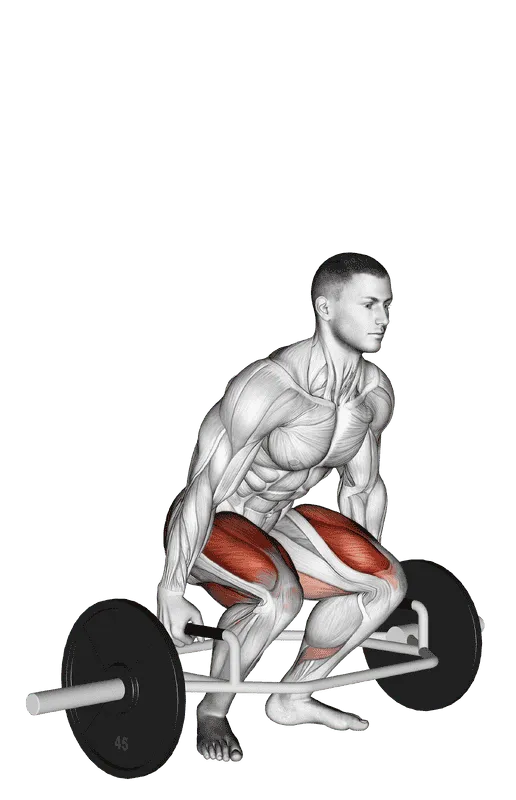
- Movement: Farmer's Walk with heavy dumbbells, kettlebells, or a trap bar.
- Load Selection: 40% to 50% of your body weight per hand (total load = 80% to 100% of body weight).
- Distance: 20 to 30 meters (approximately 65 to 100 feet).
- Volume: 4 to 5 working sets.
- Rest Interval: 90 to 120 seconds between sets to allow full phosphagen (ATP-CP) restoration.
- Frequency: 1 to 2 times per week.
Protocol B: Unilateral Core Stability and Asymmetry Corrector
Perform this protocol on upper-body or accessory training days to build bulletproof anti-lateral flexion endurance and pelvic stability.
- Movement: Suitcase Carry paired with the front plank.
- Load Selection: 25% to 35% of your body weight in one hand.
- Distance: 30 to 40 meters per side.
- Volume: 3 to 4 rounds per side.
- Rest Interval: 45 to 60 seconds between sides.
- Frequency: 2 times per week.
Protocol C: High-Density Metabolic Finisher (Fat Loss & Conditioning)
Execute this conditioning gauntlet at the conclusion of your workout to scorch calories, elevate your metabolic rate, and build relentless stamina.
- Format: Every Minute on the Minute (EMOM) for 10 to 12 minutes.
- Minute 1: 40-meter Front-Rack Carry (or Sandbag Bear Hug Carry) at moderate weight.
- Minute 2: 15 explosive kettlebell swings with controlled hip snap.
- Repeat: Alternate between carries and swings for 5 to 6 complete cycles.
To take your structural strength to the next level, pair your loaded carry work with our comprehensive 6-Week Core Strength Builder or the full-body training templates in the 8-Week Full Body Fitness Builder. Systematically applying progressive overload by adding five to ten pounds to your carries each month or increasing distance by five meters will trigger compounding adaptations in grip strength, postural endurance, and trunk stiffness. If your goal is accelerated conditioning and body recomposition, consult our guide on conditioning for fat loss to align your nutrition with your energy expenditure.
Common Form Mistakes and How to Fix Them
Loaded carries appear simple, which tempts lifters to get sloppy with execution. Avoid these four critical errors:
- The Lumbar Hyperextension Lean: Lifters often lean backward when holding heavy weights, jamming their lumbar facet joints together. Fix: Contract your glutes, lock your ribs to your pelvis, and imagine pulling your zipper up toward your chin.
- The "Penguin Waddle" (Excessive Lateral Sway): Swaying violently from side to side during a suitcase carry indicates the weight is too heavy for your lateral subsystem. Fix: Reduce the load by 20% and focus on smooth, gliding strides with zero head bobbing.
- Slumped, Internally Rotated Shoulders: Letting the weights drag your shoulders downward into forward rotation strains the cervical spine and brachial plexus. Fix: Perform a slight shoulder shrug, roll your shoulder blades down and back, and engage your lats as if protecting your armpits.
- Taking Giant, Overextended Strides: Overstriding forces your pelvis into anterior tilt and increases knee shear forces. Fix: Take short, rapid, heel-to-toe steps (roughly the length of one and a half of your feet).
Frequently Asked Questions
Frequently asked questions
How heavy should my farmer's walk be for general fitness?
Beginners should start with 25% of their body weight in each hand (e.g., two 20 kg weights for an 80 kg lifter). Intermediate lifters should aim for 40% per hand, while advanced strength athletes can target 50% or more of their body weight per hand for 30-meter carries.
Can loaded carries replace traditional ab exercises?
Yes, for functional stability. Loaded carries recruit the rectus abdominis, obliques, and transversus abdominis at higher isometric levels than crunches while maintaining a neutral spine. However, pairing carries with dedicated flexion and rotational drills ensures complete abdominal development.
Are dumbbells or kettlebells better for loaded carries?
Both work well, but kettlebells offer a distinct advantage. Their lower center of mass places the weight below your wrist, enhancing grip challenge and making front-rack and overhead carries significantly more ergonomic and joint-friendly than dumbbells.
How often should I perform loaded carries each week?
You can perform loaded carries two to three times per week. Alternate between heavy bilateral carries (Farmer's Walks) on lower-body days and lighter unilateral carries (Suitcase Carries) on upper-body or conditioning days to allow adequate recovery for your nervous system and forearms.
Sources
- McGill SM, McDermott A, Fenwick CM. Comparison of different 'carrying' styles, focusing on the spine. Journal of Strength and Conditioning Research. 2009. doi.org/10.1519/JSC.0b013e3181b3dd80 ↩